Moluccans welcome government apology but say it came too late
See more DutchNews articles in your Google search results
See more DutchNews articles in your Google search results
Add as a favourite source on Google Add DutchNews as a favourite source on GoogleMoluccans have welcomed the Dutch government’s apology for its postwar treatment of their community, but many said it had come too late, as many of the first generation – who the apology is aimed at – have already died.
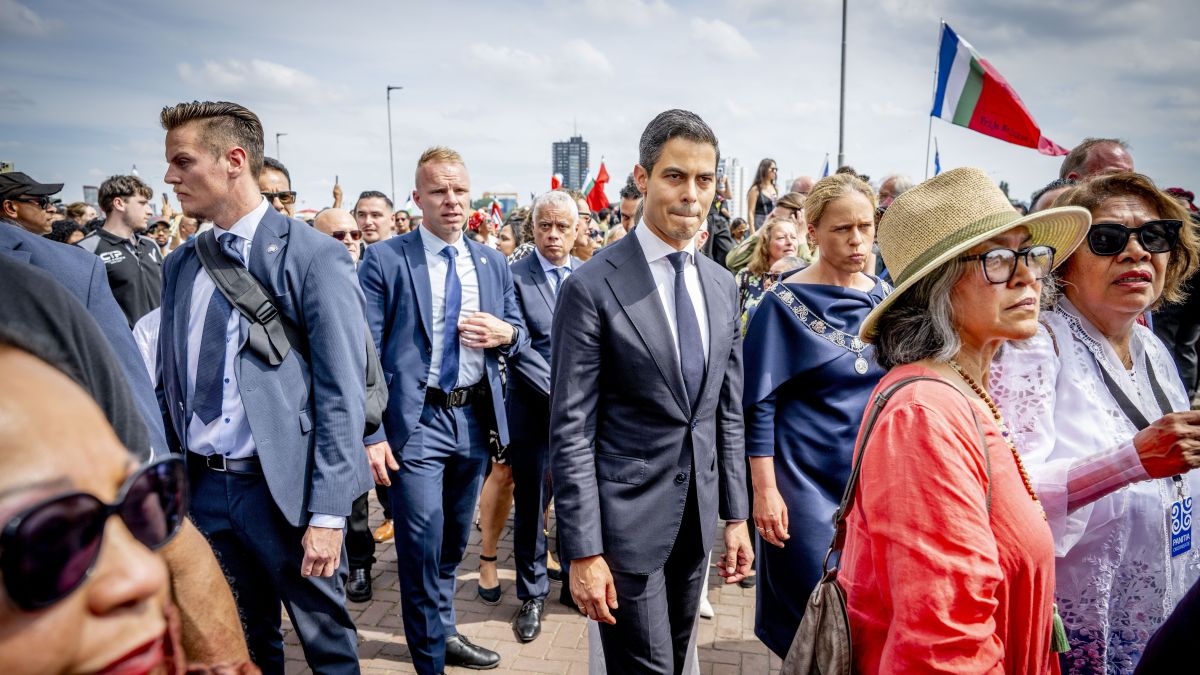
Prime minister Rob Jetten delivered the acknowledgment on Sunday at the unveiling of a national monument in Rotterdam, a step he had been expected to take in the run-up to the ceremony.
Jetten apologised for the “heartless and dishonourable” discharge of the Moluccan soldiers, for their poor reception and housing, and for the years in which their suffering went unacknowledged. “You are seen,” he said.
The response was one of relief mixed with grief, broadcaster NOS reported, with attendees saying the apology had arrived after most of their parents and grandparents had died. Several mayors of towns with Moluccan communities welcomed it as a first step.
Jetten said an apology gained meaning only through the actions that followed it, and that what those should be was “not set in concrete”. The community would have an important say, he added.
Soldiers and exiles
Some 12,500 Moluccans were brought to the Netherlands in 1951. The men were mercenaries who had fought for the Dutch colonial army, the KNIL, in the 1945 to 1949 war against Indonesian independence.
After the Dutch defeat they were seen as collaborators and could not safely return home, and the independent republic they had hoped for never materialised.
They arrived expecting to stay for six months but were instead dismissed from the army on arrival and their families were housed in former wartime camps, including Westerbork and Vught.
That treatment left scars that ran through later generations, a history set out in a recent book on the community. Jetten warned against reducing it to the violence of the 1970s, when young Moluccans hijacked trains and held a school hostage in an armed campaign for an independent homeland.
The apology follows years of calls for recognition, including from Amsterdam mayor Femke Halsema. Last week a large majority of MPs backed a motion by ChristenUnie’s Don Ceder for an independent investigation into the treatment of Moluccans, with findings due in early 2027.
The Moluccan community in the Netherlands now numbers more than 75,000 people.
Thank you for donating to DutchNews.nl.
We could not provide the Dutch News service, and keep it free of charge, without the generous support of our readers. Your donations allow us to report on issues you tell us matter, and provide you with a summary of the most important Dutch news each day.
Make a donation