“I will always want to have a home in Amsterdam”
See more DutchNews articles in your Google search results
See more DutchNews articles in your Google search results
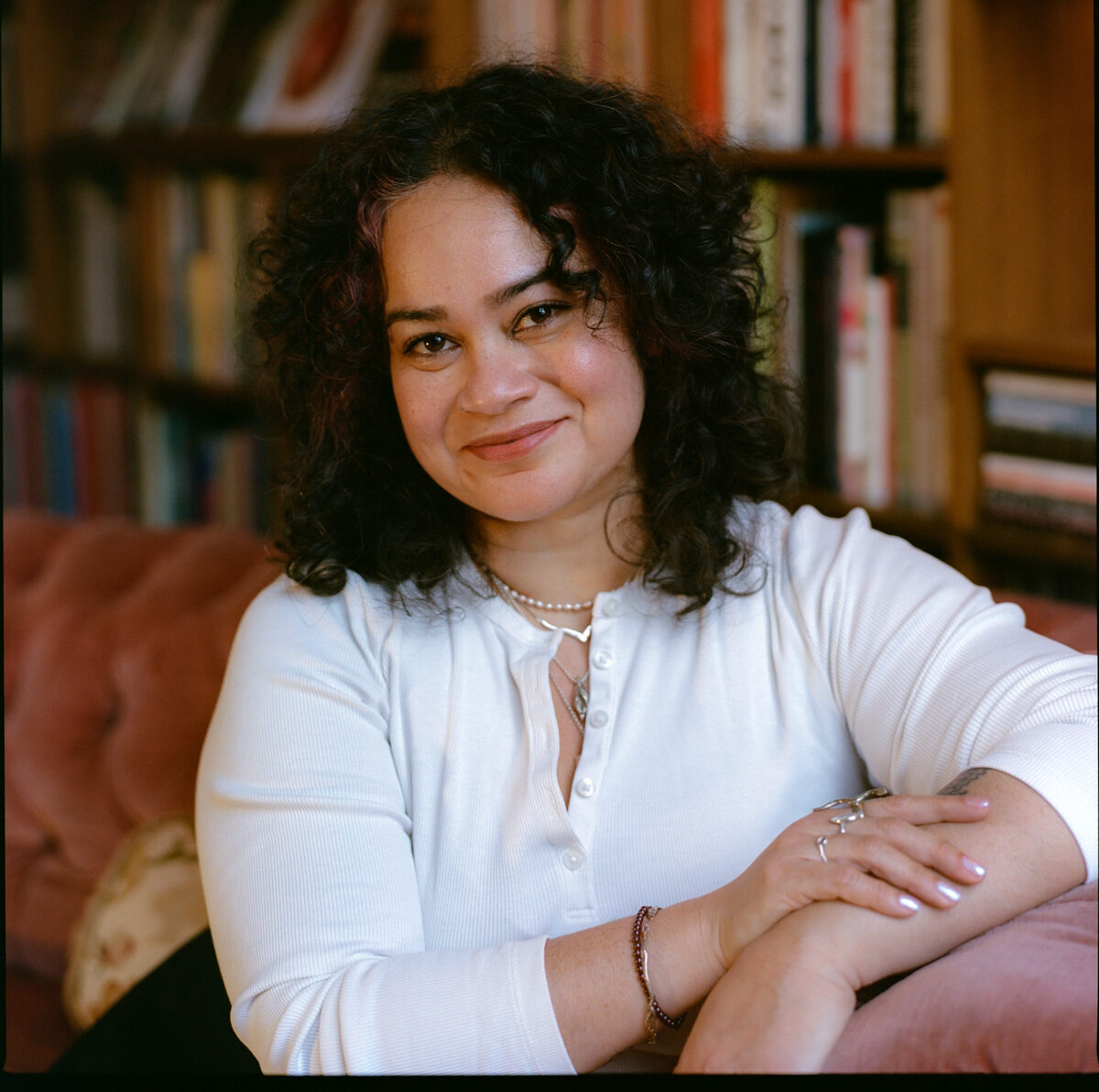
Add as a favourite source on Google Add DutchNews as a favourite source on GoogleOriginally from the Philippines, Deepa Paul moved to Amsterdam nearly 15 years ago after her husband took a job in the capital. Her book about opening up her marriage, Ask Me, was longlisted for the Women’s Prize for Non-Fiction. She loves how the Dutch do kids birthday parties, strongly advises tourists not to cycle and wishes she could have met Mata Hari.
How did you end up in the Netherlands?
I was born in the Philippines to a Bengali father and Filipina mother. I met my husband at university in Manila. I was studying communication but also had a crazy pipe dream of going to Europe to train as a classical singer. His first job ended up being in Singapore, so we had a long-distance relationship for four years while I lived in Manila. After we were married, I moved to Singapore to be with him and found work as a writer and producer in TV. But Singapore wasn’t really my bag.
I pitched my husband the idea of one last adventure before having a baby: a round-the-world trip, him on unpaid sabbatical, me writing freelance. He thought I was crazy and suggested finding a job abroad instead.
A friend working at a Dutch multinational offered to put him in touch with a VP at their Amsterdam HQ. I remember thinking that the cold email my husband wrote sounded way too direct and maybe a bit too much. Turns out the Dutch are a direct culture: it worked! One job offer and six months later, we were on a one-way flight to Amsterdam.
How do you describe yourself – an expat, lovepat, immigrant, international?
I am an immigrant.
How long do you plan to stay?
I don’t see an end date. I will always want to have a home in Amsterdam, although I often fantasise about living a parallel existence somewhere warm in the winter.
Do you speak Dutch and how did you learn?
There’s nothing glamorous about how I accumulated the Dutch I speak now, which I’d describe as pretty passable for daily social life. It was one awkward conversation with one school parent at a time, lots of listening to how people actually talk, and relying on context clues to fill in the 20-30% I might not be grasping accurately when people talk fast.
My husband had negotiated 30 hours of Dutch lessons for both of us, through his employer, when he started his job. I paused for a year or two after I gave birth to my daughter, then went back and took classes at the Volksuniversiteit.
I find that when Dutch people switch to English with me, I can push back. My go-to phrase is ‘ik ben grappiger in het Engels’ [I’m funnier in English]. Humour is disarming, it smooths over the switch in social situations..
My greatest achievement was being interviewed live on NPO Radio 1 about my book in Dutch. The segment was only supposed to last 8 minutes, but it was the longest 11 minutes of my life! Turns out talking about love, commitment, sex and open marriage is far more complicated than chatting about the weather.
What’s your favourite Dutch thing?
You’re asking a polyamorist to choose just one?! I love the mobility and freedom of cycling. Gezelligheid. The simplicity of young children’s birthday parties. The straightforward ease of voting – if you don’t come from a culture of systemically corrupt and murderous elections, as I do, you might not appreciate what a privilege and relief that is. The progression of flowers in the spring, from tulips to hyacinths to cherry blossoms to peonies to roses to dahlias: what a gift it is to have a reliable abundance of beauty.
How Dutch have you become?
Not much – I’m still too short (1.56m). I would argue that living in the Netherlands has given me the space and independence to become more myself, rather than more Dutch.
Having said that, I am a lot more direct now, and I not only can handle direct communication, I prefer it. It’s quite a relief actually, coming from a conflict-avoidant, high-context culture. I’ve been nearly cured of my lifelong affliction of Filipino time, which means I’m only mildly late most of the time, and actually punctual the rest of the time.
Which three Dutch people (dead or alive) would you most like to meet?
Anne Frank, who inspired me to start keeping a journal at the age of nine. She was the first person to show me that writing about my inner world and observing my own life, no matter how small and ordinary, is a worthy endeavour.
Rachel Ruysch, the most prolific and commercially successful female artist of the Dutch Golden Age, whose floral still life paintings sold for more than Rembrandt’s paintings in that time.
Mata Hari, born Margaretha Geertruida Zelle in Friesland, a bold free spirit who harnessed her eroticism, feminine power and artistic expression to live a courageous life and extraordinary life for a woman of her time. Later biographies exonerated her of espionage in World War I, but her image as a powerful and mysterious femme fatale endures to this day.
What’s your top tourist tip?
Please don’t cycle in Amsterdam, especially not with your selfie stick out. It’s not Disneyland with tulips and windmills along every cycle path. Some of us have things to do and places to get to.
On a less grumpy note, try to book a visit to the Six Collection in advance. It’s a private art collection that spans over three centuries and 10 generations of the wealthy and influential Six family, who have one of the most celebrated Rembrandt paintings you’ve never seen hanging right in their living room.
Tell us something surprising you’ve found out about the Netherlands.
When I gave birth in 2013, I was taken aback that official paternity leave was two days – one day for the actual birth and a second day for the father to register it. It ran completely counter to the image of the Netherlands in my mind as egalitarian, progressive and liberal. It turns out that it’s still deeply patriarchal in small, hidden and entrenched ways.
If you had just 24 hours left in the Netherlands, what would you do?
If I’m not panicking about making sure everything is packed and ready to go, cycle around my neighbourhood and have a coffee at my favourite spots. If the weather allows, go for a walk and read in the sunshine at Westerpark, then go for a dip in the IJ.
Throw a big party at home for all the friends I’ve made over the last 15 years, all the people who have become part of my story (except those I’ve revoked access to). My husband will cook enough Filipino food to feed everyone one last time. Eat, drink, laugh, cry, hug and dance, maybe stay up talking until the sun comes up.
If we make it out early enough, go dancing until my legs give out or the club kicks us out. Cycle home as the sun rises and enjoy one last sleep in my own bed—or not.
Deepa was speaking to Molly Quell.
Ask Me is available for sale at the American Book Center. You can follow Deepa on Substack and Instagram.
Thank you for donating to DutchNews.nl.
We could not provide the Dutch News service, and keep it free of charge, without the generous support of our readers. Your donations allow us to report on issues you tell us matter, and provide you with a summary of the most important Dutch news each day.
Make a donation