Local election watch: Housing crisis is main issue in The Hague
Gordon Darroch
The Netherlands goes to the polls to vote for 342 local councils on March 18 and Dutch News is focusing on the campaigns in 10 towns and cities where most internationals live. Second up, The Hague.
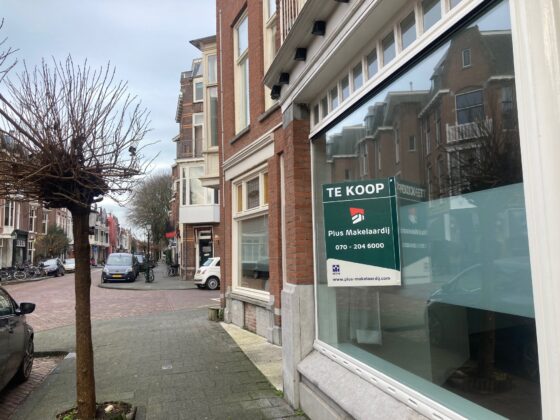
In a growing city with a multinational population, it is no surprise that the shortage of housing is the most pressing issue in The Hague.
The third-largest city in the Netherlands is projected to add another 100,000 residents in the next 25 years, with an increase in senior citizens and single-person households.
The main driver will be international migration: 20,000 people moved to The Hague from abroad in 2024 – two-thirds of them from Europe – while 14,000 left. By contrast, more people left for other places in the Netherlands than came to the city.
The current city administration has set a target of adding 4,000 houses a year, but accepts that building alone is not enough. “Demand for housing is growing so fast that we can’t reach it with newbuilds alone,” city housing chief Co Engberts said recently.
Parties are divided on the best way to cope with the demand. The right-wing liberal VVD wants to step up the pace of development so that work has at least begun on 20,000 homes in 10 key locations before the next elections in four years’ time.
- What you need to know about the local elections on March 18
- A quick guide to the biggest political parties
Lotte van Basten Batenburg, chair of the VVD party group, says: “Everyone agrees we need to build a lot more in The Hague, but we need to build homes in good locations. Not just high-rise flats, but houses where people have a good quality of life in well serviced neighbourhoods.”
Ageing population
Kavish Partiman of the Christian Democrats (CDA), who have two seats, says development needs to reflect the needs of an ageing population. “A lot of family homes are currently occupied by older people whose children have left home,” he says.
“If you build suitable houses for them, large apartments with space for the grandchildren to stay, they can move out and free up homes for families.”
For Richard de Mos, leader of local party Hart voor Den Haag, cutting the number of planning regulations is the key to kickstarting housebuilding. Just 500 new homes were added last year, one-third the number in the previous year.
“Research shows that investors are avoiding The Hague, so we need to reform our urban planning system so that it serves project developers,” he says.
The left-wing alliance GroenLinks-PvdA stresses the need for more affordable housing, including student accommodation in a city where the student population has grown from 32,000 to nearly 50,000 in the last five years.
“If you’re a student coming from abroad to The Hague, you don’t want to end up in in a hotel, said Mariëlle Vavier, the party’s lead candidate and alderwoman responsible for inclusivity. “You want to know before you arrive that there’s a room for you.”
More affordable homes would help with some of the other chronic housing-related problems in the city, she believes, such as overcrowding in migrant neighbourhoods.
More wardens
That in turn puts a strain on local services such as bin collections, as residents dump their household waste beside overflowing containers, attracting rats and seagulls.
“We should be targeting the people who are the cause of that – not the tenants, but rogue personnel agencies and landlords who cram 20 people into one floor,” says Vavier.
Other parties see fly-tipping as a public safety issue The VVD has earmarked €10 million to boost the number of boa’s, or community wardens, by 50% in the next four years, while De Mos calls for them to be better paid and better equipped. “If you pay peanuts, you get monkeys,” he says.
Yousef Assad, who heads the list of candidates for progressive-liberal party D66, says local businesses have a responsibility too.
“Businesses in shopping streets are supposed to have waste collection contracts rather than overfilling the containers that are meant for residents,” he says. “One thing we can do is enforce the waste contracts and ask business owners to show they have them.”
Safer streets
Public safety is the number one priority for voters, according to a survey by Omroep West which found that 36% of people named it as a concern.
Assad says street lighting and public pathways need to be redesigned so that women no longer have to walk through dark, deserted areas at night. “At the moment our public spaces have been built from a male perspective. We should be thinking about what makes women feel safer,” he says.
All parties agree that The Hague’s status as an international city makes it an attractive and prosperous place to live, but it also brings challenges for new and existing residents.
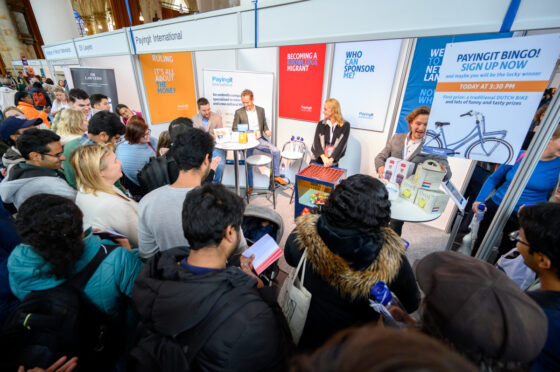
The 80,000-strong international community makes up around one-seventh of the population, making them an increasingly important section of the electorate.
Communications
“We have 180 nationalities from expats to labour migrants and everything in between,” says Mariëlle Vavier. “So just communicating bluntly in Dutch doesn’t help. We need to tell people what’s expected of them, preferably in their own language, so that people feel at home in the city and that they have a part to play.”
De Mos says there is “a world to win” by reaching out to international residents.
His party, like D66 and GroenLinks-PvdA, has added a page in English to its website. There is also an English version of the non-partisan voter guide tool (Kieskompas) for The Hague.
“A lot of expats don’t realise they’re entitled to vote,” he says. “It’s in their interests too to have clean neighbourhoods, safety, bustling shopping streets, and know where to go if they have complaints.”
Van Basten Batenburg says the international community is an asset, but wants it to be “less of a closed community”. The council has a role to play through facilities such as The Hague International Centre, but also stimulating connections at ground level.
“We see more people getting involved in residents’ organisations and that’s something we want to encourage where possible,” she says.
De Mos leads polls
Hart voor Den Haag was kept out of the last coalition because De Mos was facing charges of corruption in public office, but having been acquitted by a court 18 months ago, he says there is no reason to exclude his party any longer.
“We want to show the city we are willing to work with anyone,” he says. “In the last four years we’ve had administrations that have produced more arguments than results.”
Opinion polls put De Mos’s party on course to win 12 of the 45 seats on the city council, which would make it the clear winner, while D66 and GroenLinks-PvdA are forecast to win eight each.
D66’s Assad says that regardless of which parties form the next coalition, “it’s important to have a stable city government that can solve major problems such as the housing crisis.”
The VVD, who currently have seven seats, are expected to be the biggest losers, possibly dropping to three. The party performed better than expected in the general election last October, but 40% of their voters say they will back Hart voor Den Haag in the local elections.
The winners are likely to be the far-right PVV and migrants’ rights party DENK, who could win three or four seats each. But there is still plenty to play for: one-third of D66 voters from October still have not made up their minds, according to pollsters Ipsos I&O.
The Hague key information
Current council executive: D66, GroenLinks, Partij voor de Dieren, PvdA, CDA and Denk
How many seats on the council: 45
Total number of voters: 440,000
Number of international voters: 80,000 approximately
Local election information in English:
Municipality website with election information
Groenlinks–PvdA alliance (PvdA’s information is available in eight languages)
Hart voor Den Haag
D66 (basic information about the party)
Partij voor de Dieren (general information, not specific to the Hague)
CDA (general information, not specific to the Hague)
SP (general information, not specific to the Hague)
ChristenUnie–SGP Alliance (general information, not specific to the Hague)
Volt (their English information centres Amsterdam)
Events for internationals
In The Hague, two events are still on the calendar – a debate featuring the main parties on March 10 at The Hague Tech and a Student & Stand Debate is on March 5.
Expaterience, the English-language talk show produced by and for the
international community in The Hague, is hosting an elections
special on February 27 featuring a debate in English between candidates from the
four biggest parties on the current council.
Additional research by Eden Tweedie.
If you’ve come across any additional information useful for The Hague’s international voters, please email editor@dutchnews.nl
Thank you for donating to DutchNews.nl.
We could not provide the Dutch News service, and keep it free of charge, without the generous support of our readers. Your donations allow us to report on issues you tell us matter, and provide you with a summary of the most important Dutch news each day.
Make a donation