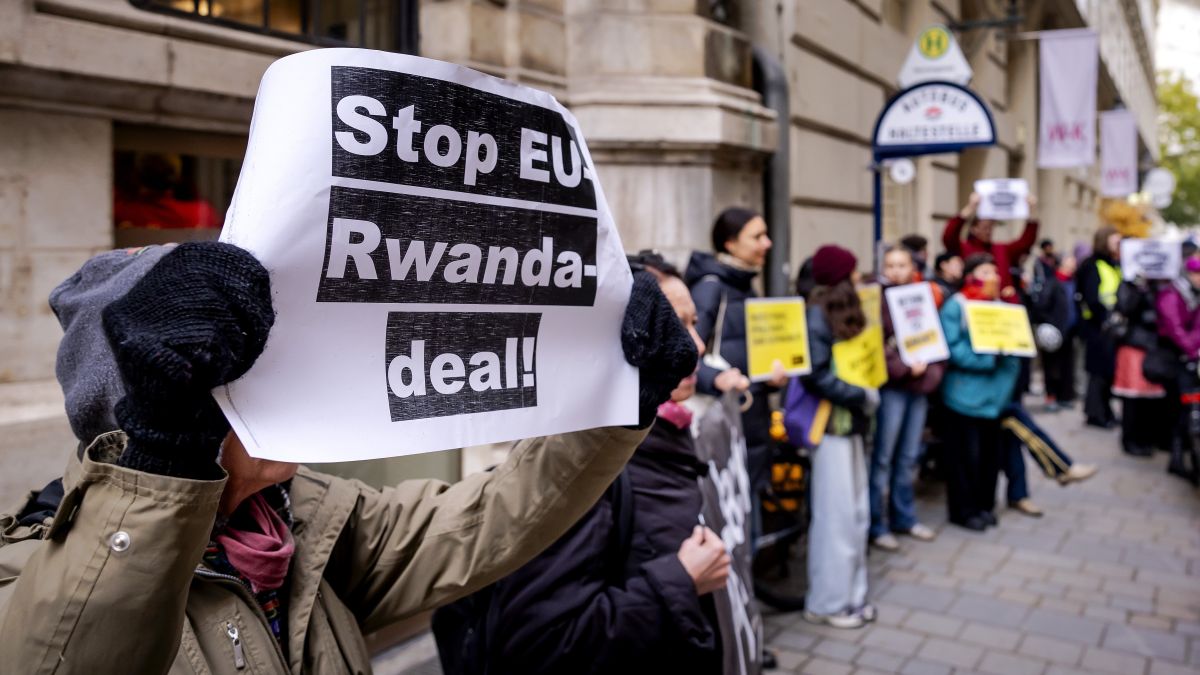
Outcry over “cruel” plan to send failed asylum seekers to Rwanda
See more DutchNews articles in your Google search results
See more DutchNews articles in your Google search results
Add as a favourite source on Google Add DutchNews as a favourite source on GoogleSome 46 human rights, civil society and trade union organisations have signed a letter objecting to the “cruel” plan presented by the Netherlands and four other EU member states on Monday to begin sending asylum seekers whose applications have been rejected to Rwanda.
The plan, presented in Vienna on Monday, will pave the way for people to be sent to “deportation hubs” in Rwanda, on the idea that it will help secure national borders and break apart human trafficking networks. The reality, the signatories say, is that this is just a euphemism for forced deportation and will deteriorate security.
Dutch foreign affairs minister Tom Berendsen joined counterparts from Austria, Denmark, Germany and Greece at the conference. The letter of objection notes that the vulnerable people will be sent to a place that they have never been to, have no connection to, and which has a serious ongoing record of human rights violations.
“It signals that member states accept the risk of serious human rights violations against one of the most marginalised groups in society, in return for a deterrence goal that evidence clearly suggests they will not reach. Such cruel measures drive people into further insecurity, and risk making migration routes more dangerous,” the letter states.
Berendsen said at the press conference after the event that “effective return is important” and that through the deal the Netherlands is “taking a concrete step towards a better migration system by establishing a return hub in Rwanda.”
He also spoke of the need for economic development in Rwanda, though how the deal will work is unclear. According to broadcaster NOS, Rwanda wants economic support in return, and the five countries will share the costs, which have not been made public. Rwanda will initially offer around 100 places, and only single men will be sent at first.
A spokesperson from asylum foundation Stichting Vluchteling told Dutch News: “We are against this concept as a humanitarian organisation. Member states are responsible for these people. We’re very concerned about the situation in Rwanda. We see human rights abuses on press freedom. We don’t believe there will be the possibility for independent monitoring from member states.”
The spokesperson said the talk of improving human rights through this agreement was nothing but “pretty words”.
They said that the move sends a signal that Europe does not want to accept its responsibility for asylum seekers. “This is super dangerous. Even if one person is sent over the next couple of years, it sends a signal that we don’t want you here and that we’re willing to go quite far to remove you.”
There is a critical shortage of asylum beds in the Netherlands, with many taken by people whose applications have been rejected but are stuck in legal limbo. But the spokesperson said “this is not a numbers crisis, it’s a political crisis. The focus should be on obligations that member states have, which is that we’re responsible for people who are rejected.”
The letter also warns that the EU’s proposed new rules for border agency Frontex would allow it to support returns to non-EU countries, including a possible role in running “return hubs”. Frontex already operates with “a de facto lack of accountability”, the organisations say, and the proposal would remove the obligation to assign at least one fundamental rights monitor to each operation.
The Dutch foreign ministry’s own country report on Rwanda, which the immigration service IND uses to assess asylum claims, records extrajudicial killings, enforced disappearances and torture in unofficial detention centres.
The letter also warned that “by relying on third countries to take on its protection obligations, the EU makes itself dependent on non-EU states, enabling third countries to leverage migration in line with their own political agenda.”
Thank you for donating to DutchNews.nl.
We could not provide the Dutch News service, and keep it free of charge, without the generous support of our readers. Your donations allow us to report on issues you tell us matter, and provide you with a summary of the most important Dutch news each day.
Make a donation