King raises history of slavery at ceremony to mark First Salute
See more DutchNews articles in your Google search results
See more DutchNews articles in your Google search results
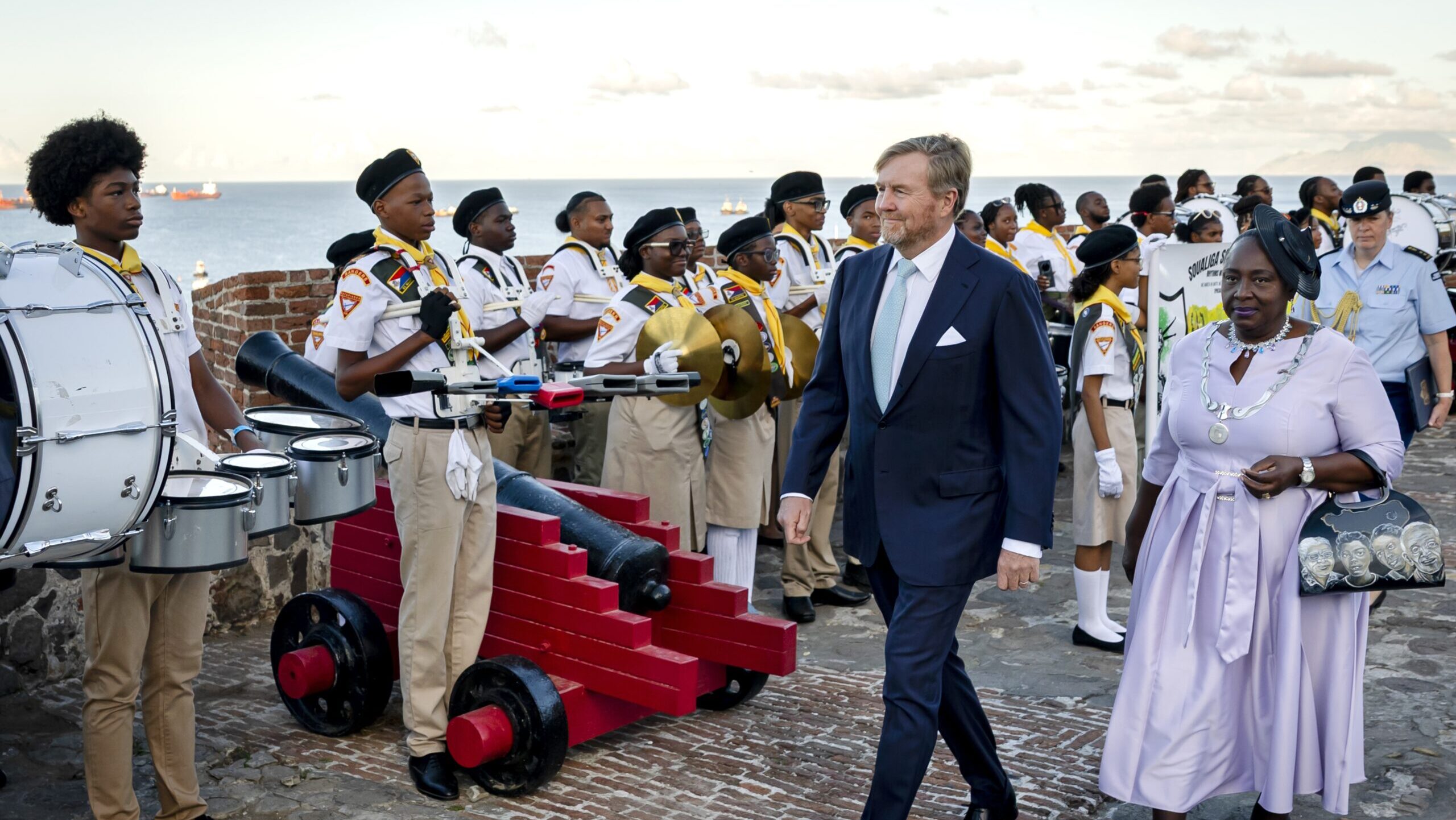
Add as a favourite source on Google Add DutchNews as a favourite source on GoogleKing Willem-Alexander has acknowledged the role of the Dutch Caribbean islands in the transatlantic slave trade during a ceremony to mark the 250th anniversary of the Netherlands’ recognition of the United States.
The king was speaking on Statia Day, a national holiday on the island of Sint Eustatius to mark the First Salute, when a Dutch cannon was fired from Fort Orange to return a salute from the American ship Andrew Doria.
The event on November 16, 1776, is seen as the first formal recognition of the USA by a foreign power after the Declaration of Independence in July that year.
At the time the island was a Dutch colony with around 70 slave plantations. Today it is a special municipality of the Netherlands with a population of around 3,300.
During his speech on Monday, the king referred to the recently published study into the royal family’s role in slavery, which concluded that the house of Oranje-Nassau earned more than €500 million from the colonies since the 17th century.
Prime minister Rob Jetten had also been due to attend the ceremony, but he was forced to stay in the Netherlands for crisis talks with his coalition partners after last week’s budget vote brought his cabinet to the brink of collapse.
Common history
“The First Salute is a milestone in history, but our common history goes far wider,” the king said. “There is also the story of Statia as a place to commemorate slavery.
“In the 17th and 18th centuries several thousand people from west Africa landed here. After an inhumane journey of two months, packed into the bowels of ships with no more than two square metres per person, there was no salute for them on their arrival.”
He said that he had been moved by the results of four years of research into slavery, led by Leiden university professor of colonial history, Geert Oostindië, which he commissioned and paid for.
“I know that life on this isolated island is not easy for many people,” he said. “Groceries are expensive, there are few jobs to be had and healthcare is limited.” He added he would continue to work for “fair opportunities and a good life for everyone.”
Thank you for donating to DutchNews.nl.
We could not provide the Dutch News service, and keep it free of charge, without the generous support of our readers. Your donations allow us to report on issues you tell us matter, and provide you with a summary of the most important Dutch news each day.
Make a donation