Groningen university continues Dead Sea Scrolls work with Israel
See more DutchNews articles in your Google search results
See more DutchNews articles in your Google search results
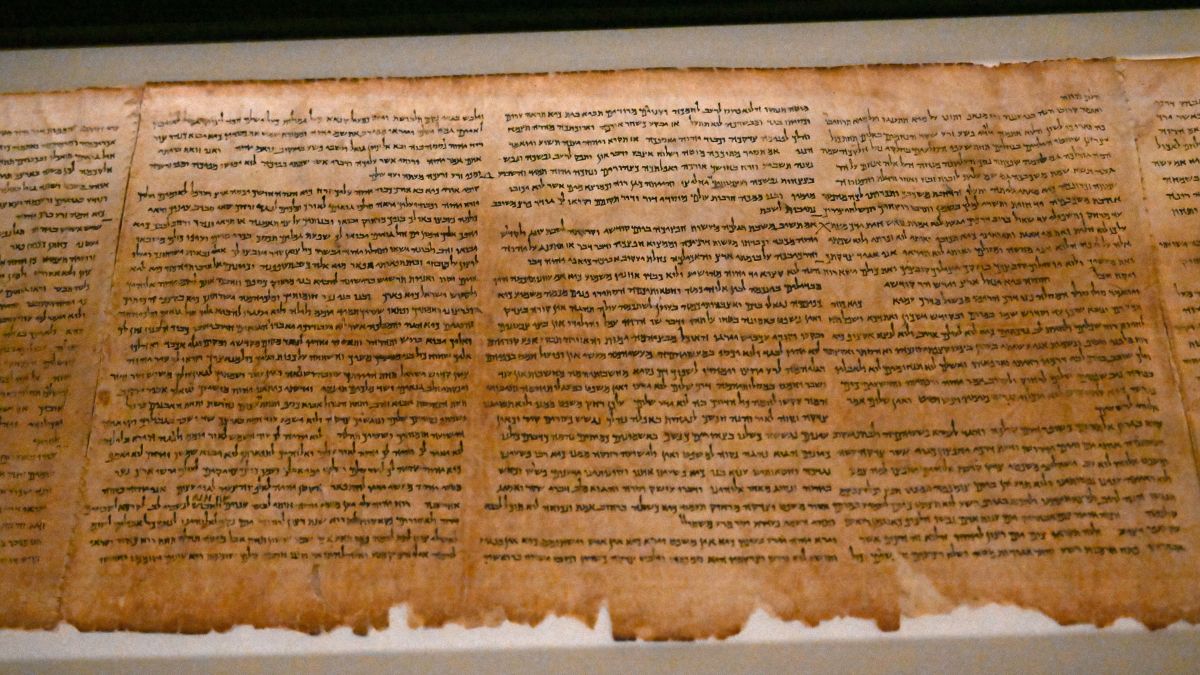
Add as a favourite source on Google Add DutchNews as a favourite source on GoogleThe University of Groningen (RUG) is set to continue a research collaboration into the Dead Sea Scrolls with Israeli researchers, despite protests over the provenance of the scrolls and an appeal from 18 of its own professors, broadcaster NOS reported.
The Dead Sea Scrolls are considered one of the most important archaeological finds of the past century. They are ancient Jewish manuscripts, many of them biblical, that were discovered between 1947 and 1956 in various locations in the present-day West Bank, such as the caves at Qumran.
These locations were occupied by Israel during the 1967 war, and the manuscripts were transferred from the Palestine Archaeological Museum in East Jerusalem to the Israel Museum in West Jerusalem. Critics say Palestinians no longer have access to the collection.
Origins study
In June, RUG professor Mladen Popović was awarded €2.5 million by the European Research Council for a five-year study into the origins of the scrolls. The work is being done with the Israel Antiquities Authority (IAA), the state body that holds most of the collection. The team will use chemical analysis and AI to examine samples of parchment, papyrus and ink for clues about where the manuscripts were made.
In August, local protest groups wrote an open letter asking the RUG to stop the study because of the occupation and the ongoing violence throughout Palestine. They argue that working with the IAA legitimises the occupation.
The university’s executive board responded in late August that it would continue regardless, though it recognised the humanitarian situation in the region as “heartbreaking”. It said events there were not directly linked to the research.
Professors’ appeal
In October, 18 professors asked the board to reconsider. “By working together, the RUG gives the Israeli institution recognition, legitimacy, and prestige,” said Marcel Brus, emeritus professor of international public law and one of the signatories. “Anyone who remains neutral in a situation of injustice has sided with the oppressor.”
Critics are also concerned about a proposed Israeli law that would bring archaeology in the West Bank and Gaza under Israeli law, which they fear could help Israel lay claim to land.
In a statement on November 11, the board said the project has a clear scientific aim and needs direct access to manuscripts held by the IAA. The collaboration “does not constitute endorsement of government policy”, it said, and ancient Jewish history should be studied separately from the current conflict.
Thank you for donating to DutchNews.nl.
We could not provide the Dutch News service, and keep it free of charge, without the generous support of our readers. Your donations allow us to report on issues you tell us matter, and provide you with a summary of the most important Dutch news each day.
Make a donation