Dutch arms maker’s staff hunted Russian drones in Ukraine: NRC
See more DutchNews articles in your Google search results
See more DutchNews articles in your Google search results
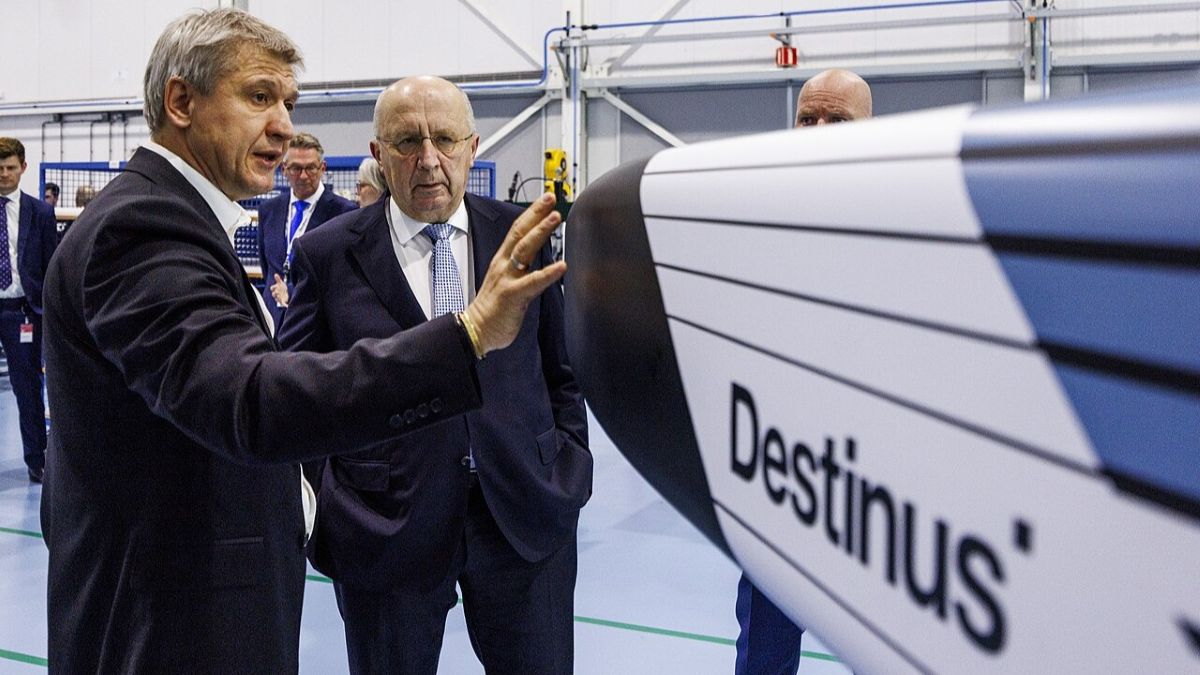
Add as a favourite source on Google Add DutchNews as a favourite source on GoogleEmployees of Dutch arms manufacturer Destinus have been actively participating in the Ukraine war, engaging in drone battles with Russian forces, according to an investigation by NRC.
The defence ministry says such actions amount to direct participation in hostilities, and experts warn the company’s activities could drag the Netherlands into the war.
On Tuesday, the company publicly announced its missiles had been used in a specific attack, the strike on the Crimea bridge. It has now confirmed to NRC that its staff “launched and operated” interceptor drones against incoming Russian attack drones, without live explosives and under the direction of Ukrainian soldiers.
NRC asked the defence ministry whether Destinus employees are allowed to use weapons against Russian drones or targets. The ministry said that launching or operating a weapons system counts as taking part in the fighting, and that anyone who does so loses the protection given to civilians under the laws of war. Explaining to soldiers how a system works does not, it said.
Legal risk
Jessica Dorsey, an international law lecturer at Utrecht University, said company employees who take a direct part in fighting can be treated as targets, and the Ukrainian army’s consent makes no difference. Liesbeth Zegveld, a professor of the law of war, said they could also face prosecution.
Zegveld also told NRC that the company could drag the Netherlands into the war. “The formal position is that the Netherlands is not at war,” she said. “But by supporting companies that take part in this way, you muddle your way into the war.”
Wimar Bolhuis, a left-wing PRO MP who sits on parliament’s defence committee, called the findings “worrying” and has asked the Defence ministry to explain how the drones were tested and how the export licences were granted. “We need to know what is really happening there,” he said. Volt leader Laurens Dassen also called for an investigation into whether Destinus lets staff take part in the war.
Battle testing
NRC spoke to more than 40 people, including current and former employees, investors and advisers, and drew on internal documents, messages and video. It found that from autumn 2024, a Destinus team in Ukraine tested the company’s Hornet interceptor drone against Russian-made Shahed drones, using drones shipped from the Netherlands.
Internal messages seen by NRC show that the drones crashed repeatedly, and one was nearly lost over a village. When the Ukrainian army asked whether the drone was ready for use, the team on the ground said it was not ready for combat missions. A team leader in Spain pushed for it to fly anyway.
Kokorich told NRC he did not recognise its descriptions of chaotic factories, of the drones’ poor condition or of a start-up mentality at the company, and said safety is “of the utmost importance” at Destinus.
Strike on Voronezh
NRC also reported that in June 2023, before Destinus moved its military arm to the Netherlands, employees went to the front near Kharkiv to test the company’s first attack drones. The aircraft carried explosives and were set to hit a military airfield near the Russian city of Voronezh, 180 kilometres across the border. According to the paper, Destinus staff were closely involved.
On the morning of June 9, a drone hit an apartment block in Voronezh and three people were injured. NRC said employees who saw footage of the strike suspected the drone was theirs, though it cannot be said with certainty where the Destinus drone came down.
Destinus said the Ukrainian army selects targets and decides on military operations, and the company provides “technical support in line with its contracts”. “Destinus does not carry out military operations,” it said.
Government backing
Destinus was founded in Switzerland in 2021 by Russian-born Kokorich and registered its military arm in Hengelo in 2024. In 2024 he settled US fraud charges over his previous space company, without admitting or denying them, and paid a $2 million penalty and accepted a five-year ban from running listed companies.
The Netherlands has since become a key customer. In June it agreed to pay for 700 Ruta cruise missiles for Ukraine, worth €250 million, a package the cabinet first described as drones.
In August, the defence ministry signed a contract with Destinus to develop a navy version of the Hornet, part of a project budgeted at €250 million to €1 billion.
The foreign ministry, which grants arms export licences for Ukraine, told NRC that manufacturers are responsible for safety defects and Ukraine is responsible for assessing the quality of the weapons.
On Wednesday, the Russian embassy asked whether the Netherlands was becoming involved in the war after the Crimea bridge strike. In a parliamentary committee debate on Wednesday, foreign minister Tom Berendsen said his ministry had no further details of Destinus’ role in the bridge attack. He said Russian statements of this kind are intended to sow division and stoke fear.
Thank you for donating to DutchNews.nl.
We could not provide the Dutch News service, and keep it free of charge, without the generous support of our readers. Your donations allow us to report on issues you tell us matter, and provide you with a summary of the most important Dutch news each day.
Make a donation