“It’s too tense” says mum of Cape Verde’s Dutch World Cup stars
Gordon Darroch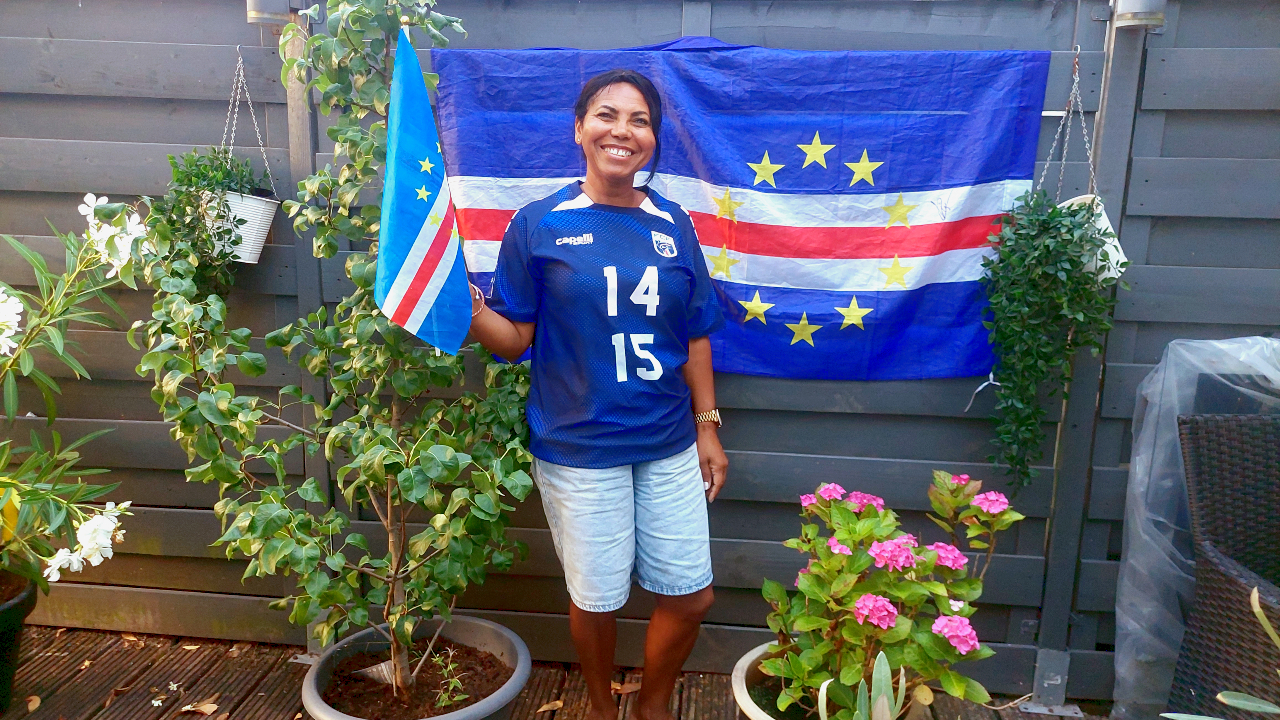
See more DutchNews articles in your Google search results
See more DutchNews articles in your Google search results
Add as a favourite source on Google Add DutchNews as a favourite source on GoogleDutchNews spoke to the mother of Rotterdam-raised footballers Laros and Deroy Duarte, who are preparing for a historic World Cup match against Argentina, having helped Cape Verde become one of the tournament’s most improbable underdog success stories.
The road to Miami runs from Rotterdam through the footballing outposts of Hardenberg, Spakenburg and Groesbeek. For 10 years Maria da Cruz drove her blue Toyota Starlet through the polders and flat fields of the Netherlands, Cape Verdean music on the CD player as the windscreen wipers swept away the lashing Dutch rain. Her teenage sons, Laros and Deroy, were promising players in Sparta Rotterdam’s boys’ teams, with hopes of professional careers one day in the Eredivisie, perhaps even beyond.
Only in their wildest dreams would they have imagined themselves stepping out in front of a crowd of 65,000 opposite perhaps the greatest player of all time, Lionel Messi, and his Argentina team-mates. But on Friday in Miami, the brothers Laros and Deroy Duarte will do just that, as part of the Cape Verde side that has astonished the world by reaching the knock-out stages of the World Cup.
“It feels like a dream,” Maria said, sitting in her kitchen in Schiedam, a town of 80,000 people neighbouring Rotterdam. She is hastily packing for her second trip to America in three weeks. The first was to watch Cape Verde’s opening two matches against Spain and Uruguay, but she and her eldest son Lajoyce flew back before the final group-stage game against Saudi Arabia.
“We assumed they’d play three matches, so if we got to see two of them that was great,” she said. “My son could only get time off work for two games and I didn’t want to stay in America on my own. So we came back.”
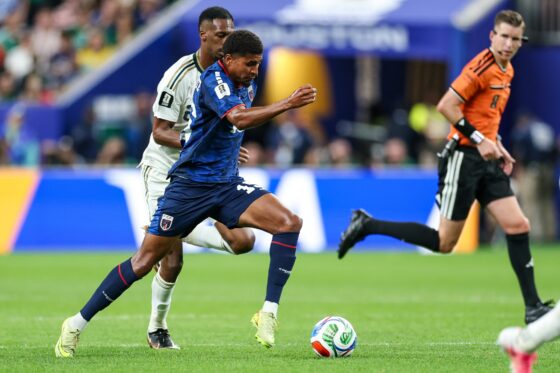
But everything changed when Cape Verde defied the odds to hold Spain, the European champions, to a goalless draw in their first ever World Cup finals match in Atlanta. Laros was one of five Rotterdam-born players who started the match for Cape Verde; Deroy came on as a second-half substitute against a team packed with superstars such as Rodri, Fabián Ruiz and the teenage sensation Lamine Yamal.
“I think we felt the tension more than they did,” Maria said. “My boys have always wanted to play against the best. For them it was a dream come true. Losing is part of the game and it’s no shame to lose to some of the best players in the world. Nobody thought they would go through, but after they drew against Spain the boys thought: we can do this.”
Both brothers came on as second-half substitutes in the second game, a 2-2 draw against Uruguay that gave them real hope of reaching the last 32. But for the final match she was back in Schiedam as Cape Verde qualified with another goalless draw against Saudi Arabia. Deroy earned the man of the match award for his solid performance in defensive midfield. In the last minute Laros was sent clear on goal for a chance to seal his country’s first ever World Cup win, but his shot was turned away by the Saudi goalkeeper, Mohammed Al-Owais.
“I watched the match on the first day we came back and I thought: ‘What am I doing here? Why aren’t I there?’ But my eldest son said: ‘If they go through, we have to go back.’ I don’t really like flying, but I said OK. For moments like that you just go.”
Laros, the elder of the two footballing brothers, started training with Sparta at the age of 5 and quickly showed promise. “You could see very early that he was very good on the ball,” Maria recalls. Deroy, three years younger, joined the club at the same age, by which time Laros was training three days a week with the future professionals.
The years went by in a blur of shuttle runs to training sessions and matches all over the country. “I worked part-time, so I’d dash back home, make dinner before they came out of school at 3.30pm, pick them up and go straight up to Sparta,” she said.
As the only person in the household with a driving licence, Maria had to do most of the chauffeuring, but sometimes one of the boys could go to training on the back of their father Mario’s scooter, or hitch a lift with a team-mate. “If they were both playing at home it was nice for me, because I only had to go once,” she said. “But the youngest always played earlier than the eldest, so I still spent the whole day at the club.”
At one point Maria and a group of other mothers started a running club to fill the time they spent waiting for their children to finish training. “You spend so long waiting, so we decided to do something for ourselves. Sometimes we’d run 10 kilometres,” she said. “And it meant we were able to keep an eye on what was going on at training.”
Turning professional
When Deroy turned 16 and signed professional terms with Sparta, Maria could finally retire the little Toyota Starlet, which had clocked up 276,000 kilometres around the Netherlands, as well as family trips to France. “I said to them: ‘That little car took you everywhere and now you can have your own cars.’”
“People ask how I managed it for all those years and I say: it just becomes your life,” Maria said. “You see they have talent and as long as they enjoy it and want to keep going, you go with them because all you can do as parents is support them and take them where they need to be. I didn’t really have that Cape Verdean social life because I was always busy with training in the week and matches at weekends.”
Both brothers made it through the ranks at Sparta, but at the age of 18 Laros joined PSV Eindhoven. He spent four years playing for the reserve team before being loaned back to Sparta, where he teamed up with Deroy as the club was trying to win promotion from the Dutch second tier to the Eredivisie.
“They’re real brothers: they’re always there for each other,” Maria said. “One time at training people were talking about how good Laros was while Deroy was there, and he said: ‘they don’t know how good Laros really is.’”
“Laros always wants to play in midfield with his brother. Deroy is a different type of player, more defensive. In the youth teams he was a defender, but the coach at Sparta put him in midfield and they clicked so well together that the team ended up getting promoted.”
Going national
In 2021 the brothers left Sparta to head in opposite directions – Laros headed north to Groningen, while Deroy moved to Fortuna Sittard, in Limburg. Around the same time the brothers were approached to play for the Cape Verde national team, based on their parents’ nationality. Laros and Deroy had both been called up dozens of times for the Dutch national youth teams – Laros won 14 caps at under-19 level. But when Cape Verde called on Deroy in 2022, he quickly made up his mind.
“He wasn’t involved with the Netherlands any more and he wanted to play for his country,” she said. Laros joined the following year, having been injured while at Groningen. “He wanted to take it easy, recover and settle in at Groningen before he started playing international football,” Maria said.
Two years ago Laros moved to Puskas Akademia, near Budapest, while Deroy signed for Bulgarian club Ludogorets Razgrad. By now they were established players in the Cape Verde national side that qualified for the World Cup for the first time in Octoober last year by beating Eswatini – formerly Swaziland – to top a group that included Cameroon and Libya. Head coach Bubista described the achievement as a “special moment” in the year the island nation celebrated 50 years of independence from Portugal.
The road to the World Cup has not always been smooth; Maria and Mario separated when the boys were in their teens, though they remain on good terms. “We had to do a lot on our own,” she said. “It got to the point where we couldn’t go on any more. But we’ve remained good friends and we still follow the matches together.”
For the match against Argentina she has customised Deroy’s number 14 shirt from the final qualifying match against Eswatini, adding Laros’s number 15 underneath. The days of taking her sons to training in her Toyota Starlet may be over, but she admits she still finds herself defaulting to soccer mom mode when her sons are on the pitch, even at the World Cup. “When they’re not playing I can just watch the game, but when my children play I’m chasing every ball. It’s so tense.”
And if the unthinkable happens and Cape Verde’s heroes topple the mighty Argentina, would she stay on for the quarter-final? “I haven’t even thought about it,” Maria said. “I’m just taking each match as it comes.”
Thank you for donating to DutchNews.nl.
We could not provide the Dutch News service, and keep it free of charge, without the generous support of our readers. Your donations allow us to report on issues you tell us matter, and provide you with a summary of the most important Dutch news each day.
Make a donation