Dutch border residents in a spin over giant German wind turbines
See more DutchNews articles in your Google search results
See more DutchNews articles in your Google search results
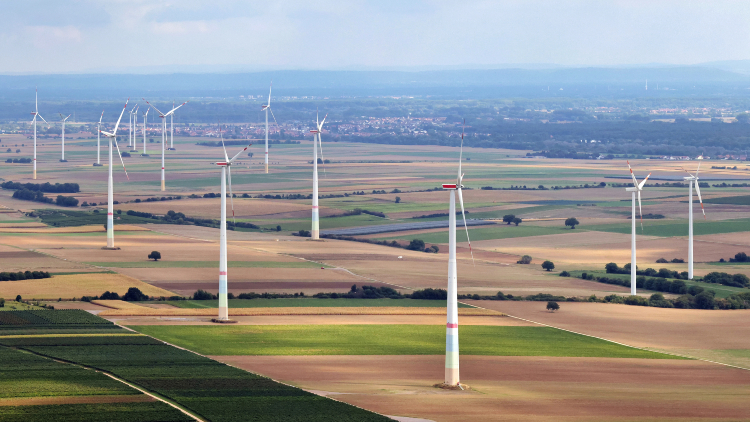
Add as a favourite source on Google Add DutchNews as a favourite source on GooglePeople living in Dutch border communities are complaining they are powerless to stop giant wind farms being built a few kilometres away in Germany, even when they have a direct impact on the landscape.
Residents in Het Woold, in Winterswijk, Gelderland, last December forced the council across the border in Rhede to carry out an environmental impact review into plans to build three 250 metre-high turbines within 2km of the nearest Dutch homes.
But a similar objection by residents of Groesbeek to a cluster of 270-metre turbines in Kleve which will be visible as far away as Nijmegen was turned down last July.
“We think this is unacceptable,” Paula Castien, who runs a bed and breakfast in the area. “This is not how you deal with what nature you still have left and with your neighbours.”
Protests in other border towns such as Echt-Susteren in Limburg, Coevorden in Drenthe and Berkelland in the Achterhoek region have fallen on deaf ears.
In Losser, a village between Enschede and the German town of Bad Bentheim, the council dropped its objection to plans to construct six large wind turbines on the border because of fears about mounting legal costs.
Relaxed regulations
Germany relaxed its regulations in 2022, allowing councils to abolish minimum distances between wind farms and houses, in contrast to the Netherlands, where most municipalities have a limit of 500 metres.
Housing minister Eleanor Boekholt-O’Sullivan said she was aware of the concerns of people living in border communities, but it was up to provincial governments to raise concerns.
“If Dutch people are affected it is important that they have a say,” she told Nieuwsuur. “But ultimately it is Germany that takes the decisions.”
She said she was always ready to offer support to provinces if they called on her, but she had no formal power to intervene. “I don’t know if I can do anything, but I can take a look,” she said.
Thank you for donating to DutchNews.nl.
We could not provide the Dutch News service, and keep it free of charge, without the generous support of our readers. Your donations allow us to report on issues you tell us matter, and provide you with a summary of the most important Dutch news each day.
Make a donation