Injury-hit Dutch still hopeful of springing a World Cup surprise
Gordon Darroch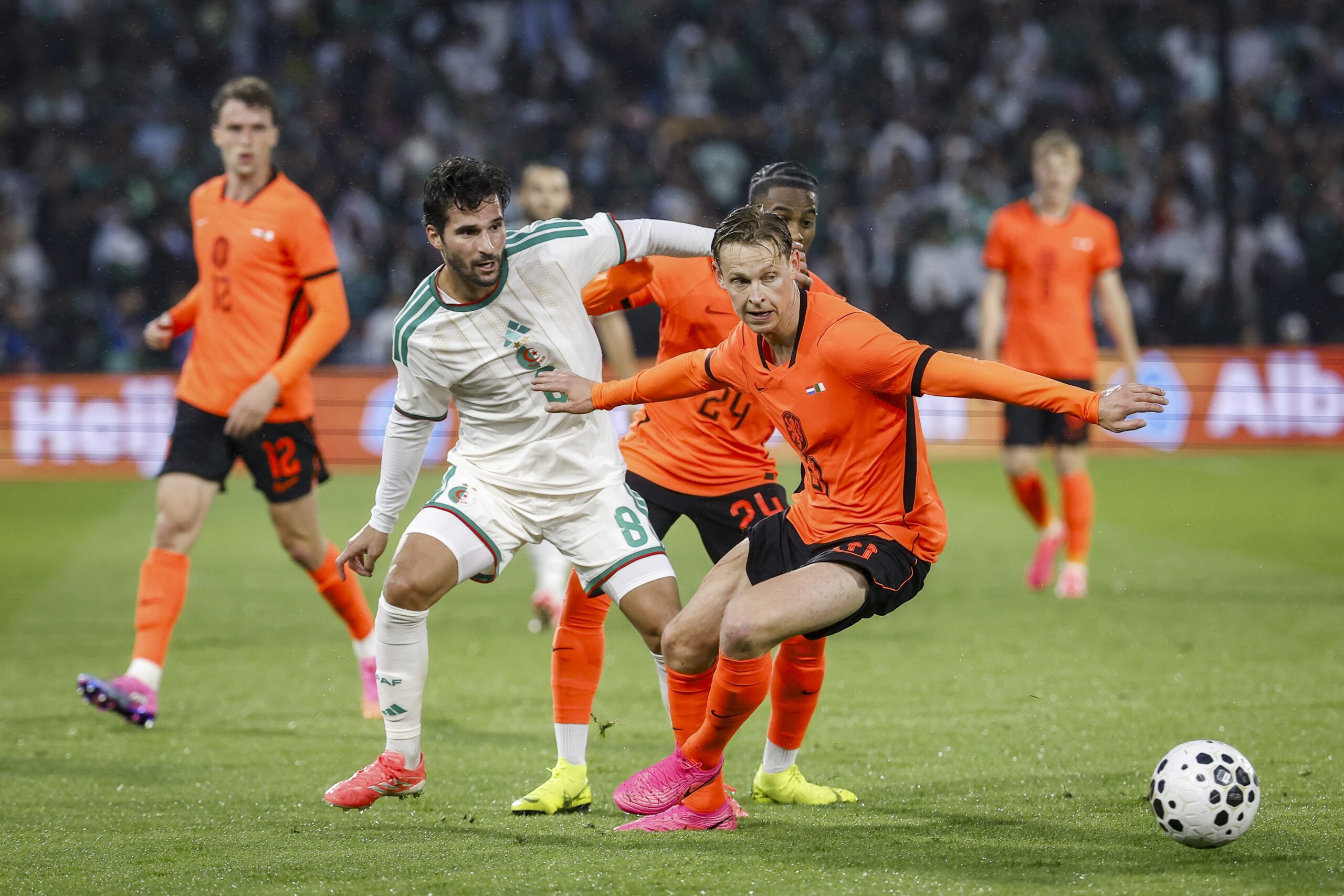
See more DutchNews articles in your Google search results
See more DutchNews articles in your Google search results
Add as a favourite source on Google Add DutchNews as a favourite source on GoogleThe mood among Dutch football fans leading into the World Cup is thick with anxiety.
As usual, the Netherlands are classed as dark horses for the tournament: number eight in the bookmakers’ ranking of potential winners, with a modest but respectable 3.7% chance of lifting the World Cup for the first time.
But domestically, injuries to key players, a tricky draw and lacklustre performances in the build-up games have contributed to the sense that the 2026 vintage is not so much a clockwork orange as a custom-kit model put together from spare parts.
Oranje wrapped up their preparations last week with a 1-0 defeat to Algeria in Rotterdam and a 2-1 win over Uzbekistan in an empty stadium in New York that required two penalties, the second in the final minute of stoppage time.
Head coach Ronald Koeman called the lack of cutting edge a “headache” after watching his forward line of Donyell Malen and Crycensio Summerville contrive to miss a hatful of chances, while Uzbekistan equalised in the last five minutes with their only shot on target.
Pressing problem
Steven Minten, who specialises in tactical analysis for Voetbalprimeur, identified a lack of pressing as Koeman’s main problem, although he added the results were “a little bit misleading”.
“Oranje had the better chances in the two games, but it was fairly easy for their opponents to contain them, and that’s the same problem we’ve seen in the qualifiers,” he said.
“We talk in tactical terms about doubling up, so that when a player is in a one-on-one situation the wide player should be coming back to cover, but when Algeria scored Justin Kluivert was still standing up front.”
Koeman has been notably restrained in his assessment of his team’s hopes. When asked at the press conference to announce the 26-man squad whether Oranje could bring home the trophy, he replied: “Everything will have to go our way if we want to go far.”
It was a statement that reflected the passivity in the team, says Auke Kok, who wrote the definitive account of the 1974 team, Wij waren de besten (We were the best). “It’s as if they’re looking for help from higher powers or good fortune,” he says.
No panache
“The Netherlands has been playing bland football for years. We had a couple of good games against Spain in the Nations League, but it’s been years since we’ve beaten a top nation.
“There’s no panache, no bravado. A team needs willpower and aggression. The fact that Uzbekistan could score in the last minute is a sign of a kind of lethargy.”
On paper the Dutch have one of the stronger squads, says Kok, pointing out that 14 of the 26 players ply their trade in the English Premier League. But many of them have been struggling for form and fitness.
Liverpool’s disappointing second season under Arne Slot cost the Dutch coach his job and took its toll on the livewire Cody Gakpo, while his clubmate Jeremie Frimpong was left out of the squad altogether.
Oranje’s captain, Virgil van Dijk, has looked fragile at times at the heart of Liverpool’s defence, but his leadership qualities and heading ability make him irreplaceable for Koeman.
Midfielder Tijjani Reijnders has fallen out of favour at Manchester City, despite a strong start after he joined from AC Milan for €55 million last summer, and there are rumours the club is preparing to offload him to Spain or Italy.
He faces a challenge for his place from Teun Koopmeiners, who is himself heading for the exit at Juventus after failing to reproduce his shimmering form for Atalanta in the last two seasons.
Key injuries
Koeman’s lengthy injury list has grown in the last week with the withdrawal of Jurriën Timber, who had an outstanding season at the centre of Arsenal’s defence until he sustained a groin injury in March.
First-choice goalkeeper Bart Verbruggen is another fitness doubt after he fell awkwardly during the match against Uzbekistan and was taken off nursing his hip.
Koeman has also lost the experienced defenders Stefan de Vrij, who was injured while playing for Internazionale on the final day of the Italian league season, and Matthijs de Ligt, who underwent back surgery last month.
Similar problems abound in midfield, where Xavi Simons is missing after tearing an anterior cruciate ligament in April, blunting the team’s cutting edge, while the absence of PSV’s Jerdy Schouten deprives Koeman of a valuable anchor.
Frenkie de Jong returned to Barcelona’s first team in March, but is yet to play a full match and wore strapping around his troublesome ankle against Algeria and Uzbekistan.
Up front, the country’s all-time top goalscorer, Memphis Depay, has barely played since injuring a thigh muscle in March and is unlikely to start the opening match against Japan.
Malen revival
Yet the players who remain are not short on quality or experience. Gakpo showed flashes of his old confidence in the warm-up games, pulling strings on the left-hand side and setting up chances that should have produced more goals.
Donyell Malen has been given a new lease of life since joining Roma on loan from Aston Villa in January, scoring 14 goals in 18 games.
Crysencio Summerville has shown verve and enterprise on the right since making his debut against Algeria, while Jan Paul van Hecke’s solid defending suggests the Dutch may not miss Timber as much as some fans fear.
Timber’s absence is, however, likely to limit Denzel Dumfries’ opportunities to use his speed and penetration on the right flank, says Minten. “The Netherlands basically play with a three-man defence so that Dumfries can get forward, but Van Hecke is not as good as Timber at moving out wide.”
Japan test
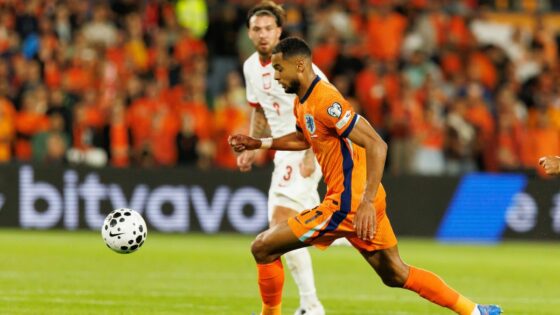
The Dutch open their campaign with an awkward tie against Japan, who will fear nobody after defeating Spain and Germany in Qatar four years ago before losing to Croatia on penalties.
Five of the Japanese players are based at Eredivisie clubs, including the league’s top scorer last season, Feyenoord’s Ayase Ueda, and the mercurial Koki Ogawa, who was instrumental in NEC’s charge to third place.
Oranje must also get past unpredictable but dangerous Sweden, who boast a forward line of Viktor Gyökeres and Alexander Isak, and Tunisia, who went through their African qualifying campaign without conceding a goal.
If they finish in the top two, their likely second-round opponents are either Brazil or Morocco, two teams ranked in the world’s top 10. A clash with the African champions will have the added spice of pitting Oranje against players such as Noussair Mazraoui: born in Leiderdorp, raised by the Ajax academy and now a star for the country of his forefathers.
Strong defence
Despite his reservations about recent performances, Auke Kok says the Dutch have the potential to go far if they shake off their timid playing style and find some form in the group games.
“They could be something like the team of 2010,” he says. “That wasn’t a brilliant team, although we still had Robben, but they had great fighting spirit under Bert van Marwijk.
“Our defence now is definitely better; actually it’s one of the best in the tournament. If they can get better communication between the defence, midfield and forwards they could be a dangerous team. Just like in 2014 they could cause a few upsets with quick players like Malen and Frenkie de Jong’s clever passing.”
Kok says fans who expect the imposing, flowing football that was the hallmark of the teams of the 1970s will be disappointed. “If you want to dominate games the way the fans like to see, you need a better forward line,” he says. “They’ll play 5-3-2, sit deep and use their fast attackers.”
Quarter-final hopes
Steven Minten also believes Oranje have the potential to go far if they build some early momentum. “I think they can make it to the quarter-finals and maybe even the semi-finals, but they’ll need a bit of luck.
“If they win the group they’ll be up against Morocco, who aren’t an exceptionally strong opponent, so if everything clicks they could do reasonably well. But if they don’t win the group and come up against Brazil, even though it’s not a great Brazilian side, it’ll be very tough for them. They need to feel things are going their way.”
Thank you for donating to DutchNews.nl.
We could not provide the Dutch News service, and keep it free of charge, without the generous support of our readers. Your donations allow us to report on issues you tell us matter, and provide you with a summary of the most important Dutch news each day.
Make a donation