New EU migration rules “will add to strain” on Ter Apel centre
See more DutchNews articles in your Google search results
See more DutchNews articles in your Google search results
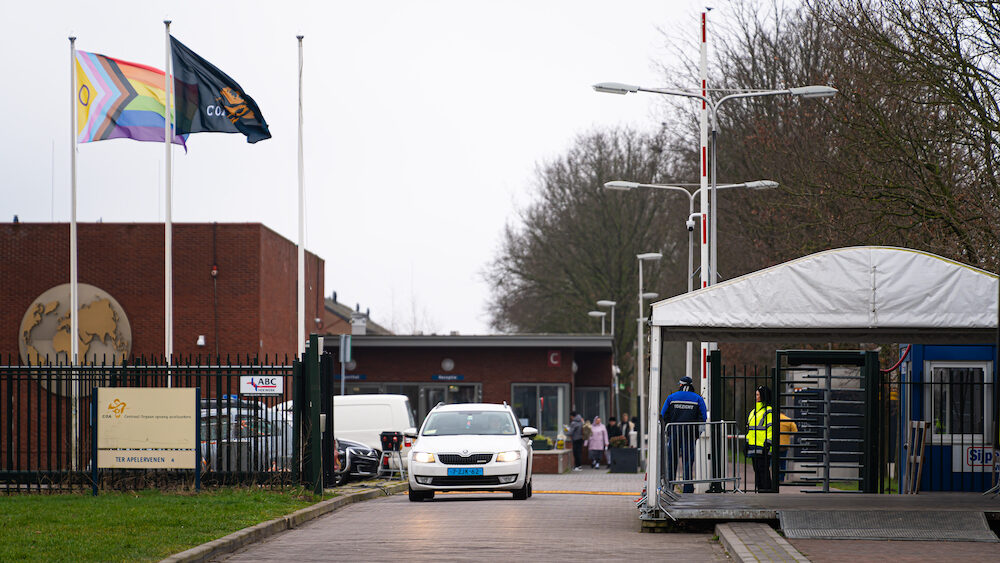
Add as a favourite source on Google Add DutchNews as a favourite source on GoogleThe overcrowded refugee reception centre in Ter Apel is likely to come under further strain when new European immigration rules take effect next month, the agency responsible for housing asylum seekers has warned.
The EU Migration and Asylum Pact includes a new registration scheme that is only being installed in Ter Apel because the overspill facility in Budel is due to be shut down.
From June 12 new migrants will have to be accommodated in Ter Apel, which is already around 10% above its maximum capacity of 2,000 people. The accommodation agency COA is being fined €50,000 for every day it goes over the limit.
The COA said it was in talks with the asylum ministry and the immigration service IND to retain Budel as an alternative location, but there is no mechanism for processing new arrivals there under the new system.
The EU migration pact is designed to speed up asylum procedures in the long term, partly by requiring member states to deal with refugees from low-risk countries in safe locations outside the European Union’s borders.
But in the short term agencies fear chaos and further pressure as they adjust to the new reality. The IND has said it will prioritise new applications from 12 June, which could mean more delays for the 50,000 people on the waiting list now.
Longer delays
“That will definitely have an impact on the well-being of our residents and the living conditions in refugee centres,” a COA spokesman told NOS. “If one person gets a decision faster than somebody who’s been waiting for a long time, that can cause disbelief and tensions.”
The migration pact is also coming into force against a background of riots and unrest outside buildings where local councils want to house refugees in order to relieve the pressure on Ter Apel, which has led to some of the plans being scrapped or watered down.
The IND will have to process all asylum claims within six months, which will require a drastic reduction from the average waiting time in 2025 of 67 weeks, or more than 15 months.
Last year the IND made decisions in 1,500 asylum cases a month, far below the goverment’s target of 3,300. Around two-thirds of claims are now rejected, which takes more time because the service has to give extensive legal reasons.
Asylum minister Bart van den Brink said the Netherlands was on schedule to introduce the new rules, but acknowledged it was a challenging set of reforms.
“We are aware that the organisations that implement the rules are under huge pressure,” said a spokesman for the ministry. “In order to ensure that the migration pact is successfully implemented, we will make every effort to deal with applications within the stated shorter deadlines from the start date of 12 June.”
Thank you for donating to DutchNews.nl.
We could not provide the Dutch News service, and keep it free of charge, without the generous support of our readers. Your donations allow us to report on issues you tell us matter, and provide you with a summary of the most important Dutch news each day.
Make a donation