Dutch slavery toll five times official figure, book argues
Louis Gore-Langton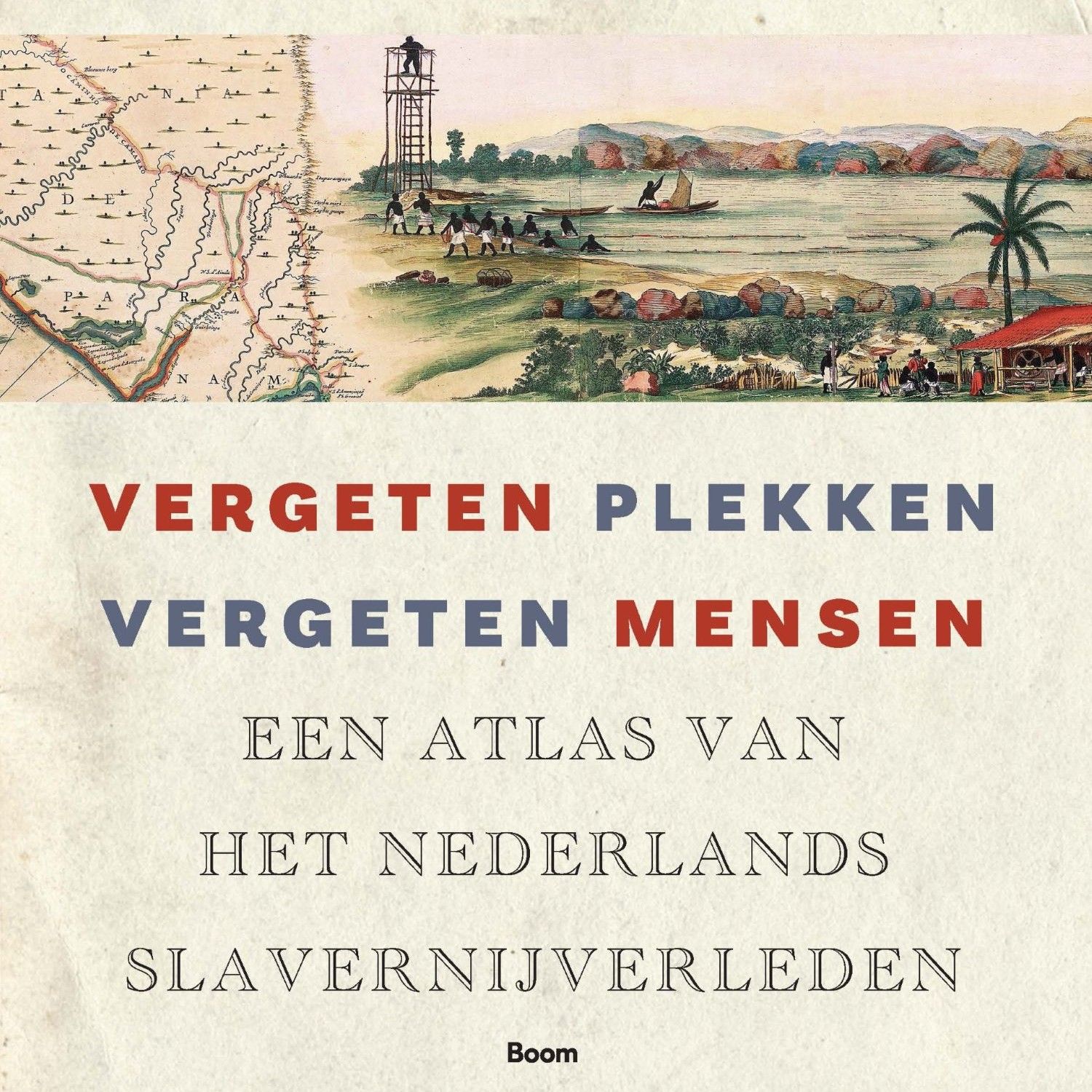
See more DutchNews articles in your Google search results
See more DutchNews articles in your Google search results
Add as a favourite source on Google Add DutchNews as a favourite source on GoogleAs many as 5.3 million people were enslaved in Dutch colonies between 1595 and 1914, according to new research that puts the figure several times higher than the 600,000 routinely cited in apologies by politicians, the cabinet and the king.
The official figure has been underestimated because it refers only to the transatlantic slave trade – leaving out the much larger Dutch slave trade across the Indian Ocean. It also discounts the successive generations of people who were born into slavery under colonial law.
The new estimate is set out in Vergeten plekken, vergeten mensen (Forgotten places, forgotten people) by investigative journalist Leendert van der Valk. His new book draws on demographic research at Radboud University Nijmegen and earlier work by historians on the Indian Ocean trade.
The book’s central argument is that Dutch slavery has been narrowed in public memory to slave trade, and within slave trade, to the Atlantic side. “When it comes to slavery, then it equals slave trade in our minds,” Van der Valk told DutchNews.
“Of course it’s not, because generation after generation was born in slavery.”
Beyond the Atlantic
Research published in 2015 by Matthias van Rossum at the International Institute of Social History estimated that between 660,000 and 1.1 million people were trafficked via Dutch-owned ports in the Indian Ocean, a trade on a similar scale to the transatlantic one but largely absent from Dutch national memory.
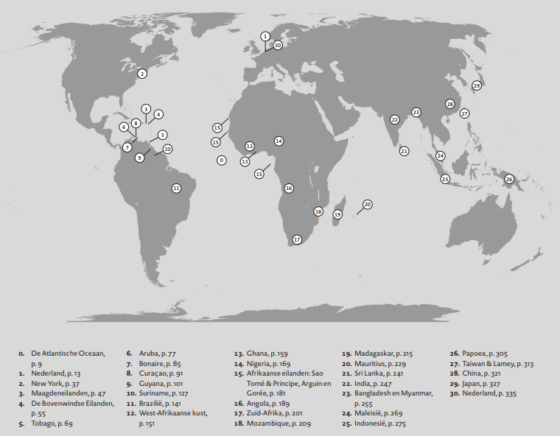
Dutch slavery extended well beyond Suriname and Curaçao, the two former colonies most familiar to people in the European Netherlands.
Tobago, the Virgin Islands, Taiwan, the coasts of India and parts of present-day Indonesia were also sites of Dutch slave trading and slavery. Most are absent from school curricula and omitted from official apologies.
High child mortality
The other group missing from the archives and the official figures, the book argues, is the children born into slavery. Dutch colonial law applied the principle that the child followed the mother, meaning every child born to an enslaved woman was enslaved at birth, including the children of slaveholders.
“People are in the archives when they are considered, when they have an economic value,” Van der Valk said. “That’s why we don’t see all those children that were born and never made it up to an age where they would have been recorded as having contributed to the wealth of the Netherlands.”
To estimate the missing numbers, the Radboud demographers worked from Suriname, where roughly half of children born into slavery died before their first birthday. The high mortality meant the colony depended on constant new arrivals rather than natural population growth, and the book applies the Suriname rate as a conservative baseline across other Dutch colonies.
The resulting figure is still on the low side, Van der Valk argues. He points to the United States, where an estimated initial 450,000 Africans transported across the Atlantic grew into a cumulative enslaved population of around 10 million – a multiplier of around 20. The Dutch estimate produces a multiplier closer to two.
Limited apologies
The mismatch between the official figure and the new research points to a wider pattern, the book argues. When the Dutch government and the royal family apologised for slavery in December 2022 and July 2023, ministers travelled to the former Caribbean colonies and to Suriname to deliver the apologies. None went to Indonesia or South Africa.
Then-prime minister Mark Rutte’s apology in December 2022 came two years after he had publicly argued that Dutch slavery was too far in the past to apologise for.
“Things changed because of the pushback that was going on,” Van der Valk said. “It shows how opportunistic it really is.”
Part of the reason there is little pressure to extend the apology to the Indian Ocean side is that there is no organised push from the disapora, Van der Valk says.
Many people of Indonesian heritage in the Netherlands are still working through the 1945-1949 war of independence war, where the euphemistic term “politionele acties”, or police actions, was long used to cover for the Dutch state’s excessive use of force.
Into the twentieth century
The book also extends the timeline of Dutch slavery far beyond the dates familiar from Dutch commemorations. The first enslaved person Van der Valk can identify in a Dutch context appears in 1595, while the last sites of de facto slavery in the Dutch realm persisted until 1914.
On Sumba, a Dutch-administered island that is now part of Indonesia, the 1860 abolition of slavery in the Dutch East Indies was never fully implemented. “Still now there are people there who are being enslaved,” Van der Valk said.
“Not the modern slavery we see in the mines of Congo or the stadiums in Qatar. But because your mother was a slave, you’re a slave.” This refers to the Marapu caste system of hereditary slavery, which survived Dutch rule and exists to this day.
Only ten of the book’s roughly 450 pages address the new figure. The remainder is descriptions of the lived experiences and stories of enslaved people in Brazil, Tobago, Taiwan, the Virgin Islands and the Indian coast – many of them children.
The book is being published by Boom, an educational publishing house in the Netherlands, chosen by Van der Valk in the hope it will reach the country’s classrooms.
Thank you for donating to DutchNews.nl.
We could not provide the Dutch News service, and keep it free of charge, without the generous support of our readers. Your donations allow us to report on issues you tell us matter, and provide you with a summary of the most important Dutch news each day.
Make a donation