“I shortened my name to make it easier for people to pronounce”
Brandon Hartley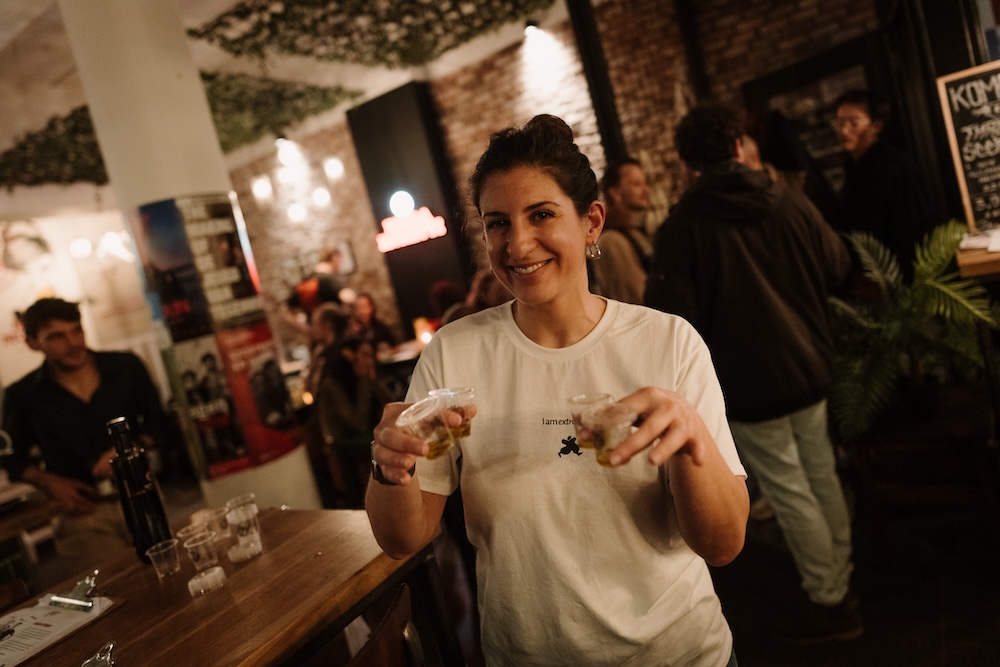
See more DutchNews articles in your Google search results
See more DutchNews articles in your Google search results
Add as a favourite source on Google Add DutchNews as a favourite source on GoogleOriginally from Marathon, Greece, Eleftheria Karyoti came to the Netherlands as a student. She likes the flat hierarchy of the Netherlands, loves Gouda cheese, and would like to meet three of the country’s top chefs.
How did you end up in the Netherlands?
I have the classic story of the student. I came here in 2010 to do a master’s degree in cultural economics and entrepreneurship at Erasmus University. A combination of things kept me in the Netherlands. I knew I wanted to live abroad for at least a few years. I wanted to see the world.
The other thing is that I really fit in. A couple of things made me feel like I was in the right place in the year after I landed. One thing was the flat hierarchy in the Netherlands, which really worked for me. I already saw that at the university when I walked into a class and the professor shook my hand and introduced himself with his first name. I was coming from Greece, where universities are very hierarchical and you only refer to your professors with their last name.
In classes there, you have to sit and listen. Here, you’re encouraged to talk, share your opinion, and think for yourself. It was really great. The other thing was the directness. I was always getting in trouble in Greece, so it was really good to be here and get to be myself.
The final thing is when I was in a grocery store and there was a trans woman behind me. Nobody looked at them in a strange way. For me, seeing them being able to behave like a normal person and do their thing was, wow. You can be yourself here. That was very liberating.
How do you describe yourself – an expat, lovepat, immigrant, international?
As an expat, I would say. I looked at the other options. Lovepat, no, because I did not come here for love, but I did find love eventually. Immigrant? No, because I connect immigration more with when you have to go abroad because things are really bad.
Things were bad, but not that bad. The Greek crisis did hit at one point, but I was out before that became really big. For me, it was a choice. I’m a knowledge worker so, in that sense, I consider myself an expat.
How long do you plan to stay?
These past few years, my approach has changed. I thought I would be here the rest of my life, but I’ve been missing home very much. At the same time, there are so many good things here and I have a hard time letting go.
I’m currently trying to find a way where I could spend, let’s say, 70% of my time in Greece and 30% in the Netherlands. I want to maintain some sort of connection with the Netherlands, ideally professionally, which would allow me to come back often to see my friends and Rotterdam.
Do you speak Dutch and how did you learn?
I do speak Dutch, but I would not consider myself a fluent speaker. I was told recently I’m between a B2 and C1 level. In the beginning, I took some courses, but they only took me so far. I didn’t have to learn Dutch because I was always working in international environments.
A combination of living here, having Dutch boyfriends, and communicating with their families helped me. While I worked in international environments, 70% to 80% of my colleagues were Dutch and spoke Dutch mostly. Eventually, I worked at Rabobank, a very Dutch company, and meetings there were held in Dutch.
Now with my business, Lelea Olive Oils, I’m making the conscious decision to speak more Dutch and practice, because I want to be able to reach a Dutch audience and speak to them about olive oil in their own language.
What’s your favourite Dutch thing?
I’ve worked at start-ups, tech companies, and later on international corporates. There was also the university experience. The flat hierarchy in all of them is my favourite thing. The fact that you’re encouraged to participate, to share your opinion, and disagree. You don’t have to say ‘sir’ all the time either. I like that.
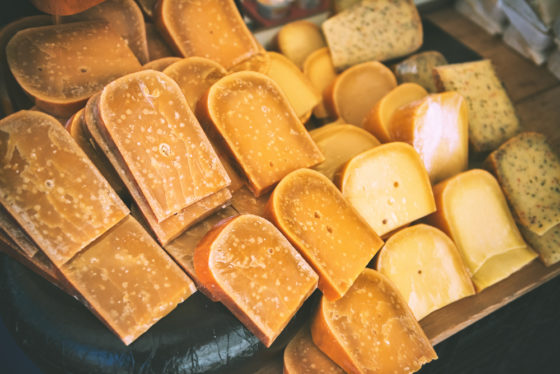
Oh, and I like cheese. I really love the oldest Gouda cheese I can find. I love the flavour, that caramel, and the crystals in your mouth.
How Dutch have you become?
I think I’ve actually taken a few steps back on this one and consciously. There was an identity crisis some years ago about who I actually am. As expats, we don’t really belong in our home culture or the host culture. We’re somewhere in between.
I felt like I’d really molded myself to belong here, which meant I shortened my name, for example, to make it easier for people to say and pronounce it. I was totally following the full agenda, planning things months ahead, but I was really missing spontaneity and just seeing what your week will bring sometimes.
I actually really like my name. I like how it sounds. I like what it means. There is a reason why I was named like this and I started to ask people to call me by my full name.
So how Dutch? Yeah, I’m not sure how to answer this, but there are things I’ve kept from Dutch culture. I still think I fit in quite well, with the directness at least. The Dutch can be quite sober. They don’t show their emotions, they try to keep calm, which is kind of nice. In some situations, it’s useful, but I miss showing enthusiasm about stuff or allowing yourself to show grief.
I’m kind of owning that more, but I can get away with it. People can say, ‘Oh, here’s the Greek one. Of course, she’s Greek. She’s going to do things like that.’ So, in that way, I use it to my advantage. I don’t know how it would be if a Dutch person started doing that.
Which three Dutch people (dead or alive) would you most like to meet?
I’ve gone for three chefs who are leading sustainable Dutch cuisine in ways that are vegetable focused with no waste and locally-sourced ingredients – Joris Bijdendijk, Emile van der Staak, and Syrco Bakker.
I would want to ask each of them what they think of the state of Dutch cuisine today, what do they think of its possibilities, how can we make Dutch people excited about their own food, and what are the most exciting producers in the Netherlands that they use. Those sorts of questions.
What’s your top tourist tip?
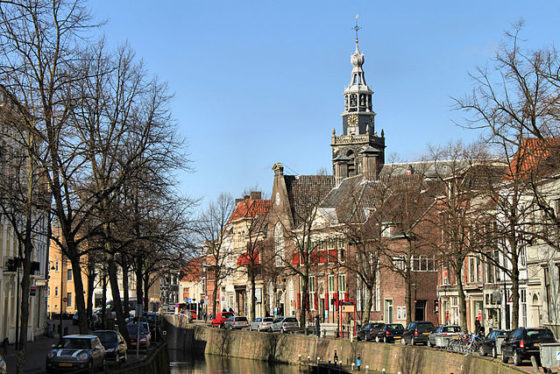
My favourite thing to do with visitors is get on a bike. We go from west Rotterdam to Delft by bike. It’s a beautiful route and it takes about one hour. It goes through the typical Dutch countryside, kind of idyllic with the farms and the horses and the sheep and some beautiful, cute houses. There’s the canals and then you end up in Delft and can explore there, of course.
This kind of route will give you an idea of the Dutch landscape and it’s a non-touristy thing to do. It also gives people the experience of cycling here.
Tell us something surprising you’ve found out about the Netherlands.
How many types of Gouda cheese there are. In Greece, you can only find one type of Gouda. It’s a very simple kind of yellow cheese that melts in your toastie. That’s what we know. But here, you have the very young ones and there are different levels. You can go all the way up to the very fantastic old Goudas.
But, of course, the cheese landscape here is so much bigger than just in Gouda.
If you had just 24 hours left in the Netherlands, what would you do?
I would start the day by walking around Rotterdam and go to the spots that have some sort of significance for me in terms of memories. The places I would go when I was a student, for example, and try to get the people I met during these years to go along with me.
I would want to end the day with a big party with all of my friends on a rooftop terrace overlooking the skyline of the city.
Eleftheria was talking to Brandon Hartley. Click here to visit the website for Lelea Olive Oils and learn more about its products.
Thank you for donating to DutchNews.nl.
We could not provide the Dutch News service, and keep it free of charge, without the generous support of our readers. Your donations allow us to report on issues you tell us matter, and provide you with a summary of the most important Dutch news each day.
Make a donation