Local parties thrive as voters lose trust in mainstream politics
Gordon Darroch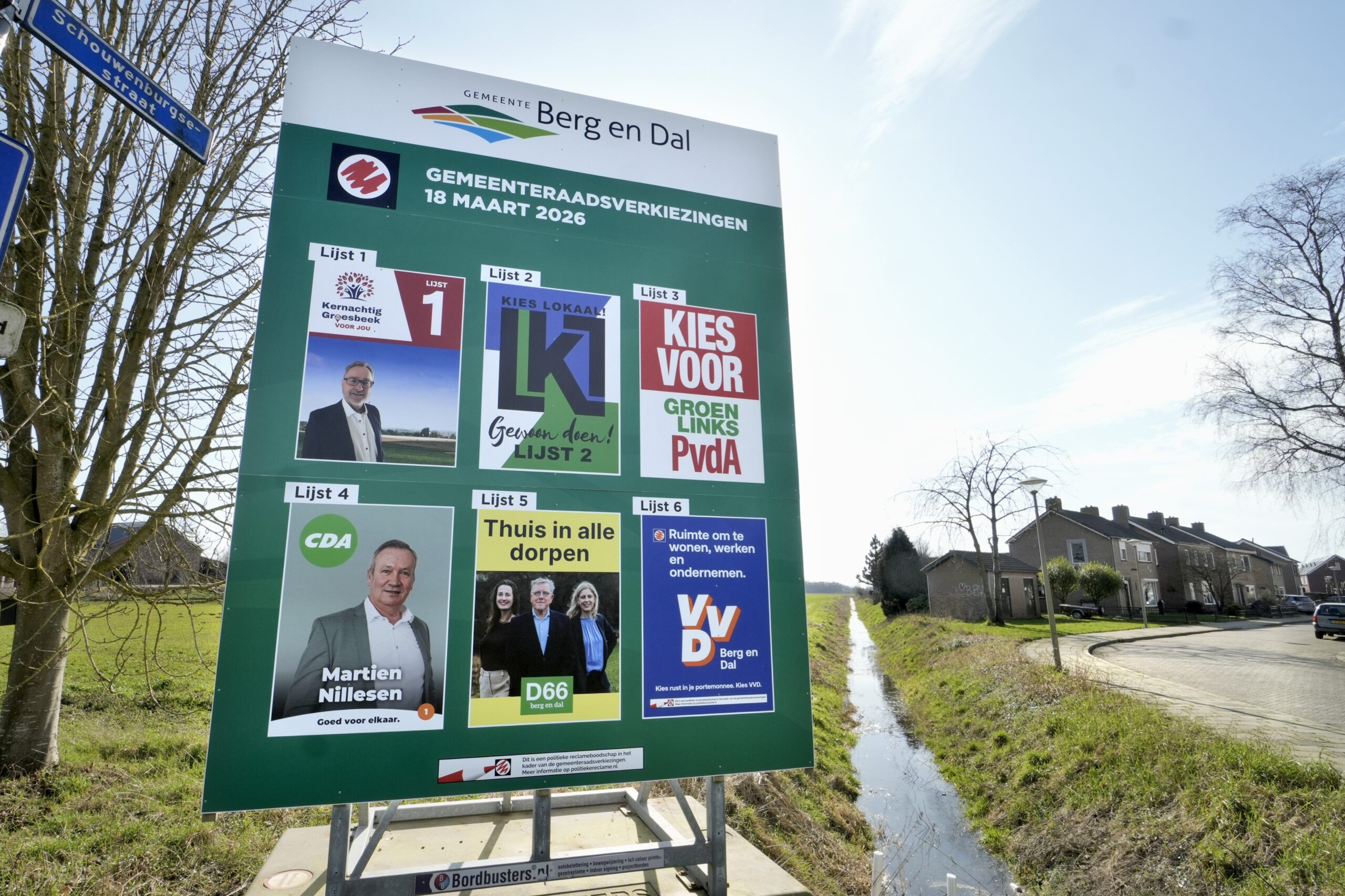
At the last general election in October, the 150 seats in the lower house of parliament were split no less than 15 ways. But in this week’s local elections, the lion’s share of votes is expected to go to parties that are only standing in one municipality.
Local parties have become the dominant force in Dutch local politics in the last 20 years. At the last local elections in 2022 they won 36% of the vote, three times as many as the largest national party, the right-wing liberal VVD.
They have also established themselves on council executives, appointing more than 500 aldermen and forming coalitions with national parties such as VVD, the Christian Democrats (CDA) and the Green-Labour alliance GL-PvdA, even as they chip away at their voter bases.
Opinion polls suggest the trend is set to continue this year, with an Ipsos I&O poll projecting a 34.5% vote share for local parties. GroenLinks-PvdA, who stood as separate parties in 2022, are in second place on 17.8%.
Simon Otjes, associate professor of politics at Leiden University, says the popularity of local parties partly reflects disaffection with mainstream politics. Their rise has coincided with a decline in turnout at local elections, with fell below 50% for the first time in 2022.
- What you need to know about the local elections on March 18
- A quick guide to the biggest political parties
The collapse of Dick Schoof’s government after less than a year in which the four-party right-wing coalition was paralysed by in-fighting has further eroded public trust.
“People who have no trust in national politics are more likely to vote for a local party, and there is every reason to think that the chaos in The Hague in the last two years has strengthened those feelings,” Otjes says.
Local parties tend to appeal to voters who back right-wing parties in national elections because they offer the chance to protest against the established parties; Otjes’ research notes that they use “a relatively large amount of anti-elitist rhetoric” in their election literature.
“The average local party is on the centre-right, anti-elitist or protest driven, and focused on local issues and problems,” says Otjes. “But there is a lot of diversity within that: student parties, parties for younger or older voters, Christian parties and explicitly progressive or left-wing parties.”
VVD breakaways
Some local factions are spin-offs from the established parties, a pattern also seen in The Hague, where parties such as Denk, Nieuw Sociaal Contract and even the PVV were founded by MPs who broke away from the traditional “big three”.
This time Otjes has seen several new parties appear that have broken away from the VVD, following unrest in the party over leader Dilan Yesilgöz’s decision to form a coalition with the PVV in 2023.
“In the last two years we’ve seen a lot of debate within the party about the line it’s taken and the co-operation with the radical right,” he says. “But it varies a lot between members who think the party has gone too far to the right and those who think it’s too soft.”
Local parties have also benefited from the fact that right-wing populist parties such as the PVV are not on the ballot in many municipalities.
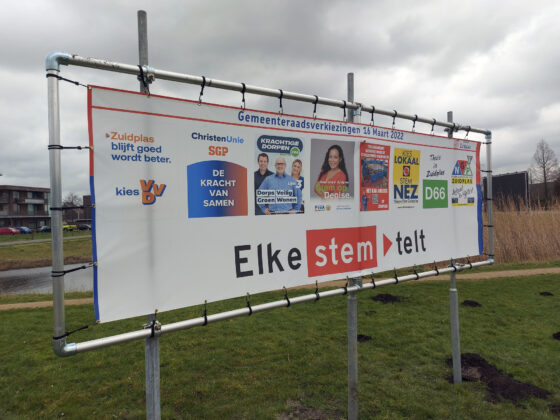
Geert Wilders’s party won nearly a quarter of the vote in the 2023 general election and more than 20% last time, is fielding candidates in just 40 of the 342 municipalities. The farmers‘ party BBB is standing in 29, while JA21, supported by around 8% of voters in national polls, is on the ballot for just seven councils.
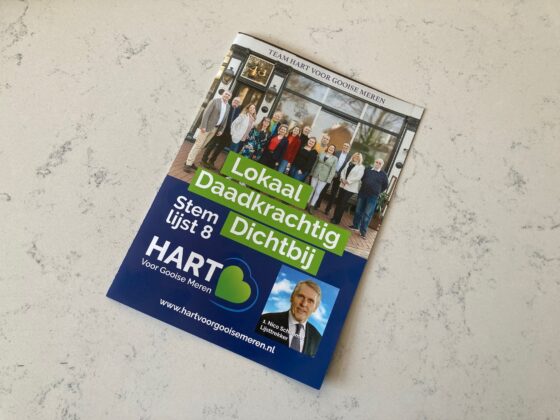
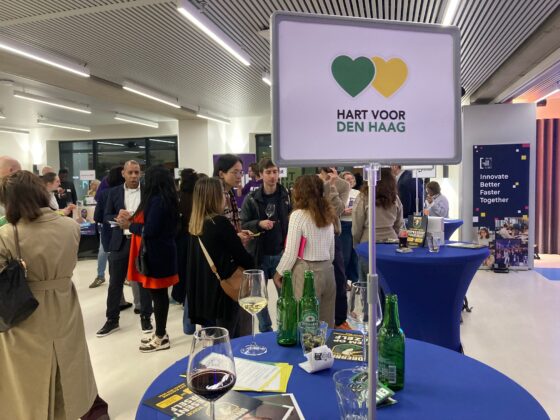
Even where parties such as the PVV do stand, they can struggle to compete with well-established local parties. In The Hague, Hart voor Den Haag, founded 12 years ago by a former PVV MP, Richard de Mos, is the largest party on the city council and polls indicate it could win 14 of the 45 seats this time, while the PVV is likely to take two at best.
Troubleshooters
Otjes says around 40% of local parties have a “localist” character, typically including the name of the municipality in their name. They characterise themselves as non-ideological troubleshooters responding to the issues voters raise on the doorstep – an approach De Mos has described as ombudspolitiek.
Local parties are able to build strong networks with the community and reach voters who are disillusioned with national politics, says Herman Luitjes, who co-founded Wij Putten in Gelderland in 2009 and is the party’s lead candidate. Wij Putten has won the most seats at the last three elections and currently has four councillors.
“We have more freedom to choose our own policies,” he says. “National parties have a national stamp and a policy agenda that their local branches have to follow.
“If they’re on the rise nationally, the local party benefits, but if the national party is in trouble, it’s going to reflect badly on the local party even if they’re strong in the area.”
Monopoly in Barendrecht
In some places local parties have eclipsed the traditional big parties such as the VVD, PvdA and CDA.
Echt voor Barendrecht (EVB), based in the Zuid-Holland municipality with a population of just under 50,000 on the southern edge of Rotterdam, won 20 of the 29 council seats in 2022, a rare example of a single-party administration in the consensus-based Dutch system.
“When we came on the scene the VVD had nine seats,” says Roeland Bol, the party’s lead candidate. “Now they’re down to one.”
The party was formed in 2013 by politicians who broke away from the VVD and PvdA, partly in protest at a proposed merger with two neighbouring municipalities. It won the largest share of the vote in the elections the following year, winning nine seats and forming a coalition with the liberal parties D66 and VVD.

Four years later it grew to 14 seats, one short of an outright majority, but ended up in opposition after the other parties formed a six-way coalition. But in the last elections nearly 60% of voters backed EVB, allowing the party to run the administration alone.
EVB has focused on delivering a 10-point plan addressing local concerns about household waste collections, more police on the streets and free public transport for pensioners, in a community with a relatively high proportion of older residents.
“It’s a clear programme. People can see if our goals have been achieved or not,” says Bol, who has been alderman for social affairs for the last four years.
Crowded field
The paradox of the party’s electoral success is that voters now see it the establishment, says Bol. Two new local parties have emerged for this election to challenge Echt voor Barendrecht’s supremacy, one of which, Barendrechts Belang, was founded by two councillors who broke away from EVD.
“If we don’t replace a paving slab in time or someone can’t find a parking space near their house, it’s because of EVB,” he says. “It’s not as black and white as that, of course, but in the minds of a lot of residents it is.”
The picture varies widely across the country: while The Hague and Rotterdam have strong local parties with high-profile candidates, in Amsterdam the national parties continue to dominate in a crowded field with 35 lists of candidates.
In some municipalities several local parties are competing against each other, such as Amersfoort, where voters can choose between Amersfoort 2014, Beter Amersfoort, Burger Partij Amersfoort, ECHT Amersfoort and KeiHart voor Amersfoort.
Funding mismatch
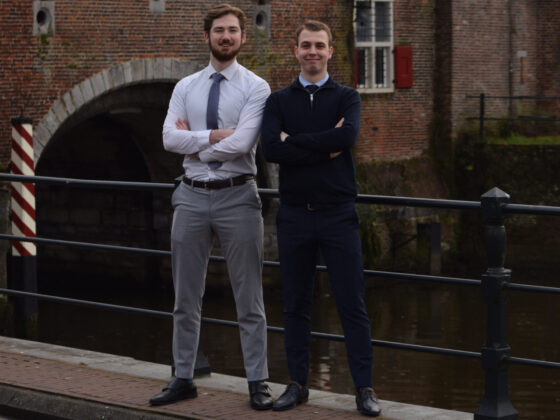
Dani Meima and Joël Westerneng started ECHT Amersfoort this year because they felt the existing parties were not doing enough for the most vulnerable residents.
“People tell us they’re thinking about not voting, which is hard to hear. But whether you have eight parties in an election or 18, if people don’t feel they’re being represented then it’s not good for democracy,” says Meima.
“We think participation and the social safety net are very important. We want to start a pilot for entry-level jobs for people who are currently living on welfare, who want to work and contribute but often find it difficult to get into the jobs market.”
A constant bugbear for local parties is that they are not eligible for state funding, which is restricted to parties that have seats in the senate or lower house of parliament and at least 1,000 paying members.
The previous government had drafted a law allocating €8.15 million in subsidies to regional and local parties, but the cabinet fell before it could be passed.
As a result, local parties are dependent on donations or contributions from their elected officials, who often agree to give a share of their councillors’ allowance to cover expenses such as campaigning, printing flyers and organising election events.
“It’s not a level playing field,” says Roeland Bol of Echt voor Barendrecht. “National parties such as the VVD and D66 can afford to put up billboards around the country, and we see them in Barendrecht as well. Local parties like us can’t do that.”
Dani Meima says running an election campaign for a local party involves a huge investment of time. “I have my own admin business so I can set my own hours, but it’s a lot of hard work and not much sleep,” he says.
Not in The Hague
Otjes says another concern is the lack of transparency around donations, which the abandoned law was intended to address by making parties publish details of their finances in order to qualify for state funding.
“People try to buy favours by giving money to local parties,” he says. “One point of concern is that it gets less attention: if D66 or the CDA receive a big donation it’s news, but if it goes to a local party it’s not such big news.”
Unlike the national parties, local groups cannot appeal to the party hierarchy when they have to liaise with provincial and national governments, but that can work to their advantage, says Otjes.
“For some national parties, especially if they’re in opposition, they might be in contact with their colleagues in parliament, but they don’t have access to the cabinet,” he says. “Local parties have the advantage that they’re completely neutral and aren’t involved in the political games in The Hague.”
Herman Luitjes of Wij Putten agrees: “I have 150 colleagues sitting in The Hague and 55 in the province of Gelderland. I’m not limited to my own party’s members. But it does mean that we have to spend time developing our relationships with provincial assembly members and MPs.”
Local parties have also helped to bring a new generation to politics, with several students’ representatives winning seats in Groningen, Leiden and Delft. Dani Meima of ECHT Amersfoort is 21 while his co-founder, Joël Westerneng, is 22, but he admits that getting young people engaged in politics is a challenge.
“People who are 18, 19 or 20 have just started studying and want to leave home, but that might take 10 years. If you want to do it sooner you need to make the right political choices.”
Roeland Bol says: “Our youngest candidate has just turned 18. If he wanted a life in politics he’d be better off joining a national party, but he didn’t choose that. We don’t want careerists, but people who want to make a difference for our town.”
Thank you for donating to DutchNews.nl.
We could not provide the Dutch News service, and keep it free of charge, without the generous support of our readers. Your donations allow us to report on issues you tell us matter, and provide you with a summary of the most important Dutch news each day.
Make a donation