Local election watch: Groningen is grappling with growth
Brandon Hartley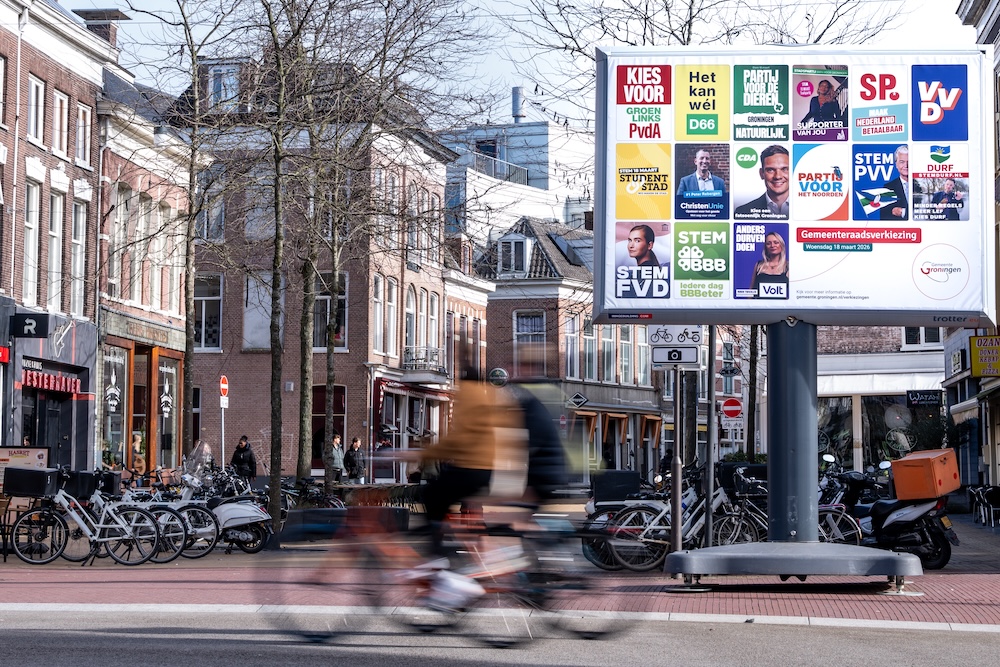
The Netherlands goes to the polls to vote for 342 local councils on March 18 and Dutch News is focusing on the campaigns in 10 towns and cities where most internationals live. The average age in Groningen is 36, so the focus of its upcoming election largely centres around education and housing.
It should come as no surprise that housing is the hot topic of the upcoming municipal elections in Groningen, as it is in other major metropolitan centres around the Netherlands. ‘
The “Capital of the North” remains one of the youngest cities in the country in terms of its residents. The primary reason why? It’s home to two universities, the University of Groningen and the Hanze University of Applied Science, that together currently have about 60,000 students.
Those students, who comprise an estimated 25% of the total population, need rooms and there are plenty of exploitative landlords eager to fleece them. Housing remains expensive and all too limited for many other types of residents as well.
Looking beyond the real estate and rental markets, the thirteen parties vying for the 45 seats on Groningen’s council are also focusing on topics like safety, liveability, and parking issues.
There are also ongoing concerns about the number of internationals in the city, lingering fears of major cuts to educational spending, and whether or not the amount of English courses being taught at the universities should be increased or reduced.
- What you need to know about the local elections on March 18
- A quick guide to the biggest political parties
Justine Jones, the current municipal councillor for the Groningen chapter of GroenLinks, is among the candidates striving to keep the city welcoming and open to internationals.
She’s tried to convince Groningen’s election officials to include English language letters with stempassen and print the words ‘this is your voting pass’ on the envelopes. She’s also courting international voters with posts in English on her own Instagram and TikTok accounts.
“It’s very important that we raise awareness about this, but I would also hope internationals are vocal about the fact that they are going to vote or have voted,” she said. “That will kind of break the cycle that we don’t have to do anything because they don’t vote so we can just assume they won’t vote.”
Her party seeks to increase green areas in Groningen, and make it safer, in terms of both crime and tolerance for marginalised communities. GroenLinks also wants to provide free childcare for residents living in poverty and allow those living on assistance to earn additional income.
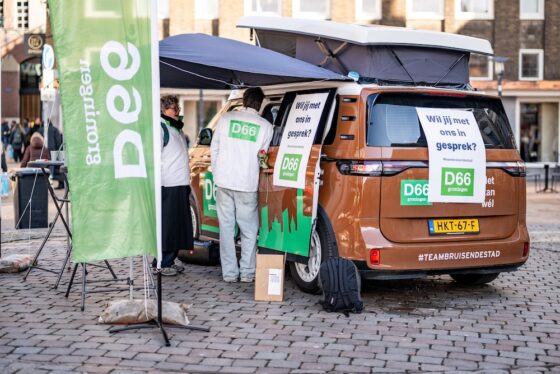
Morris Wouters, a campaign leader for D66, said his party is eager to keep the city green, vibrant, and friendly to internationals while finding effective ways to solve its housing crisis.
“The housing crisis is hitting many, but international students especially hard for various reasons,” he said. “They have even more difficulty finding suitable housing and often pay very high rents. Therefore, we must better protect international students against unfair rental contracts and simultaneously invest heavily in the housing supply by building more and making better use of the existing supply by relaxing cohabitation regulations.”
D66, he said, supports further developing the Zernike campus for additional student housing and is striving against cuts to higher education. While his party likes the idea of providing international students with Dutch lessons, it supports English language learning at the university level.
Positive forces
“D66 wants to move forward and collaborate with all the positive forces in politics,” he added. “Together, we’re working towards a Groningen where everyone is free, but no one is left behind. It’s possible.”
Anne Hensen, a candidate for the Christian Democratic party CDA, said investing in the community is her party’s focus.
“We want to tackle the housing crisis by focusing on fast execution, like in the villages or on the Zernike campus for young people,” she said. “The CDA wants to expand the knowledge-economy too by strengthening tech ecosystems in the region and aligning our education tracks with future needs.”
Her party also supports increasing funding for sports facilities and making using them free for Groningers up to 18 years of age. They’re also against paid street parking, which they feel discourages visitors as well as caregivers trying to assist the city’s elderly residents and others.
“It is the people who make Groningen special, the volunteers in sport clubs, family caregivers, and neighbours who take care of their street,” Hensen said. “We believe that communities, organisations, and bottom-up initiatives deserve more trust and less bureaucracy, as they are the main drivers of our society.”
Student party Student en Stad has three councillors on the 45-seat council and prides itself in having six internationals on its list of prospective councillors for this year’s elections.
“We have also made a conscious effort to ensure that our campaign and information are accessible to international residents,” says campaign leader Wieke van Heteren.
“Internationals are an important focus in our programme. In particular, we advocate for better and more accessible housing, including stronger protection against exploitative landlords and we focus on tackling the discrimination faced by internationals.”
Official figures
This pro-active approach is not visible everywhere. Council election officials didn’t respond to requests from Dutch News to find out more about voter statistics and if they’re working to get internationals to the polls. However, they have dusted off their ‘It’s Your City Too!’ campaign from the 2022 elections to help attract Groningen’s international electorate.
At the time of this writing, it seems largely limited to a single post on the city’s Facebook page published on 20 February and a series of electronic billboard adverts. Last time around, the campaign featured an English language voter’s guide, website, and social media posts in addition to posters in various locations.
Even less encouraging is the current version of the city’s elections website that lazily tells EU residents to just ‘right click’ to translate its content while evidently ignoring other internationals who can legally vote. But there is one page on International Groningen, a website that helps draw internationals to the city, that provides an overview of who can vote and how they can go about it.
Groningen key information
Current council executive: GroenLinks, PvdA, PvdD, SP, ChristenUnie
How many seats on the council: 45
Total number of voters: roughly194,000
Number of international voters: roughly 15,000
Local election information in English:
Eight of the 13 parties have online information available in English.
GroenLinks
PvdA
Student en Stad
D66 (their election programme, not specific to Groningen)
Partij voor de Dieren
Stadspartij 100% voor Groningen
SP (general information, not specific to Groningen)
ChristenUnie
CDA (general manifesto, not specific to Groningen)
Election events for internationals
The University of Groningen is hosting a meeting entitled “We need to talk about the municipal elections” on March 11 at USVA, Munnikeholm 10 from 7.30pm. Tickets (entrance is free) available here.
Thank you for donating to DutchNews.nl.
We could not provide the Dutch News service, and keep it free of charge, without the generous support of our readers. Your donations allow us to report on issues you tell us matter, and provide you with a summary of the most important Dutch news each day.
Make a donation