Coalition talks move on with meetings with nine smallest parties
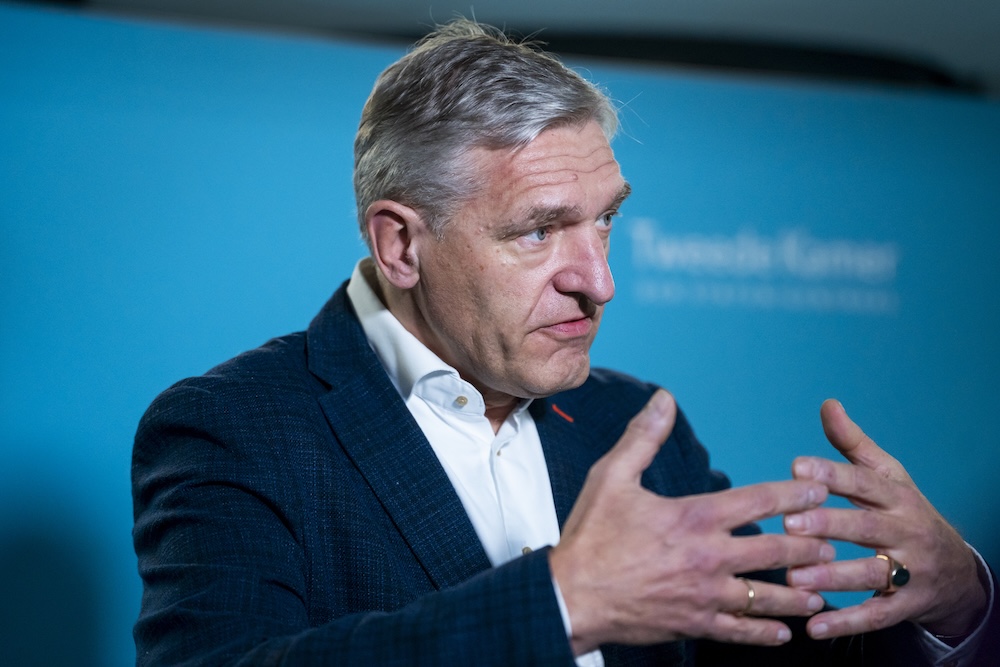
Cabinet negotiator Sybrand Buma is talking to the leaders of the nine smallest parties in parliament on Wednesday to gauge their response to the document by CDA and D66 setting out their ideas on five key policy areas.
The two parties described their plans for the next coalition government as an “outstretched hand” to other parties to discuss areas such as housing, immigration and the economy.
Leaders Rob Jetten of D66 and Henri Bontenbal of CDA said they had drawn up a “positive and ambitious agenda” with ideas for “today, tomorrow and the day after”, pointedly contrasting their approach with the infighting and stagnation that beset recent cabinets.
“We need clarity and decisiveness, but these have been replaced by hard words and confrontational politics,” they wrote in their introduction. “We seem to have lost the art in politics of disagreeing in a reasonable way and resolving them through compromise, with the national interest to the fore.”
Geert Wilders, leader of the far-right PVV party, duly responded with a scathing attack in two tweets, denouncing the plans as a “disaster for the Netherlands” and a “big middle finger”. The PVV is one of two parties, along with Forum voor Democratie, that D66 and CDA have ruled out including in a coalition.
Buma said the two leaders had made “tough choices”, but the real difficult choices will have to be made when other parties join them at the negotiating table.
The parties deliberately chose to leave out any details of how their plans would be funded, since money tends to be the main sticking point in forming coalitions. That allowed CDA and D66 to present a wish list that appeals to nearly all parties, but also forces all prospective partners to make concessions.
The programme includes ideas for the next cabinet term, but also long-term ambitions for “tomorrow and the day after”, emphasising the parties’ determination not to get bogged down in short-term thinking.
They aim to achieve the target of building 100,000 homes a year, which the last two cabinets set but failed to realise, with 21 large newbuild projects and extending existing suburbs, but D66’s flagship policy of building 10 new cities is conspicuous by its absence.
Dilan Yesilgöz, leader of the right-wing liberal VVD, said she was willing to work on “concrete solutions for the problems of our time”. “We will examine this document to see if there are enough points on which we can hold further discussions,” she said.
CDA and D66 included a commitment to phase out mortgage interest tax relief, which the VVD said it would protect during the election campaign, but the two parties did not specify any timetable.
They also want to retain the so-called “spreading law” for asylum seekers, giving the government the power to force local councils to accommodate asylum seekers, which divided the VVD.
Yesilgöz and the parliamentary party broadly opposed it, even though it was originally drafted by the former VVD asylum minister Eric van der Burg and supported by the party’s Senate faction.
Four parties
Yesilgöz is also continuing to rule out joining a cabinet that includes the left-wing alliance of GroenLinks-PvdA, which is the only combination of four parties that would have a clear majority in parliament.
GL-PvdA leader Jesse Klaver also said he was willing to negotiate on D66 and CDA’s plans, even though they were “not green enough”. The two parties agreed to maintain the current target of bringing nitrogen compound emissions below legal limits by 2035, even though D66 and GL-PvdA want to move this deadline to 2030.
Jetten and Bontenbal have hinted they are willing to consider a minority cabinet, which would allow them to form a three-party coalition with the VVD or include another right-wing party such as JA21.
Both leaders criticised the previous cabinet, a four-way right-wing combination in which none of the party leaders held ministerial posts, as a failed experiment. But Buma also said there was an “urgent” need for new leadership, since Dick Schoof’s caretaker cabinet of VVD and BBB only has 26 seats.
“We’re used to majority cabinets in the Netherlands that are more stable in terms of seats, but nobody wants to see an endless formation process,” Jetten said.
Thank you for donating to DutchNews.nl.
We could not provide the Dutch News service, and keep it free of charge, without the generous support of our readers. Your donations allow us to report on issues you tell us matter, and provide you with a summary of the most important Dutch news each day.
Make a donation