Japanese emperor lays war memorial wreath on Dutch state visit
See more DutchNews articles in your Google search results
See more DutchNews articles in your Google search results
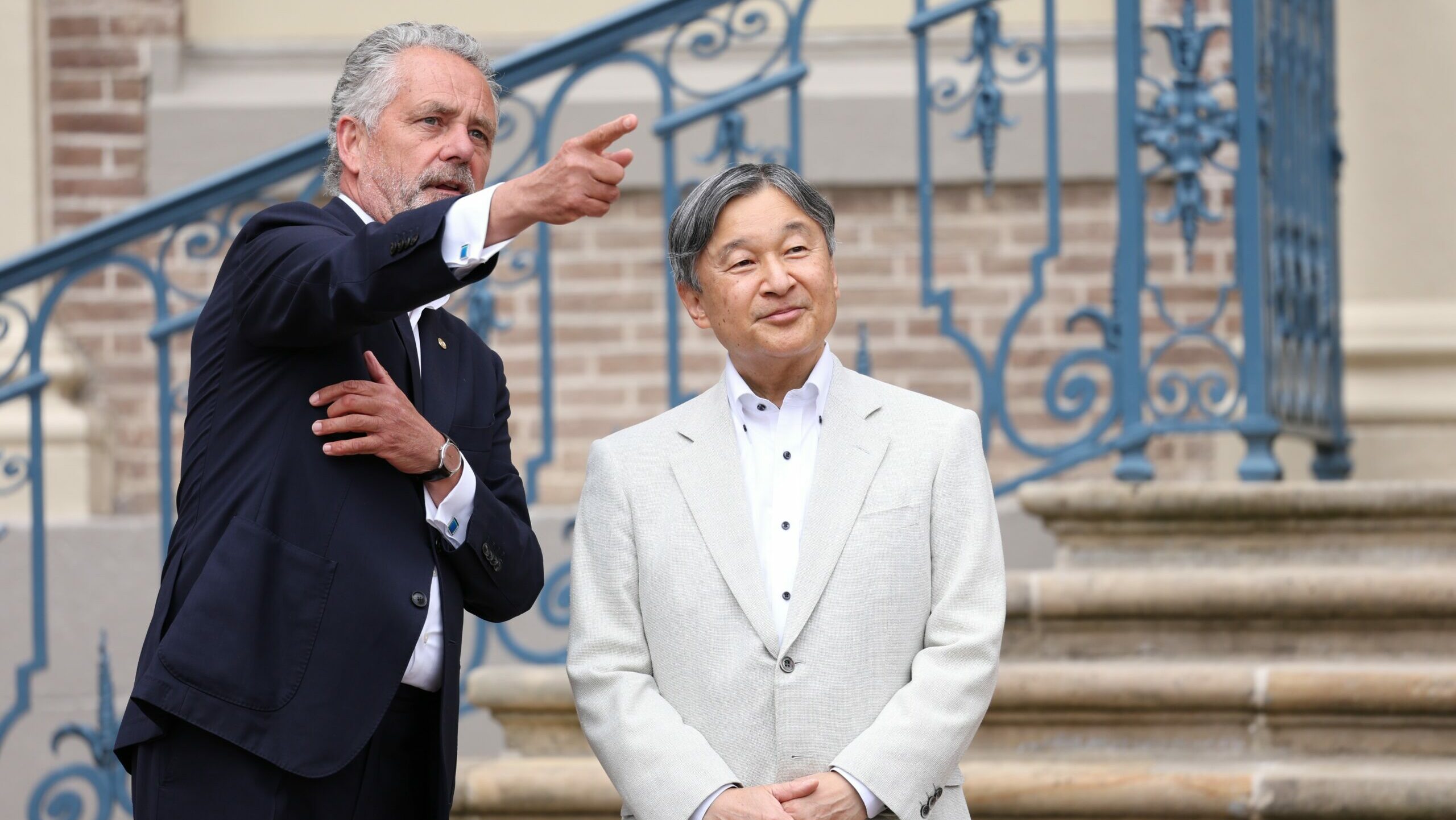
Add as a favourite source on Google Add DutchNews as a favourite source on GoogleThe emperor of Japan, Naruhito, has acknowledged the mistreatment of Dutch soldiers in POW camps as he begins a three-day state visit to the Netherlands.
Naruhito and Empress Masuko laid a wreath at the national war memorial in Dam Square, Amsterdam, at the start of the official visit on Wednesday.
Organisations representing former prisoners of war attended the wreath laying as part of their long-running campaign to secure a formal apology from the Japanese state.
The emperor placed the wreath beside an urn representing victims of the Japanese invasion of Indonesia between 1942 and 1945, when it was a Dutch colony.
He said he found it “deeply heartbreaking” that people had suffered “agonising experiences” during the war.
Period of hardship
“While there is a long history of friendship between Japan and the Netherlands and Belgium, we must not forget that there was also a period of hardship,” he said.
“In particular, I would like to turn my thoughts to the people in the Netherlands who, even today, continue to bear the pain of that time.”
Some 19,000 Dutch citizens died during the occupation and tens of thousands of soldiers were interned in Japanese camps in brutal conditions. Prisoners had carry out forced labour, while some women were forced into sexual slavery.
Peggy Stein, chair of Indisch Platform 2.0, told Dutch News the emperor’s choice of words showed recognition for the suffering of Dutch citizens during the war, but her organisation would continue to press for an apology.
“We attended in silence to remind the emperor of our message, and I had the sense that he was listening,” she said. “I hope the apologies will be forthcoming while there are still living survivors.”
Question of remorse
The wartime emperor Hirohito, who visited the Netherlands in 1971, had wanted to express “remorse” for the war in a speech in 1952, but was deterred by the government of the day, according to diary entries published after his death.
The emperor was allowed to retain his throne when the US occupied Japan after the war, but was stripped of all political power. Recent Japanese governments have been under pressure from right-wing parties not to make formal apologies.
Later on Wednesday, Naruhito will visit the Deltares institute in Delft, which specialises in flood safety, to watch a demonstration of its facilities to simulate the effects of waves and currents on flood defences.
In the evening he will attend a state banquet at the Royal Palace in Amsterdam, before travelling to The Hague on Thursday for lunch with prime minister Rob Jetten at the Mauritshuis museum.
Cherry tree
The emperor will view Johannes Vermeer’s Girl with Pearl Earring, which is being loaned to the Nakanoshima Museum of Art in Osaka for five weeks from mid-August.
On Friday his duties include planting a cherry tree in the Amsterdamse Bos and visiting the monument to the victims of the earthquake and tsunami that devastated parts of his country in 2011.
Relations between the Netherlands and Japan date back from 1600, when a Dutch merchant ship, de Liefde, arrived on the coast of Bungo, now known as Usuki.
The Dutch later established a trading post at Hirado, but were not allowed to settle on the mainland. For centuries they were the only Western country to have trade and diplomatic relations with Japan, where knowledge from the west was known as “Dutch studies”.
Naruhito has been emperor since 2019, following the abdication of his father Akihito, who is still alive.
He arrived in the Netherlands at the weekend and watched the World Cup match between the two countries with king Willem-Alexander and their wives. The match ended in a 2-2 draw.
View this post on Instagram
Thank you for donating to DutchNews.nl.
We could not provide the Dutch News service, and keep it free of charge, without the generous support of our readers. Your donations allow us to report on issues you tell us matter, and provide you with a summary of the most important Dutch news each day.
Make a donation