The Netherlands goes to the polls to elect 340 local councils
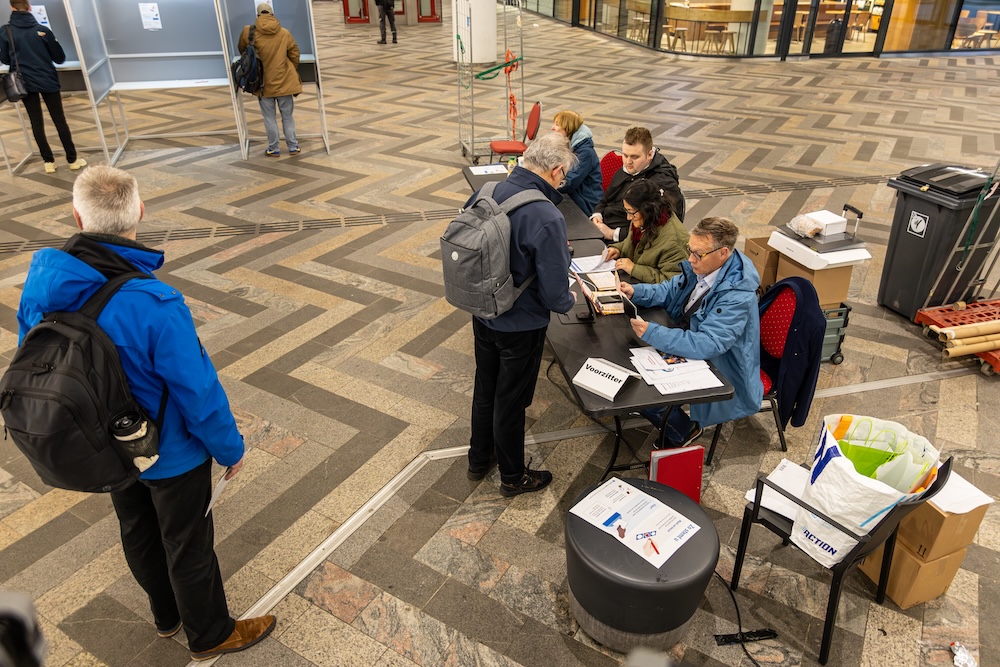
Polling stations across the Netherlands are open for Wednesday’s local elections, in which some 62,000 people are competing for around 8,500 seats on 340 of the Netherlands’ 342 local councils.
In some places, voting began at midnight, including at railway stations, in a snack bar in Kampen and in The Hague, where there was a party on the Grote Markt.
In Amsterdam, 35 parties are competing for one of the 45 seats on the city council, while in three areas — Hilvarenbeek, Rozendaal and the Wadden Sea island of Schiermonnikoog — just three parties are taking part.
- What you need to know about the local elections on March 18
- A quick guide to the biggest political parties
- Check out the Dutch News city guides
- Why you should vote
The results are being seen by some commentators as an early guide to support for the new minority coalition government, although turnover is always much lower than at a national election and the far right parties are not standing in all council areas.
Turnout mixed across the country
Turnout in the local elections varied widely across the country by early afternoon, with some smaller councils reporting higher participation than the big cities.
Unlike national elections, there are no fixed national updates during the day and turnout figures are released by councils at different times or reported by regional broadcasters.
In Utrecht, turnout stood at 20.5% in Utrecht at 1 pm but in Amsterdam, just 16.4% of voters had cast their ballot by 1.30 pm. Turnout in Westerwolde, by contrast, was 30% at the same time.
The figures cannot be directly compared with the previous local elections in 2022, when voting took place over three days because of coronavirus measures. Final turnout in that election was 51% of eligible voters, with the lowest participation – 39% – in Rotterdam.
Jan and Karin lead the list of popular candidate names
Jan is the most common name on the multitude of candidate lists, news website Nu.nl said. In total, 1,344 Jans are standing for election. Peter, with 866 is in second place, followed by Hans on 786.
When it comes to popular women’s names, there are 177 Karins on the lists, followed by 176 Moniques and 51 Petras.
Several candidates have also died since their names were included ahead of the February 6 deadline, Nu.nl said.
D66 spends most on advertising
D66 has topped the list in terms of spending on advertising, having shelled out over €1.3 million on attracting votes, according to research by website politiekereclame.nl.
Parties are now required by law to make their advertising budgets public. Next on the list come the Amsterdam branches of the VVD, PvdA, GroenLinks and CDA. Hart voor Den Haag and Leefbaar Rotterdam – both populist local parties – have also spent around €100,000 on advertising, the Volkskrant reported.
One in five councillors earns less than minimum wage
Research by the NRC suggests three in 10 local councillors earn less than the minimum wage for civil servants, particularly those in smaller council areas, and almost one in five earn less than the statutory minimum wage.
The minimum rate for a local authority civil servant is €16 per hour while the national minimum wage for adults is €14.70.
The paper asked councillors how many hours a month they spent on council work to determine their hourly rates. On average, their earnings work out at around €22 an hour.
Councillors earn a fixed amount a month based on the number of local residents. In the smallest councils they are paid €1,305 per month and in the biggest cities €3,200.
Thank you for donating to DutchNews.nl.
We could not provide the Dutch News service, and keep it free of charge, without the generous support of our readers. Your donations allow us to report on issues you tell us matter, and provide you with a summary of the most important Dutch news each day.
Make a donation