Dutch far-right PVV falls apart, seven MPs form new party
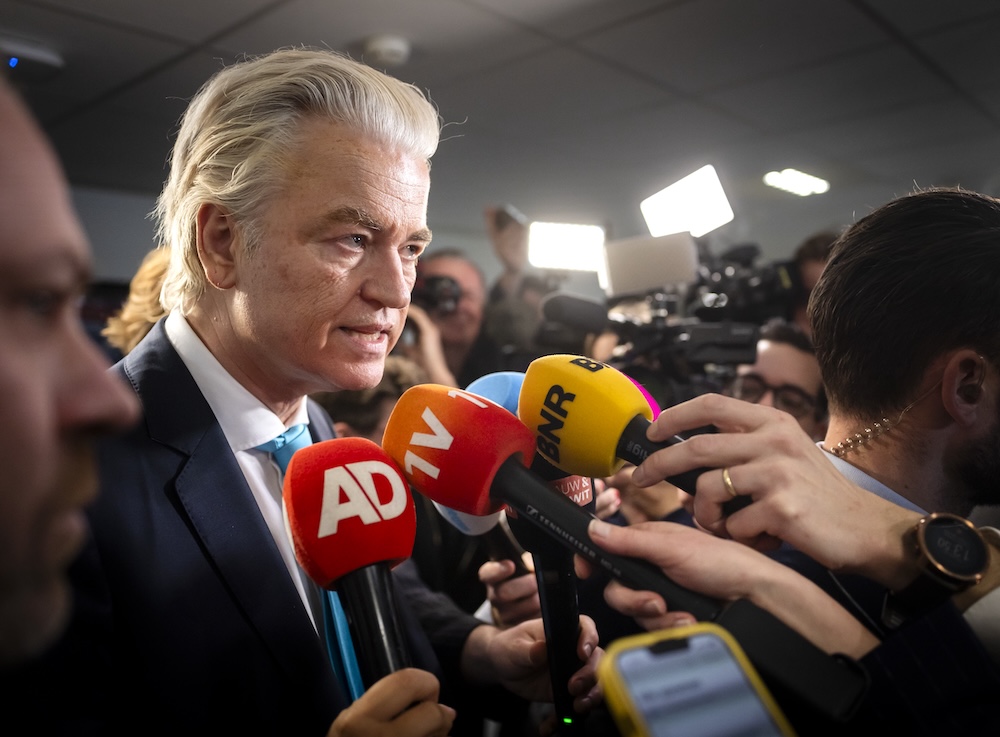
Seven MPs from the far-right PVV have left the party in a dispute over strategy with its leader, founder and only member, Geert Wilders.
The group, led by long-serving MP Gidi Markuszower, criticised Wilders’ handling of the election campaign, when the PVV lost 11 seats, as well as his failure to create any kind of membership structure since founding the party in 2006.
Wilders claimed that the seven MPs had given him an ultimatum to step down as leader by July in favour of Markuszower, otherwise they would quit the party. “It wasn’t a coup, but an attempt at one,” he said.
Markuszower said he and his fellow dissenters had been left with no choice after Wilders refused to discuss a four-point plan on the party’s future, including a membership system and better co-operation with other parties to deliver results for voters.
“If that’s not possible under this chairman, maybe it’s time to appoint a different referee temporarily,” he said.
The split leaves Wilders’ party as the fourth largest faction in the Dutch parliament with 19 MPs, behind the coalition parties D66 (26) and VVD (22) as well as the left-wing alliance GroenLinks-PvdA (20).
Campaign failure
In a letter obtained by the Telegraaf newspaper, the breakaway MPs blamed Wilders for the election defeat, saying “the campaign came to a halt because the leader could not be bothered any more”.
Wilders himself triggered the election when he pulled his party, which had 37 seats in parliament, out of the last right-wing coalition in July because the other parties would not sign a commitment to speed up the introduction of stricter asylum rules.
But at the election in October the PVV lost 11 seats and was narrowly beaten by its nemesis, the progressive liberal D66.
The dissenters called for an immediate change of tack including a less hostile attitude to the incoming minority coalition of D66, VVD and CDA.
“Spreading insulting images on X about Islam is okay, but ultimately does not solve any of the electorate’s problems,” the document said. That, the dissidents say, is threatening the party’s continuity.
The PVV’s popularity has declined again since then, with one opinion poll at the weekend suggesting the party would win just 17 seats if there were an election tomorrow. The rival parties on the far right, Forum voor Democratie and JA21, have risen to 14 and 11 seats respectively.
However, both parties immediately said they would not admit Wilders’ former colleagues. FVD leader Lidewij de Vos said she would “continue with the party group we have now”, while JA21’s Joost Eerdmans said: “We are very happy with our nine seats.”
“Black day”
Wilders described the decision as a “black day” for the PVV. “I am going to be leader for a long time to come,” he told reporters. “This is a setback, but I have every confidence that we will rise above it.”
The PVV, he said, was committed to being a loud voice in opposition rather than working with the new government.
The seven dissidents will continue as a separate parliamentary party under the leadership of Markuszower, an MP since 2017 and a former confidant of Wilders. He told reporters the new party would be prepared to work with the minority cabinet.
The group includes four of the top seven MPs on the party’s October list, including four new parliamentarians.
D66, the biggest party in the incoming coalition, is currently working on draft legislation that would require all political parties to have formal membership systems.
Thank you for donating to DutchNews.nl.
We could not provide the Dutch News service, and keep it free of charge, without the generous support of our readers. Your donations allow us to report on issues you tell us matter, and provide you with a summary of the most important Dutch news each day.
Make a donation