Three’s a crowd: Will Jetten’s tax bill kill the cabinet?
Gordon Darroch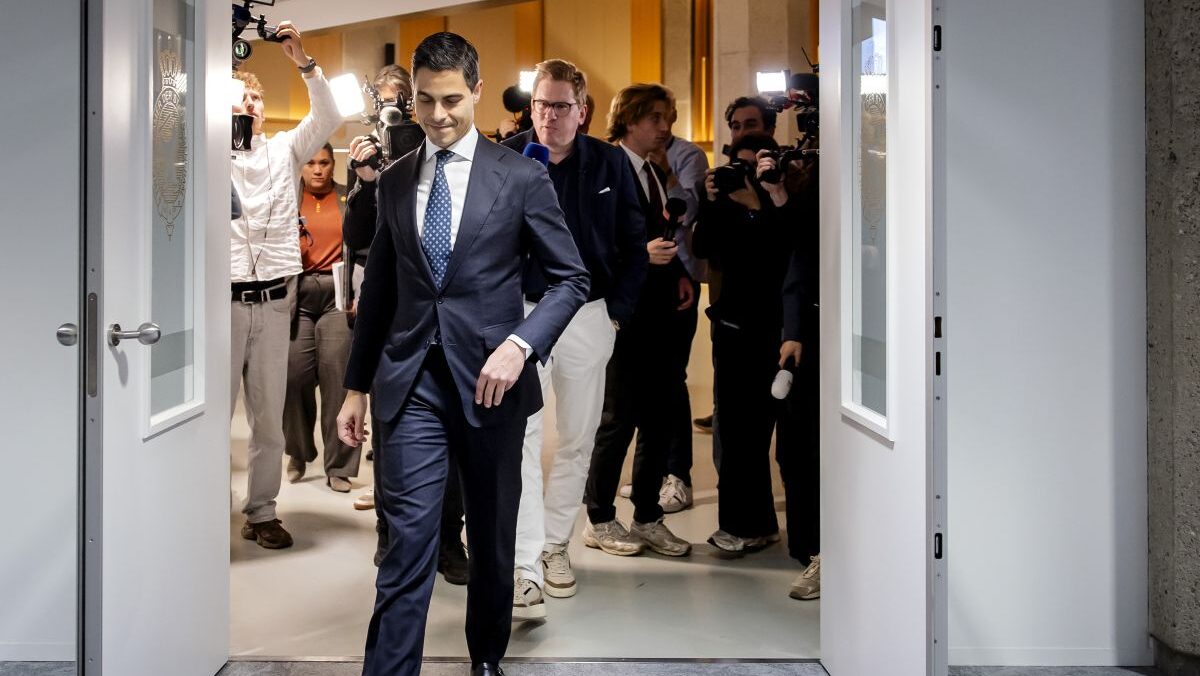
See more DutchNews articles in your Google search results
See more DutchNews articles in your Google search results
Add as a favourite source on Google Add DutchNews as a favourite source on GoogleThere is an old medical joke about a surgeon who declares: “The operation was a complete success, but the patient died.”
After months of chaotic, gruelling negotiations, Rob Jetten achieved a majority in parliament for his tax bill on Thursday night, but his coalition is in tatters. The right-wing liberal VVD were so incensed by the deal the other two partners, Jetten’s D66 and the Christian Democrats (CDA), struck with the left-wing Pro that they voted against the entire plan, which had been extensively drafted and redrafted by the VVD finance minister, Eelco Heinen.
The party’s leader, Dilan Yesilgöz, denounced it as “a bad deal for the Netherlands” and demanded a “fundamental reset” of the centre-right coalition. Essentially, she wanted the prime minister to switch his cabinet off and switch it on again.
The millionaires’ tax knife twist
Strikingly, the amendment that D66, CDA and Pro agreed on Wednesday afternoon was a milder version of one that the VVD had seemed willing to tolerate earlier in the week. Pro wanted to raise an extra €1.5 billion in wealth taxes in order to pay for an income tax cut for the lowest earners. D66 and CDA had negotiated the amount down to €1 billion and built in counterbalancing measures to protect people with modest savings – at an earlier stage one of the key concerns for the VVD. Its impact, even on the private investors it was aimed at, was marginal.
But none of that mattered. For the VVD, the deal was unacceptable because it crossed a red line – raising taxes on successful, hard-working entrepreneurs – and it was drawn up behind their backs between their coalition partners and Pro.
Jesse Klaver, the leader of Pro, then twisted the knife by describing the measure as a “millionaires’ tax”, a phrase that went down like cold gravel in the throats of not just the VVD, but CDA leader Henri Bontenbal.
The seeds of the crisis were sown around 10 days earlier, as a reconstruction in AD.nl has found, when the coalition parties agreed to enter what commentators immediately called an “open marriage”. After months of abortive attempts to strike a collective deal with a divided opposition that balanced the interests of left and right, the three parties would try to form separate majorities for their own priorities. It would allow D66 and CDA to pair up with Pro and Volt while the VVD could court the right-wing opposition block of JA21, the farmers’ party BBB and the orthodox Protestant SGP. As a last resort, they could even vote on opposite sides when the amendments were tabled in parliament, if it meant that the tax bill and the coalition survived.
Unagreed terms
The problem was, none of the parties had agreed on the terms of the open marriage. And what the VVD hadn’t reckoned with was that D66 and CDA would go all the way with Pro and produce an amendment that seemed calculated to hurt them. D66 and CDA protested that they had kept their partners informed throughout the negotiations and even invited them to the table. But the VVD’s whole reason for joining the coalition in the first place was to keep the left-wing Pro out of power, as D66 and CDA knew all too well.
For Yesilgöz, the amendment represented the very outcome that she had entered the partnership to avoid, and Klaver’s press conference and Instagram reel to celebrate the millionaires’ tax were simply rubbing salt into the wound. To extend the analogy, it was like agreeing to an arranged marriage only to see your partner immediately phone up the ex-girlfriend he told you was no threat and take her for dinner at the Ritz.
None of this should obscure the extent to which the VVD engineered their own downfall. The minority cabinet was built on unstable foundations because the VVD wanted to shut out the opposition party that would have the strongest hand in the upcoming negotiations. When the coalition agreement was published, they took out billboards to parade their achievements, such as retaining mortgage interest tax relief.
The final betrayal
From the outset the VVD have focused more on defending their red lines within the coalition than finding the opposition votes they need to pass their legislation. It allowed Pro to exploit the deadlock to torpedo key VVD policies such as the €6.5 billion of welfare cuts. The budget amendment was the final betrayal for the VVD, but it was also the inevitable outcome of a process in which the party had refused to build any kind of constructive relationship with Pro, while D66 and CDA had reached out to unlikely partners such as Gidi Markuszower’s far-right DNA. And when the VVD decided to reject its own budget deal, its partners delivered a final humiliation by salvaging it with the support of a pair of fringe parties on the left: Denk and the animal rights party PvdD.
What happens next is unclear. The VVD, stung by what they see as a deep betrayal, want the coalition to renew its vows. Jetten prefers to talk about a “restart”, the language usually used for businesses that have called in the receivers. Yesilgöz almost goaded the other parties to try their luck with Pro in a new combination, but that would leave the cabinet still nine votes short of a majority and a hostile opposition dominated by the right. Jesse Klaver may well have overplayed his hand with his “pick me” posts on social media.
But new elections are an equally risky option for three parties whose standing in the opinion polls has been further damaged by the tax plan saga. And if the coalition survives in its current form, it will be as a marriage of inconvenience. Not for the first time, politics and matrimony have turned out to be a toxic mix.
Thank you for donating to DutchNews.nl.
We could not provide the Dutch News service, and keep it free of charge, without the generous support of our readers. Your donations allow us to report on issues you tell us matter, and provide you with a summary of the most important Dutch news each day.
Make a donation