Leaving her mark: women take over street art at Straat museum
Senay Boztas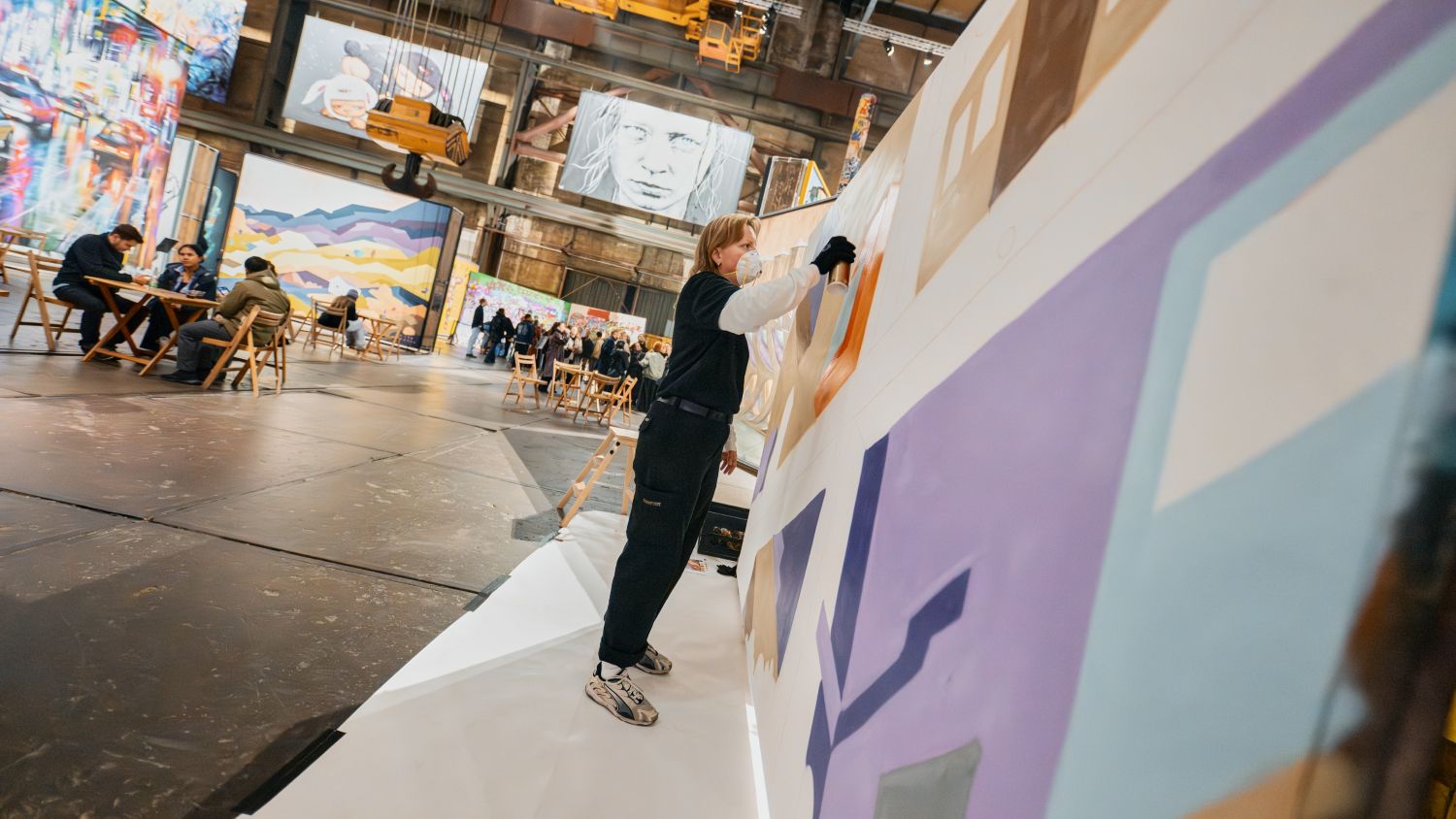
See more DutchNews articles in your Google search results
See more DutchNews articles in your Google search results
Add as a favourite source on Google Add DutchNews as a favourite source on GoogleA few months ago, Anouk Brand witnessed a woman being assaulted on the street by her partner.
“When I tried to come to the rescue, I was threatened,” she recalls. “When I called the police, there was no ‘evidence of being caught in the act’ and they didn’t bring anyone in for questioning. Unbelievable, as I was an eyewitness.”
This scene, a snapshot of the 1.3 million Dutch adults who suffer domestic violence each year, will soon be exposed on the walls of Straat museum in Amsterdam. As part of a “women in street art weekend”, Brand will be raising awareness of domestic violence and femicide, through the medium of spray paint.
“I am going to create a work that talks about violence against women,” she told Dutch News. “Even when this violence is visible to the outside world, sometimes there is no action… and you can only wonder how many times it happened to these female victims inside the home.”
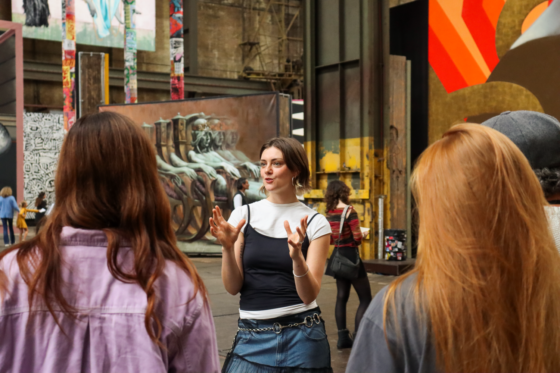
The 21-year-old artist from Dordrecht – who has a growing profile on social media – is one of 13 female street artists who will be painting live, running workshops, tours and taking part in a debate at the museum in Amsterdam-Noord.
From the stylised signature “tags” that emerged in the 1960s to Banksy murals adopted by the art world and sold for millions, what we call “street art” encompasses protest, crime, political statement and increasingly a legitimate artistic career. But, say experts, there is ever more interest in women’s representation and the “feminist geography” they can create.
Mat Cahill, a curator at Straat museum, traces it all back to a caveman urge to mould our physical environment. “There’s something quite traditionally masculine about this idea of street art,” he says. “For me personally, it’s about leaving a mark on territory, the idea that street art goes back to Stone Age man.”
Early man might have been warning “I am here”, but when spray cans were invented (initially to put wax on skis), the delivery mechanism made it possible to daub an entire wall with paint. “That’s why it worked really well in illegal spaces because you could turn up, create an image very quickly and it would dry quickly and be permanent,” he says.
Developing as a protest movement in black America, alongside hip-hop culture, street art was dominated by male figures. “A lot of this act is in illegal spaces and very unsafe environments, usually at night in rundown areas,” says Cahill. “There have always been female artists in the street art world, but I think the recurring factor when talking to artists for this project is that it is not always that safe.”
Even when working within a community and at legal sites, street artists are often exposed to sexual harassment. “This is mainly due to misogynistic cultures, catcalling and sometimes inappropriate comments from men while working on my art,” explains Brand, via email.
The semi-legal element of the world means some artists involved in the weekend guard their identities. Pran, a street artist and tattooist from Brazil, will be painting without exposing her face and says that anonymity is key to the graffiti scene. “Your style and your presence in the streets should speak for themselves,” she says in an email. “It’s not really about galleries or profit; it’s about the streets and the culture itself.”
Others point out that male street artists can offer protection. CC, an artist for 20 years, says the scene has opened up to more women, not least because you no longer have to source car paint. “The scene has evolved,” she explains. “[But] it was the male artists who supported me right from the start. They invited me to go out and paint and shared their tips, tricks and great stories.”
Vandalism or value?
Whether street art feels like vandalism, politics or potential cash often depends on where it is, says Lieke Prins who recently completed a PhD on women in street art in Colombia. “In Latin America, it’s very much used as a socio-political means of expression,” she says. “I think in Europe, it’s much more perhaps about aesthetics.
“Especially in the West, we make a difference between graffiti as visual pollution, as illegal vandalism, and then street art [that] is beautiful and used as a communication tool. In the global south and countries where murals are more socio-political, the means of obtaining permission are also less formalised.”
Male street artists have been more recognised in the formal art world, says Emily Pethick, former director of the Rijksakademie art academy in Amsterdam. “Artists such as Jean Michel Basquiat and Keith Haring brought informal gestures into their work that drew on graffiti,” she says.
Basquiat and Haring
“Haring took his work out into public spaces, and also brought ‘ready-made’ graffiti into the gallery. But women artists who make the links between these worlds are not as well recognised – and these male artists feature more on the art market, accruing large value.”
The point of street art, she says, is that it is often hard to commercialise, hard to reach. Meanwhile, the internet has become a space of protest too. “These days you have social media, people saying things on a keyboard,” says Cahill. “[Street art] is going more decorative. But the transgression, the needing to be heard is still there.”
This is why, says Brand, an open wall is the right place to protest about domestic violence. “A single voice will have minimal impact, but imagine more female artists making huge street art works based on this,” she says. “It could reach the whole world.”
STRAAT women in street art runs from June 5 to June 7
Thank you for donating to DutchNews.nl.
We could not provide the Dutch News service, and keep it free of charge, without the generous support of our readers. Your donations allow us to report on issues you tell us matter, and provide you with a summary of the most important Dutch news each day.
Make a donation