Dutch ministers visit Syria to discuss refugee returns
See more DutchNews articles in your Google search results
See more DutchNews articles in your Google search results
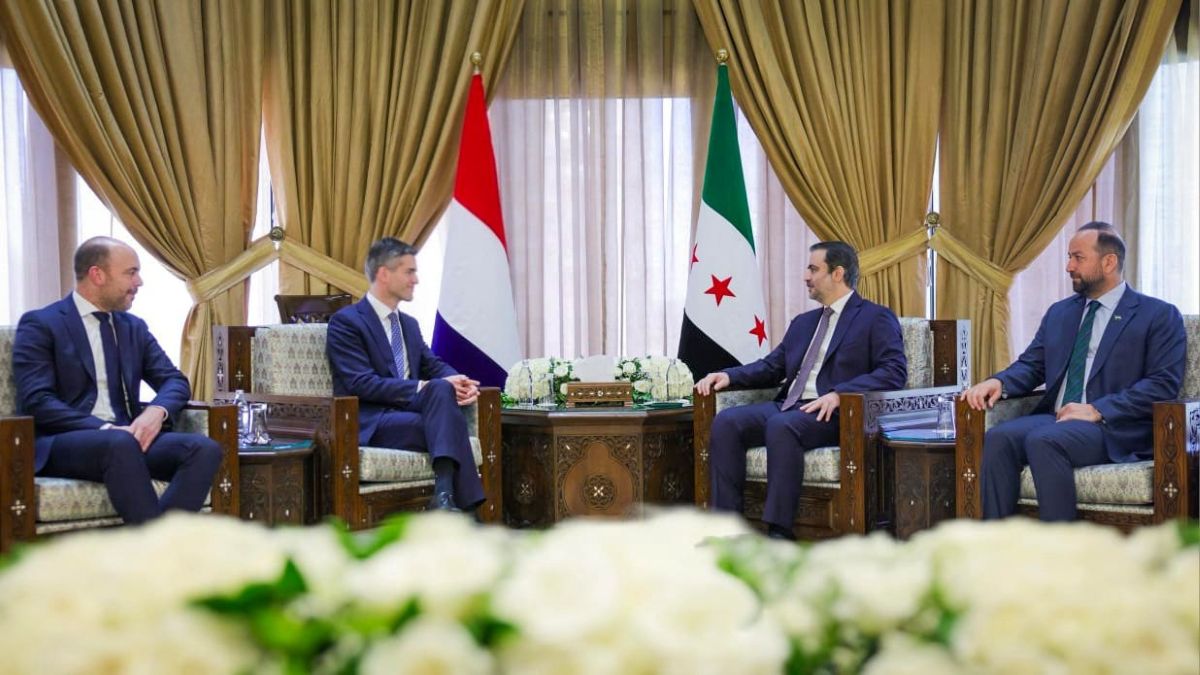
Add as a favourite source on Google Add DutchNews as a favourite source on GoogleForeign affairs minister Tom Berendsen and asylum minister Bart van den Brink have travelled to Damascus to meet Syrian president Ahmed al-Sharaa, the former jihadist rebel leader who became the country’s ruler after the fall of Bashar al-Assad.
It was the most senior diplomatic visit to Syria since the Assad regime collapsed in late 2024. The two governments agreed to set up a joint committee of officials to work on reconstruction, economic development and the return of Syrians from the Netherlands.
There are around 150,000 Syrians in the Netherlands, the largest single refugee group. The cabinet says it wants to support those who choose to go back, and 1,440 have returned voluntarily since Assad fell, with a payment of €2,800 for adults and €1,650 for children.
Forced return on the table
But the ministers also told broadcaster NOS they had discussed making forced return possible for Syrians who have been refused asylum.
Van den Brink said many Syrians were still in the system, but that with the war over those cases often no longer led to a residence permit, and the Netherlands was looking for new agreements with Damascus.
The government’s report on the visit described the idea of forced-return as an ongoing dialogue. Syria has so far resisted the idea.
In May, Syria’s foreign minister, Assaad al-Shaibani, told Euronews that forcing involuntary returns would “lead to chaos”, that there was no agreement on numbers or timing, and that returns had to form part of a wider partnership on reconstruction.
Safe to return?
The talks rest on the question of whether Syria is now safe enough to return to. The Dutch foreign ministry’s own country report, released last year after a court challenge, called the situation “fragile”, “unstable” and “volatile”, and al-Sharaa’s transitional government has struggled with deadly violence against minority communities.
There has been a wider European push to send Syrians home since Assad’s fall, with Germany aiming to return most of its Syrian population within three years. In the Netherlands, Syrian claims are no longer automatically approved and are assessed case by case.
Berendsen and Van den Brink also met Christian, Kurdish, Druze and Alevite religious leaders, stressing that the rights of all minorities must be respected.
Thank you for donating to DutchNews.nl.
We could not provide the Dutch News service, and keep it free of charge, without the generous support of our readers. Your donations allow us to report on issues you tell us matter, and provide you with a summary of the most important Dutch news each day.
Make a donation