Does “Our Amsterdam” policy include internationals and startups?
Senay Boztas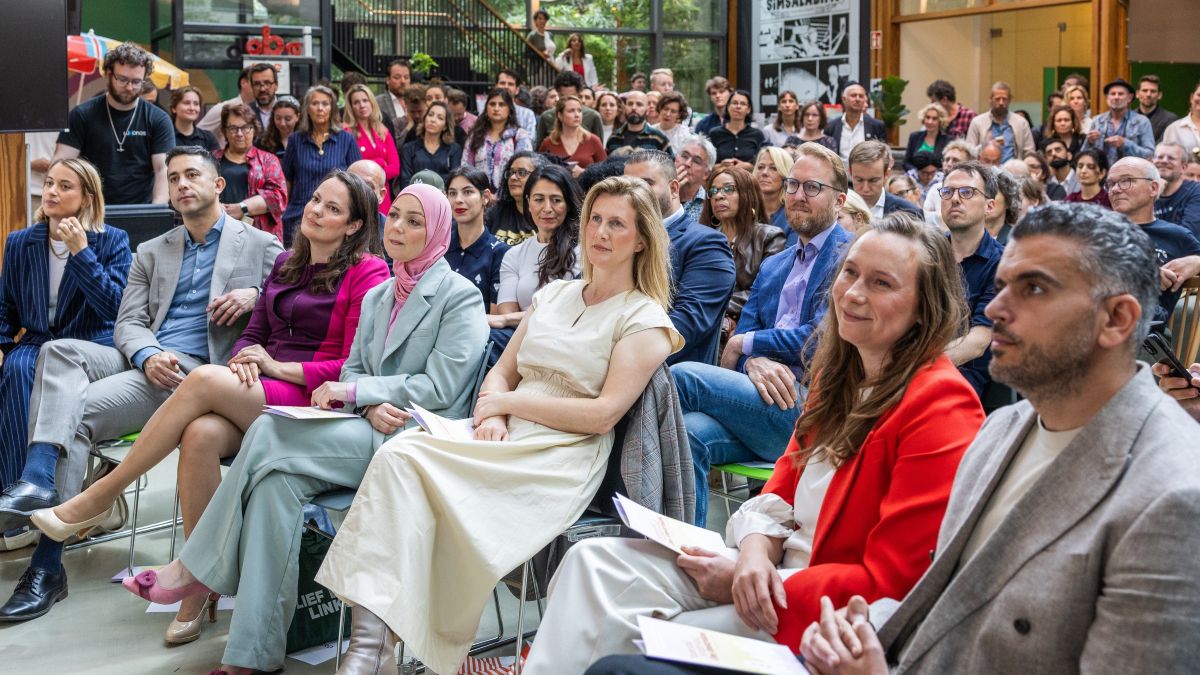
See more DutchNews articles in your Google search results
See more DutchNews articles in your Google search results
Add as a favourite source on Google Add DutchNews as a favourite source on GoogleIt claims to be a coalition agreement for “our Amsterdam”. But some are concerned that the programme from a new centre-left alliance in Amsterdam has few concrete measures to support the tech economy and highly skilled migrants.
The 70-page agreement, presented by Progressive Nederland Amsterdam and D66 on Wednesday in Zuidoost, focuses on affordable housing, recruiting more teachers and free public transport for the under-17s.
Head of economic affairs Melanie van der Horst said that the coalition did want to support the tech sector. “We have agreed that we want to have a broad role within Europe as a tech region,” she said.
“We want to buy more from the European market in order to be independent from American big tech. And we need a good environment so that start-ups and scale-ups can flourish.”
However, experts and opposition politicians said that these words manifested in few actual policies in the coalition agreement.
“The word ‘startup’ does not appear,” said Johan Schaap, of the Dutch Startup Association (DSA). “The ambition to become the tech hub of Europe, which the previous coalition explicitly aspired to be, has been dropped… So there is a good chance that Amsterdam will sink even further in the rankings.”
The DSA – which lobbies for the sector and supports new entrepreneurs – believes Amsterdam is losing global talent to countries such as Singapore, Italy and the Middle East. Last week, it raised the alarm after Amsterdam slipped from fifth to seventh place on a new ranking of European tech hubs – behind Munich and Cambridge.
Economist Barbara Baarsma warned last month that skilled immigrant numbers are plummeting, although there is evidence that they are key to productivity and future economic prosperity.
Juliet Broersen, head of pro-European party Volt, was dismayed that “expats” or internationals were not mentioned in the agreement, although 13% of Amsterdammers were born in other EU countries and 25% outside the EU.
“The international community is barely mentioned,” she said. “That is disappointing for a city like Amsterdam, where international students, young Europeans and internationals are not just temporary guests or an economic asset, but residents, neighbours and part of our city.”
“If this coalition truly wants Amsterdam to be a city for everyone, it must also make sure housing, participation and municipal services work for people who do not yet speak Dutch.”
One-stop shop
Other parties also want more concrete action. Rogier Havelaar, head of the CDA, said while the new executive wants employers to give low-paid migrants proper housing and language lessons, there is little attention for others.
“The CDA wants Dutch lessons in every neighbourhood where internationals and locals meet, a one-stop shop for practical and legal questions and good access to international schools, healthcare and housing,” he said.
Brigitte Vonck, founder of the charity Serve the City, which draws 70% of its volunteers from the international community, argued for more bridge-building initiatives like the pilot Nexxxt Step event.
“What does not really come across strongly in the coalition agreement is the sense of community: doing things together, and making sure Amsterdam is a city for everyone,” she said. “For internationals and expats, it can sometimes be difficult to truly feel at home.”
Thank you for donating to DutchNews.nl.
We could not provide the Dutch News service, and keep it free of charge, without the generous support of our readers. Your donations allow us to report on issues you tell us matter, and provide you with a summary of the most important Dutch news each day.
Make a donation