Dummies’ guide to the main parties in local elections in March
Senay Boztas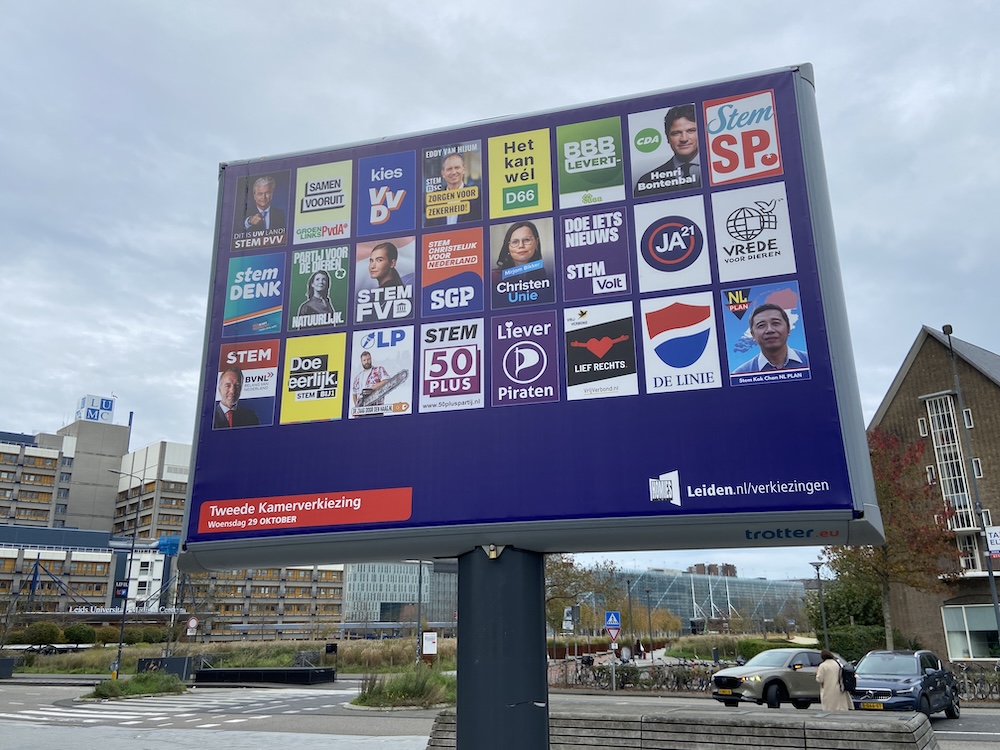
If you muddle your VVD with your PVV, don’t be ashamed. Read the Dutch News 2026 dummies’ guide to the main political parties.
With local elections on March 18, political parties are waking up to the fact that thousands of people born outside the Netherlands have the right to vote.
Because the turnout is typically low in these local elections – just 50% last time – the international vote could be critical in areas with a large, mixed population.
Let’s say you have checked whether you have the right to vote in the local (and district) elections. The voting card has popped through your letterbox and you have stuck it carefully to the fridge. The next job is understanding what on earth is going on with Dutch local politics, when, every time you blink, a new party has been established.
Effort
If you come from a first-past-the-post system like the UK or the US, you should not feel embarrassed about how confusing you find Dutch proportional representation. When you have lived here for years, if you take an interest in politics, you will almost certainly know more than all of your Dutch friends.
“It requires a bit of extra effort,” says Verena Kitowski, a German who is standing for election for the Volt party in Amsterdam. “If people feel they are not informed and don’t feel the connection, it’s very easy [not to vote]. If you have always lived here, you have more peripheral knowledge.”
Floris Vermeulen, associate professor at the University of Amsterdam, specialising in the political participation of immigrants, believes that the Dutch should do more to explain the system to voters, regardless of where they were born.
“I think that it is the responsibility, partly of the political parties and of the system, to inform people properly: they have a right to vote, and that means the system has certain duties too,” he said. “But, on the other hand, they might be talking to a lot of people who feel that it is pretty complicated and they don’t know where to start. Every political system has its own complexities and political parties, and that means that you need to invest in it, read about it.”
Migrants unwelcome
The invitation for internationals to make sure their voices are represented in municipal politics – which has responsibilities for urban planning, youth care, local transport and local tax – is even more important when migration is a hot topic and foreigners are sometimes made the scapegoat for local problems.
“Migrants are interested in principle, but at the same time our interviews suggest they don’t feel so involved or welcome in Dutch politics,” said Vermeulen.
Local parties make up the largest share of votes, 31% in 2022. But Dutch News has summed up what the main parties standing nationally do (and don’t) stand for in local politics. Here is a quick explaination of the top 15.
VVD (People’s Party for Freedom and Democracy)
The centre-right party of former prime minister Mark Rutte is – says Daan Wijnants, VVD head in Amsterdam – comparable to the Conservatives in the UK. “We’re the party that wants the municipality to focus on basic affairs: building proper housing, especially [homes] that people can buy, reducing crime and lowering government taxes,” he said.
“And we think it’s really important that the municipality aims to attract new industries and companies. We believe the international community is of great value, not only in an economic sense, but also in a cultural sense.”
CDA Christian Democratic Appeal
This centre-right party – which follows Christian democratic ideas but welcomes people with other religions or none – is one of the oldest in the Netherlands. It resembles the German CDU, the party of Ursula von der Leyen.
It believes in facilitating business (including private landlords), with government promoting solidarity and setting norms like decency. “Where a socialist sees a problem and thinks, ‘how can the government solve it’, and a liberal thinks, ‘how can the market solve it’, the Christian Democrats say: how can society solve it?” said Rogier Havelaar, CDA councillor in Amsterdam. “I always call the CDA a moderately-progressive movement.” House building, clean streets, safety and good governance are key themes.
D66
The party of new prime minister Rob Jetten sits in the centre to centre-left of the spectrum and is similar to the British Liberal Democrats or US Democratic Party. It is liberal on economics and pro-Europe.
“Amsterdam has grown because of immigration, and this is the DNA of the city,” said D66 Amsterdam councillor Erik Schmit. “We should not scapegoat internationals for the challenges we have in the city: we should welcome them, be open and integrate internationals into society.” The party promises to achieve housebuilding targets for all groups, is strong on education, women’s and sexual diversity rights, and promotes green cities.
GroenLinks
The green-left party was formed after a merger of left-wing parties including the Communist Party: it is a left-wing, progressive party that promotes green issues. Although it is campaigning separately in some cities, it is set to merge with the PvdA.
“Houses are for living in, not to earn money,” is one of its mottos and it focuses on building affordable homes and promoting housing corporations. It advocates a so-called circular economy and “community wealth building”, wants to boost conditions for low-paid immigrant workers, and is vocal about scrapping the 30% tax break for highly-skilled migrants (although this is not a local power).
Partij van de Arbeid (PvdA)
The PvdA or labour party was established in 1946 in Amsterdam as a merger of three left-wing parties. It has traditionally played a strong role in local politics in areas such as the Dutch capital.
“It’s a party that believes social security is important,” said Sofyan Mbarki, deputy mayor and head of the list in Amsterdam. “The government should play an important role in the core functions needed to keep a society running well, rather than leaving it to the market.”
It aims to build affordable housing, share local wealth and ensure everyone participates. “My father was an international,” said Mbarki, whose parents emigrated from Morocco. “My father behaved differently, because he couldn’t participate in society as he had a different socio-economic position. Now internationals arrive who do have this [wealth] and who can participate.”
ChristenUnie and SGP
The ChristenUnie is a socially conservative and economically centre-left Christian party which follows “biblically inspired politics”. It opposes “bubbles, individualism and the pressure to perform”, focusing on protecting the weak and vulnerable. It won 3.9% of votes nationally in 2022 and is fielding candidates in 130 municipalities, although its performance has declined in recent years.
The SGP is a hard-line, right-wing Christian party which does not allow women to stand for election nationally. It won 2.3% of the local vote in 2022, is standing in around 100 areas (sometimes on a shared ticket with the ChristenUnie) and promotes Biblical family values, solid financial policy and more independence from the EU.
SP
The SP or socialist party, another movement with its roots in Dutch communism, is standing in just over 100 municipalities. It won 2.79% of the local vote across the country in 2022 and does well in areas like North Brabant and Friesland.
The SP has policies such as making public transport free, drastically reducing tourism, building affordable housing and “radically greening” municipalities. “We will encourage non-Dutch speakers (expats, labour migrants, and foreign family members) to learn Dutch as quickly and effectively as possible through municipal education programmes,” reads one of its policies in Amsterdam.
Partij voor de Dieren (PvdD)
The party for animals is a left-wing group promoting animal rights and green policies. It advocates better treatment for animals, a crackdown on polluting businesses and littering, policies to combat discrimination and better quality social housing. It opposes mass tourism and wants to replace hotels and offices with affordable homes.
DENK
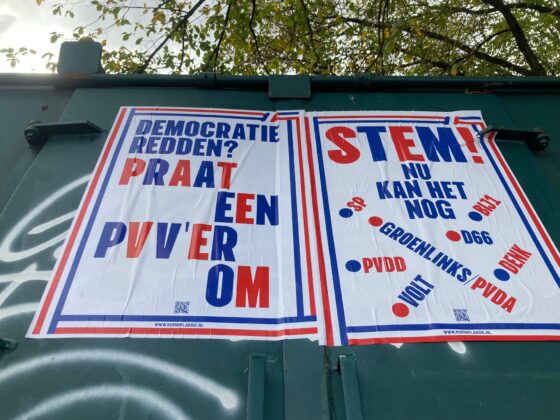
This left-wing, pro-migrant party split from the labour party and particularly promotes the interests of people with an immigrant and Muslim background. The word, denk, reflects the Dutch word for “think” and the Turkish word for “equal” or “equivalent”. The party promotes inclusive policies, affordable housing, tackling racism and dialogue between different communities; you can see its programmes and candidates in the major cities here.
PVV
Geert Wilders’ far-right, anti-immigrant, anti-Islam Party for Freedom has a very low result in local elections because it often does not stand. It is taking part in 40 municipalities in 2026. “We will put the Dutch people number one everywhere because this is our country,” said Wilders in a tweet announcing the list in December.
Volt
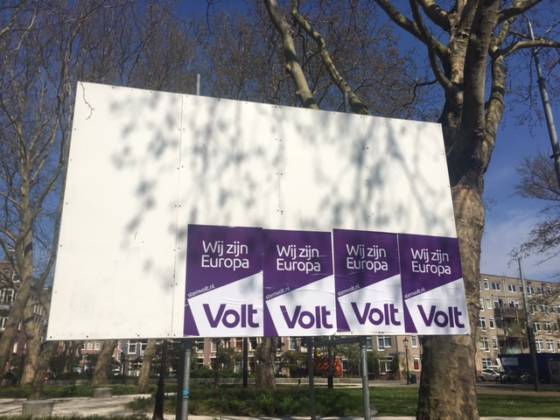
Volt is a pro-European, liberal party created after Brexit and with 0.75% of the vote in local elections in 2022. It is vocally pro-international, and has already produced campaign material and an information evening in English. The party believes in affordable housing – especially for young people and students – safe streets and “liveable” cities.
“We believe that good ideas know no boundaries,” according to its programme in Amsterdam. “What works in Copenhagen, Barcelona or Vienna in terms of affordable housing and safe streets, we want to apply in Amsterdam.”
BoerBurgerBeweging (BBB)
The farmer citizen movement (BBB) promotes the interests of the agricultural community. It was created in 2019 and rose to prominence in provincial elections in 2023 at a time of farmer protests at proposals to cut pollution.
It had roots in the CDA but moved to the right politically and is now considered a far-right party. It is standing in several areas, wants to reduce asylum and opposes efforts to regulate agencies employing labour migrants (who often work in agriculture).
Forum voor Democratie (FvD)
Since emerging as the biggest party in the provincial elections in 2019, the far-right Forum voor Democratie has has seen its fortunes plummet and rise again, following a string of scandals involving financial irregularities, racist and anti-Semitic Whatsapp messages and conspiracy theories.
Founder Thierry Baudet handed over the campaign leadership to 28-year-old Lidewij de Vos last year, and she helped propel the party’s support up again at the last general elections.
However, Forum is once again embroiled in a scandal after a number neo-Nazis and members of extremist far-right organisations were included on local election candidate lists.
JA21
JA21 (Juist Antwoord, or right answer) was founded in December 2020 (not 2021) by Joost Eerdmans, a former ally of Pim Fortuyn, and Annabel Nanninga, then an Amsterdam city councillor for the far-right Forum voor Democratie.
Both left the FvD after a major anti-Semitism row and took most of Forum’s MEPs and senators with them. The party has been working hard to position itself as the “decent” far right and won nine seats last year’s general election.
The party is pro-free market, wants more police on the streets and to close the Dutch borders. It says on its website: “We love this country and want to pass our culture and values on to our children and grandchildren.”
Thank you for donating to DutchNews.nl.
We could not provide the Dutch News service, and keep it free of charge, without the generous support of our readers. Your donations allow us to report on issues you tell us matter, and provide you with a summary of the most important Dutch news each day.
Make a donation