Working from home, school closures, are a matter of common sense
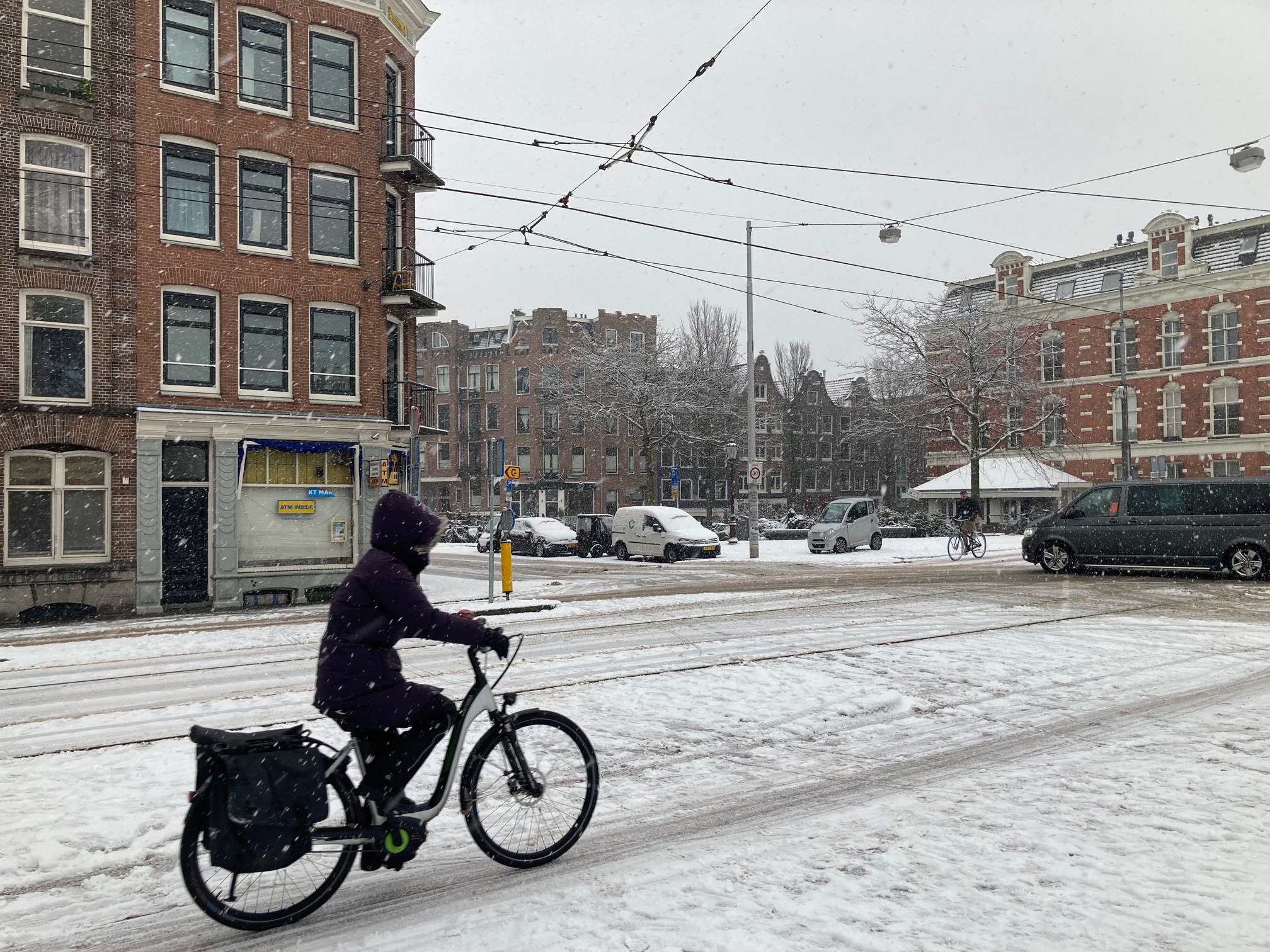
Snow and icy roads are making the trip to work and school complicated but the absence of specific rules makes measures a matter of common sense, experts say.
Schools are not allowed by law to declare a day off for children to enjoy the snow but in case of extreme weather, the school board or head, may decide to close the doors.
They can do this, for example, if the safety of pupils or staff is a concern because the route to school is unsafe, or because a majority of teachers are unable to get there.
There are not yet any official figures about how many schools are shut but a quick scan by parents’ lobby group Ouders & Onderwijs among 550 parents showed that on Tuesday, 4.3% of schools closed or adapted their schedules and that 8.3% partly closed.
The large majority remained open, although Wednesday’s heavy snowfall may cause more schools to close. Some trade schools also decided to switch to online teaching.
Parents’ reactions to the closures are mixed, spokeswoman Lobke Vlaming told the Volkskrant. “Some say, great, a chance for children to enjoy the snow but others are hard put to combine childcare and work,” she said. Parents also want to be informed in time. On Tuesday, some pupils had already set out when the message came that it would not open.
Schools do have a duty to accommodate children whose parents cannot arrange for a babysitter, particularly for children in primary schools. Child care organisations, which include BSO after-school care, are usually asked to jump in.
As far as work goes, working from home would seem to be the practical solution. However, there are no legal rules to cover work/weather-related contingencies.
“Snow and ice don’t automatically mean you can stay at home,” employment lawyer Gerard Berghuis told the AD. Employees have a duty to turn up at work, even if there is no public transport, he said.
It is up to them to sort out alternative transport, but in practice, employers are willing to cooperate. “It is important to find a solution together,” Berghuis said. “Car pooling, or adapting the work schedule, can work, or switching days off,” he said.
If the presence of a worker is absolutely necessary, employers can arrange transport and pay for the extra cost that may entail.
Delivery workers
However, if the government’s highway agency says not to travel at all, as was the case in Utrecht on Monday, employers will often tell workers to stay put and that the company will close that day.
Builders, postmen and women and care workers are facing the biggest challenges, Berghuis said. An “unworkable weather” clause is in place for people with outdoor professions, meaning the worker can stay at home without having to sacrifice days off. The exact circumstances are included in the CAO, or collective work agreement.
Thank you for donating to DutchNews.nl.
We could not provide the Dutch News service, and keep it free of charge, without the generous support of our readers. Your donations allow us to report on issues you tell us matter, and provide you with a summary of the most important Dutch news each day.
Make a donation