Temporary employment agencies are increasingly staffed by people born outside the Netherlands, with Polish nationals leading the way, national statistics agency CBS said on Wednesday.
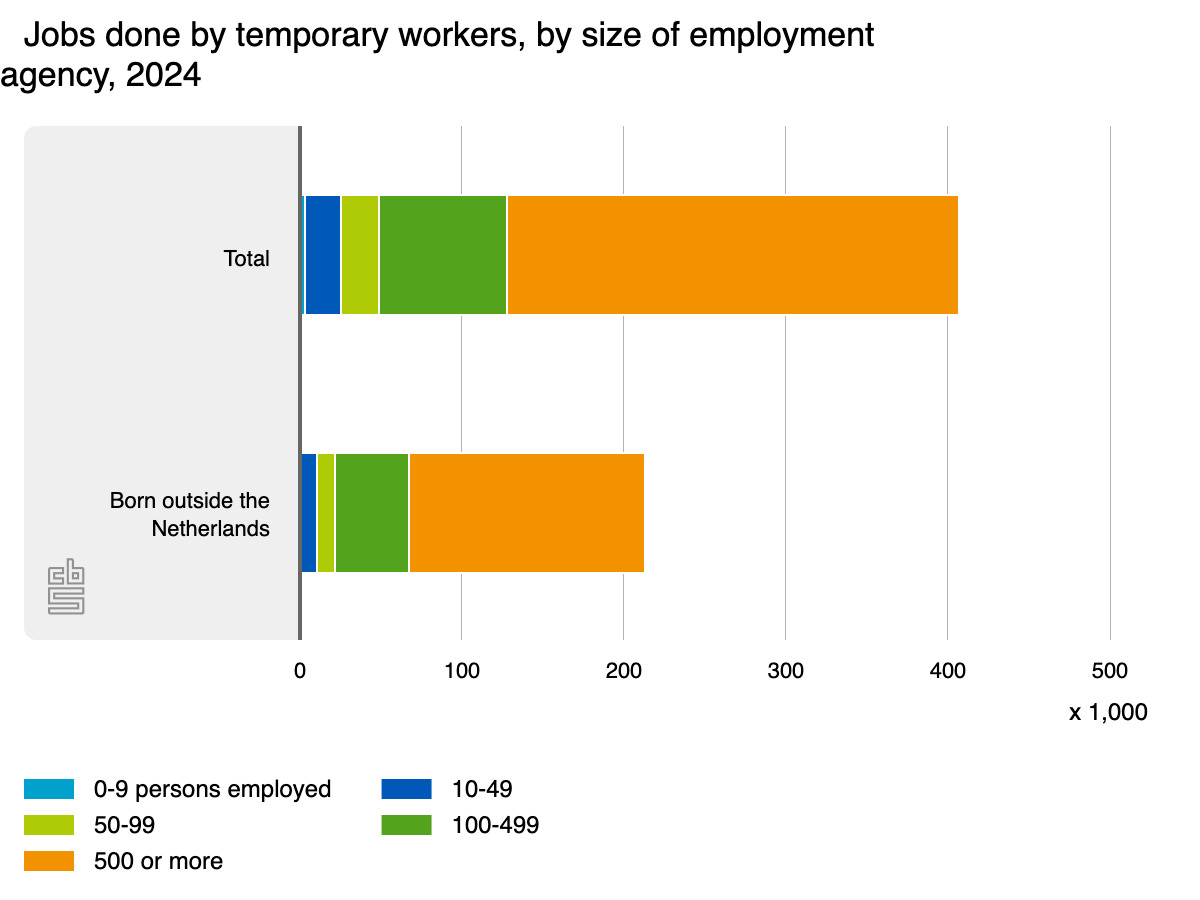
Figures from 2024 show that 44% of people employed by staffing agencies – as temps themselves or as office workers – were not born in the Netherlands. In 2010, the figure was just 27.5%.
In total, 52% of the people working for other companies through the Netherlands’ 2,300 staffing agencies were not born here. “This is all down to the tight labour market,” CBS chief economist Peter Hein van Mulligen told broadcaster NOS.
Many of the foreign temps are doing work that the Dutch themselves are unwilling to do, such as jobs in agriculture, distribution centres and industry, he said. “Dutch workers are often over-educated for these jobs, so employers have to look abroad.”
Most staffing agency workers – 82,500 – originate in Poland. Romania, Ukraine and Bulgaria account for a further 66,700 jobs, while people from outside Europe fill another 26,000 vacancies.
Reducing Dutch reliance on low-skilled workers from abroad is set to be a key issue for the next government. Economists and the head of the labour inspectorate have argued that the Netherlands needs to focus more on highly skilled jobs rather than minimum wage contracts in farming, distribution and the meat industry.
In addition, many temporary workers are exploited by the companies they work for, living in poor housing and facing eviction when the work has been done.
In November, the senate finally approved a new law requiring staffing agencies to hold a government licence in an effort to improve worker protection and ensure fair competition between employment agencies.
The law, which has been delayed several times, will come into effect on 1 January 2027. From that date, only licensed agencies will be allowed to supply staff. Companies that continue to operate without a permit, or hire workers from unlicensed agencies, will face fines once enforcement begins in 2028.