Coalition parties hope to swear in new Dutch government by March
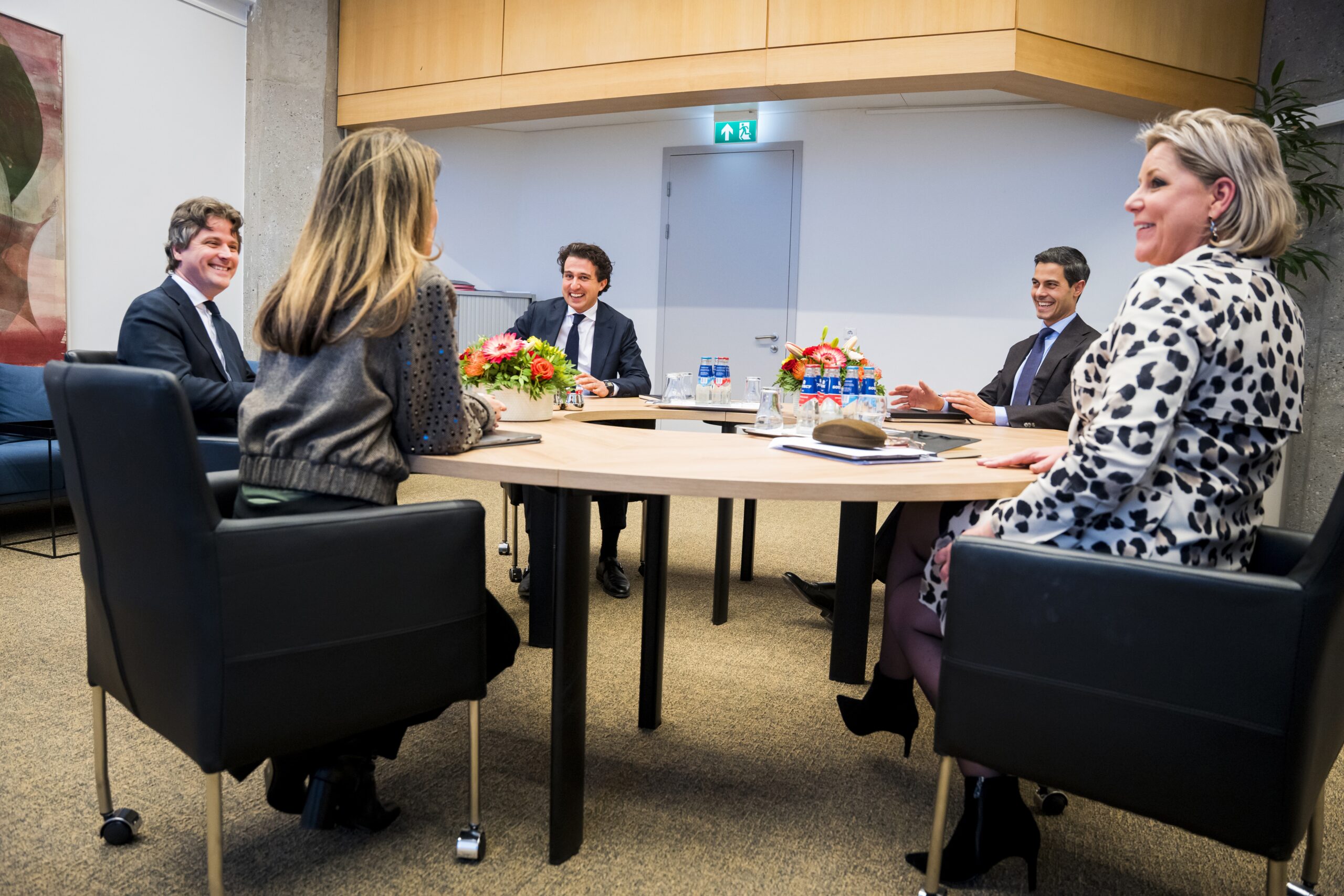
The next Dutch government could be sworn in by the end of February after opposition parties said they would not stand in the way of forming a minority coalition of D66, CDA and VVD.
Most of the main opposition groups said they would not vote against installing the new cabinet, clearing the way for the three parties to move to the next stage of drawing up a coalition agreement and appointing ministers.
But the new administration, which will be headed by D66 leader Rob Jetten, will face strong headwinds when it comes to steering legislation through parliament, with opposition groups on left and right likely to demand a heavy price for their support.
The parties will hope to have a new coalition in place to avoid the negotiations clashing with campaigning for the local elections on March 18.
A minority administration was the only viable option after the right-wing VVD refused to back down from its pre-election pledge not to form a government with the left-wing alliance GL-PvdA, while D66 refused to bring the far-right JA21 on board.
“Risky experiment”
GL-PvdA leader Jesse Klaver called the minority coalition a “risky experiment in turbulent times” but said his party would take a “responsible” approach to opposition. “We will do everything we can to help the Netherlands move forward,” he said.
The largest opposition party, Geert Wilders’s far-right PVV, has shut the door on any kind of constructive opposition. Wilders declined an invitation to meet Rianne Letschert, who is chairing the coalition talks, on Tuesday, instead posting his reply on social media site X.
“The PVV will not take part in the demolition of the Netherlands in any way whatsoever,” he tweeted. “The less time Jetten spends as prime minister, the better!”
The 20 seats held by GL-PvdA are the most straightforward route to a majority for the cabinet, which is 10 seats short. Klaver’s party is also the largest group in the Senate, where the three coalition partners need the support of 16 opposition members to pass legislation.
However, relations between GL-PvdA and the VVD have soured in the wake of an election campaign in which VVD leader Dilan Yesilgöz claimed the left-wing party GroenLinks had been infiltrated by extremists.
Yesilgöz had hoped to bring in the right-wing JA21 as a fourth coalition partner, which would have given the cabinet 75 seats, but that option was blocked by Jetten, who said it was “not sensible, given everything that needs to happen”.
Spending plans
JA21 leader Joost Eerdmans said his party would be constructive, but warned: “If we have to make painful choices, we will need something in return.”
That is likely to mean concessions on issues such as climate change and immigration, where the progressive-liberal D66 and the hardline conservative JA21 have diametrically opposing views.
The coalition parties will also face resistance on their spending plans, where they need to make cuts in order to invest in defence to meet the new Nato benchmark of 3.5% of GDP.
All three parties favour cutting spending on healthcare and welfare, but GL-PvdA’s manifesto included commitments to raise healthcare spending, raise the minimum wage and extend the term for unemployment payments to two years.
GL-PvdA says the money should be raised instead by increasing wealth taxes and phasing out income tax relief on mortgages – a tax break for homeowners that the VVD has vowed to defend to the hilt.
Christian Democrat leader Henri Bontenbal suggested that some cabinet posts could be filled by opposition parties, but the idea was immediately dismissed by party leaders.
Eerdmans called the plan “remarkable”, while Klaver said: “We’re not going to carry out an agreement that we didn’t negotiate.”
Jan Struis, leader of the pensioners’ rights party 50Plus, also said he was not interested in providing ministers. “We have enough on our plates,” he said.
Thank you for donating to DutchNews.nl.
We could not provide the Dutch News service, and keep it free of charge, without the generous support of our readers. Your donations allow us to report on issues you tell us matter, and provide you with a summary of the most important Dutch news each day.
Make a donation