“My first Dutch was ‘Is het een Sinterklaas of kerstcadeau?'”
Brandon Hartley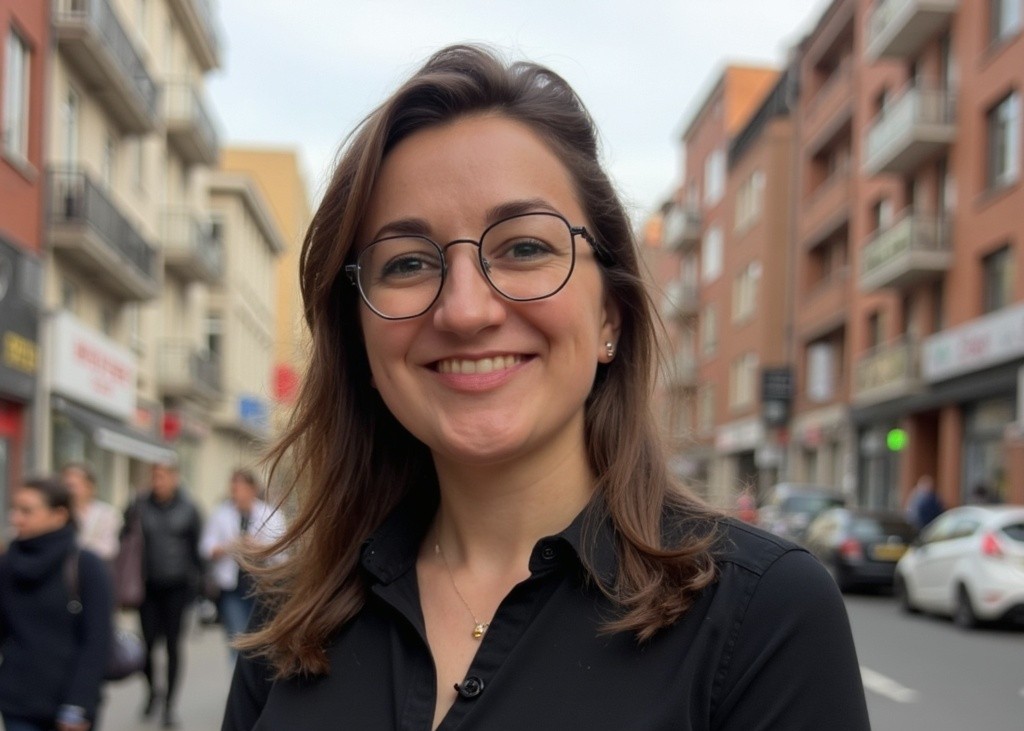
German national Sabine Imdahl is an attorney based in Rotterdam where she works as a ‘legal cupid’ and helps her clients find legal assistance in their native languages. She’s a big fan of the borrel, will go outside in any weather and would like to meet Amsterdam mayor Femke Halsema.
How did you end up in the Netherlands?
I originally came here for a bachelor’s degree in European law with absolutely zero plans for what would come after. That was 18 years ago. A three year degree in Maastricht turned into a master’s degree followed by training followed by a lot of other things and I just stayed.
I remember researching my career options. I thought about what I wanted to do after the bachelor’s, what was a possible master’s, what was a possible job in which country and in which language, and somehow the answers all pointed to the Netherlands.
How do you describe yourself – an expat, lovepat, immigrant, international?None of the above. I think I’m too German to be Dutch and too Dutch to be German. People try to place me in a box based on my behaviour, outfit, or accent… and usually fail. So let’s keep it simple: I’m European. Or even better, just human.
I spent one of my high-school years in New Zealand when I was 16. That had an influence on my development and then I went back to Germany. That was followed by university in the Netherlands and then I did half a year on Aruba to improve my Dutch skills.
Whenever you move to a different country, you take something different with you and you pick up new things. You learn, you grow, and you take some part of that language and that culture with you.
How long do you plan to stay?
Potentially forever. Time will tell, but for now I genuinely enjoy living here. The Netherlands still feels like the right mix of familiar and foreign in all the best ways.
And all the adult things for me have happened here; things like buying a house, doing a mortgage, tax declarations, and insurances. If I went to any other country, I would have to learn how to do those all over again. That can be exciting, that can be fun, but it would be a challenge and this feels like home.
Do you speak Dutch and how did you learn?
I do now, yes. My first student job was wrapping presents in a ICI Paris perfume shop during the Christmas rush. I learned exactly one sentence and one sentence only: ‘Is het een Sinterklaas of kerstcadeau?’ [‘is it a Sinterklaas or Christmas present?’]
I had to wrap all the presents and would say ‘hello’ to each customer before asking them the question and trying to chose the right type of paper. Thankfully, there was a third neutral type I could use when I didn’t understand what they were saying.
It was really learning by doing and in that type of job people love to talk to you. Customers told me long stories about the weather, their aunt, their dog, why they picked this perfume, and I just smiled and nodded because I didn’t understand a word. Step by step though, I picked up words. It was a paid course in the sense I was learning Dutch and getting paid to do it.
And I did do one class, but I found it really useless. You learn things like ‘Hi, my name is Sabine and I’m from Germany. My hobbies are…’ It’s not how anyone speaks. So I learned through e-studying and jobs instead. I did a lot of waitressing too, but then I started studying Dutch law, which is quite an upgrade from perfume vocabulary. I learned so many words no normal person would ever use in real life.
What’s your favourite Dutch thing?
The borrel for so many random reasons. People here will get together for drinks for anything. Ooh, it’s a birthday. Ooh, it’s nice weather. Ooh, a colleague bought a hamster. It can be absolutely random, but they’ll find a reason to celebrate life, have a drink with people, and have some snacks with that. I like it.
How Dutch have you become?
There are very Dutch things about me, but there are things I’ll never ever want to do, accept, or understand. I do bike everywhere, the obvious one, and I do take paracetamol for a few days before daring to call the doctor. That’s the culture here, which is very different from where I come from.
I also go outside in any type of weather and use the informal form of ‘you’ in Dutch with basically anyone I meet. It’s always the first name approach, whether that’s someone on the street, the CEO of a company, or whoever. There’s no hierarchy in that sense.
But one thing I still find very weird is this whole birthday thing where you come in and congratulate everyone. If it’s my friend Anna’s birthday, people will congratulate me even though it’s Anna’s birthday. I fail to understand that.
At a party, you’ll congratulate the parents, and I do get that part. They made the person. That’s great, awesome, but anyone else? A neighbour? A friend? I don’t get it. I won’t do it. I say ‘hi’ and then excuse myself. It’s where I draw the line.
Which three Dutch people (dead or alive) would you most like to meet?
Cabaretier Lisa Loeb. She talks about femicide and she does it in a really confronting and honest kind of way, which I find impressive and important. Topics like these shouldn’t be funny, but the way she exposes society’s blind spots is brilliant.
Amsterdam mayor Femke Halsema. I like people who show integrity in a human kind of way. She’s a politician who doesn’t just go where the wind blows, who actually stands for something, and tries to find connections between people, no matter their background or belief system. She brings nuance and humanity into tough conversations.
Anne Frank. Her writing still shapes how we understand an entire period of history.
What’s your top tourist tip?
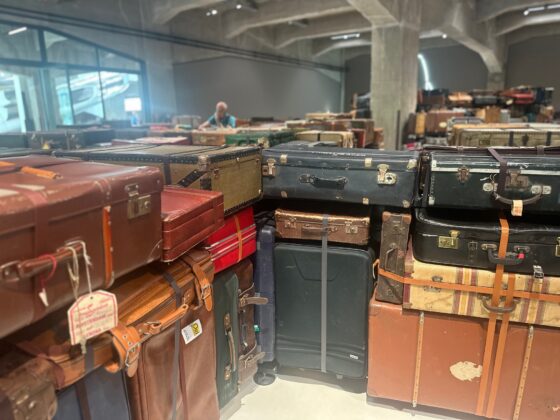
They should go to Fenix, the museum of immigration in Rotterdam. It emphasises how everyone is an immigrant. We have this idea that immigrants are either refugees or people who are merely looking for luck. When you go there, you’ll see that everyone’s story, if you go a bit further back, is always all about immigration. People move. It’s part of the DNA of human beings. I really like that. It’s a different perspective and they offer it in a kind of fun way.
And if they’re already in Rotterdam, they can make a day of it: take a boat across the river, wander through the Markthal, or try one of the many small restaurants that make the city feel so alive.
Tell us something surprising you’ve found out about the Netherlands.
Everyone speaks English at a pretty decent level, which makes you think everything here is easy since everyone speaks English, but the moment you need to talk about scary adult things, suddenly it’s no longer possible to speak in English.
Tax returns, insurances, notary deeds, and court hearings? You suddenly need a Dutch interpreter for things like these that really matter. That language gap is exactly why I started Counselr. And, yes, it’s a long road, but someone has to make the legal system more accessible for internationals.
If you had just 24 hours left in the Netherlands, what would you do?
One massive, 24 hour straight borrel. Life here is all about the people you meet, right? As much as you might enjoy a city, buildings, nature, or whatever you’re into about the country, at the end of the day, it’s about the people you meet, how they treat you, and how they welcome you. Because I feel at home here, I would want to invite everyone who has crossed my path in the past 18 years and share memories while having a good borrel together.
Visit Counselr’s website to learn more about Sabine’s work and efforts to improve accessibility within the Dutch legal system.
Sabine Imdahl was talking to Brandon Hartley.
Thank you for donating to DutchNews.nl.
We could not provide the Dutch News service, and keep it free of charge, without the generous support of our readers. Your donations allow us to report on issues you tell us matter, and provide you with a summary of the most important Dutch news each day.
Make a donation