Partner content
Fun, fit and friends: the benefits of joining a sports club
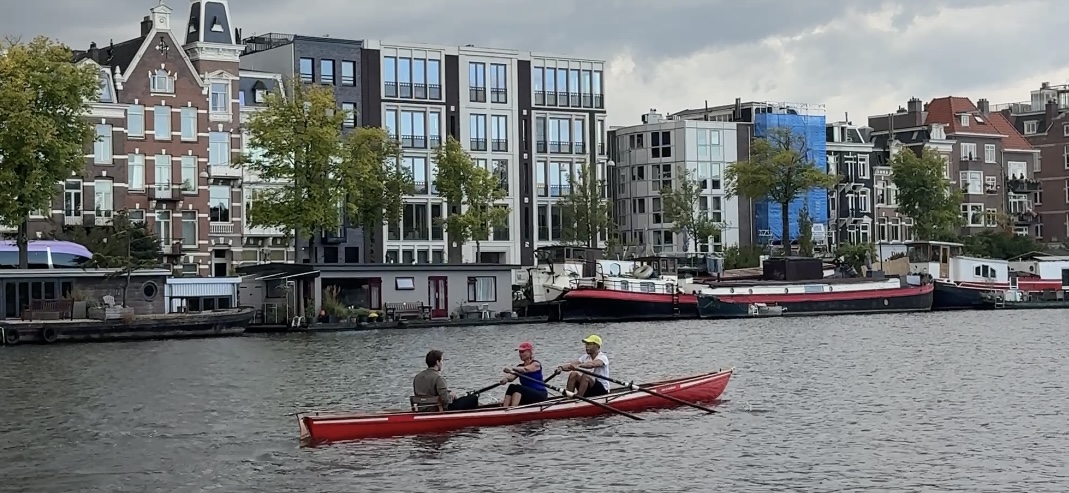
New Year is just around the corner, which means so are those pesky resolutions. But if you’re looking for a way to get fit, up your social life and hang out with some echte Dutchies, then joining a sports club may be the only resolution you need.
“Every time I move I find a sports club,” says 47-year-old energy executive and lifelong athlete Michelle Lesh. “It’s the quickest way to build community.”
Originally from the US, the college volleyball player found rowing as an adult. These days you can find her giving lessons on the Amstel River at De Hoop boat club in Amsterdam Oost, one of the country’s oldest.
“You’re with people week in and week out and build trust and connection so much faster,” says Lesh, who admits to speaking “rowing” Dutch. “You see the cultural similarities. Rowing is rowing. The words may be different, but the sport is the same.”
Lesh, who moved from Switzerland to Amsterdam in 2021, says rowing has helped her build a strong people network, make business connections and even integrate into Dutch society, including learning how to navigate the Dutch healthcare system.
“The sports element is common, but sitting with a coffee later is a way to make deeper connections,” she says. “You get access to knowledge with people who want to help you because you’re part of a team.”
She notes that in Switzerland and the Netherlands, adults are encouraged to join sports clubs, as compared to the US, where you have to seek them out. “It’s normal here, it’s more social,” she says. “You’re kind of expected to stay for a coffee. It’s a more holistic experience.”
One of her first-time rowing students, Brazilian Jefferson Gomes (33), agrees. “I decided to join the rowing club because I wanted to pick up a sport and feel more integrated into the community. It turned out to be a great decision — I’ve learned a few Dutch words (even if they’re mostly rowing-related!) and met some really nice people.”
He especially enjoys summer rowing on the Amstel, the many club-organised events and the opportunity to volunteer at races and competitions, “which makes the whole experience even more enjoyable.”
Volunteering
Volunteering is a big part of sports club life in the Netherlands, especially for smaller organisations that have fewer members and resources than some of the bigger field hockey and football clubs.
It’s something that parents quickly discover when they sign up their offspring for one of the many Amsterdam hockey or football clubs. Bar shifts and driving to away games are very much part of the job.
Unlike in many countries, competitive sports for children are arranged around clubs not schools, and they are a place where youngsters often make friends for life.
Dutch brand and design consultant Theo Lindemann (62) is a cricket player and board member at VRA Cricket Amsterdam, the country’s largest cricket club. A teenage baseball player, he became fascinated by cricket, but there was none of it in the east of the country when he was growing up. A Dutch friend brought him into VRA 35 years ago, and he hasn’t looked back.
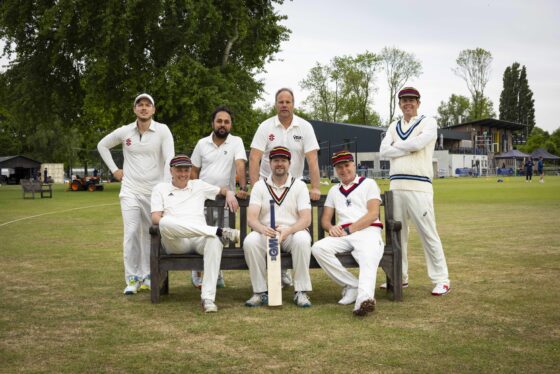
“The guy who introduced me to cricket and the club was a colleague who’s been one of my best friends for 35 years now,” he says. They’ve travelled the world together playing cricket – from Cape Town to Goa to Philadelphia – while here in Amsterdam, they make sure the substantial number of transient international club members feel at home.
But with only some 450 club members, as compared to 2,500 for a big field hockey organisation, everyone is expected to do their part. And at VRA Amsterdam, a large part of that centres around the clubhouse, which serves as a socialising spot to meet people outside of work and family.
“The bigger clubs can afford to hire a professional hospitality worker, but the small clubs can’t do that,” he says. Everyone pitches in behind the bar and also helps prepare the grass pitches and take care of the practice nets.
“The city helps with the maintenance of the fields,” he says, “but we own the pavilion and must maintain it. It’s all volunteers.” After they bought the clubhouse in 2019, a lot of people who couldn’t get to the office because of COVID had time on their hands to help renovate the building at a time when construction work was still allowed. “We needed all the volunteers we could get,” he says. “And we got them.”
Beer and bitterballen
Fellow cricket VRA club member Prasun Bannerjee (45) moved to Amsterdam from Calcutta in 2017 as a highly skilled migrant. He’s one of the club members—some 50% of them—who hail from India or Pakistan.
“In India, cricket is a religion,” says the systems engineer who dreamed of pursuing cricket as a career when he was young. He applauds the cricket infrastructure in the Netherlands, which helped him meet people and integrate while playing a sport he loved.
“The social part is very interesting to me,” he says. “A game, some beer, a few bitterballen and a chat. In India, that’s only at the experienced level.”
While Bannerjee plays competitive cricket, which is all about the sport, he also enjoys the social league, where people come to enjoy the game and camaraderie but don’t get competitively crazy.
“You get to meet locals and others in the cricket diaspora, which is a mix of ages, skill levels and demographics,” he says. “Especially in the summer, when there are barbeques and dinners and drinks. That’s how friendships develop.”
Now that it’s winter, club members still train together, play padel and often meet for dinner and game nights at someone’s home. He urges newcomers to join social cricket, which he says is unique to the Netherlands.
“Our cricket team plays poker during the winter,” he says. “I’m now getting hooked on poker!”
Don’t give up!
But sometimes finding a sports club can be difficult, says Cathy Leung (52), executive producer of Bram Radio and the Broadcast Amsterdam foundation. The London native moved to Amsterdam 15 years ago with her Dutch husband. She actually met him on a hockey pitch while playing on a corporate club in Britain. Once they moved to the Netherlands, finding a proper hockey club was her priority.
“I found it difficult to locate one,” she says, “which is surprising because there are so many clubs here. But a lot of people play. It’s a bit who you know here.”
Leung says not speaking Dutch also hampered her. She bounced around a few hockey clubs trying to find a good fit, and enjoyed playing on Ernst & Young’s corporate club, but, after the birth of her daughter, she traded in her hockey stick for a tennis racquet.
At the T.C. Kattenlaan tennis club in the Vondelpark, Leung started organising teams and became a captain. She eventually joined the club’s policy-setting committee, which meant her Dutch was up to par.
Stand up for yourself
“I was forced to speak Dutch, which is right,” she says. “It’s very integrating, learning the rules and settling arguments in Dutch. I’ve made connections and learned how to stand up for myself and not be a passive player.”
Her advice to those who are club searching in the city? “Don’t give up! There are lots of different clubs,” she says. “Finding and getting onto the right team is challenging. But get a taste of different clubs to get an idea of their culture.”
For tennis, you can do that via a membership of the KNLTB tennis association, the umbrella organization for tennis, padel and pickleball in the Netherlands.
Leung herself has actually found her way back to hockey via tennis through a teammate who invited her to her club. “Sometimes it’s knowing people who open doors,” says Leung. “I went on a ski vacation with my new hockey team. Between tennis and hockey, I have two very strong social networks.”
From baseball to ice hockey, lacrosse to rugby, padel to badminton. Amsterdam has hundreds of team sports clubs. Ask friends and colleagues for recommendations, and if you are looking for a club for your offspring, ask school parents as well. Check out IN Amsterdam’s suggestions here.
Thank you for donating to DutchNews.nl.
We could not provide the Dutch News service, and keep it free of charge, without the generous support of our readers. Your donations allow us to report on issues you tell us matter, and provide you with a summary of the most important Dutch news each day.
Make a donation