Catholic experts call for major inquiry into harm done to women
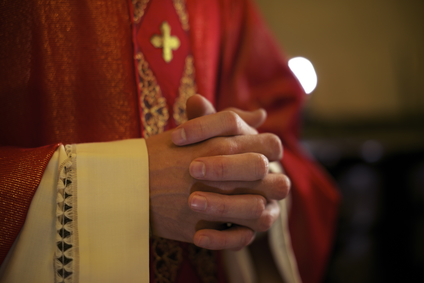
Catholic scholars and church representatives are calling for a comprehensive investigation into the harm women have suffered as a result of Catholic doctrine, Trouw reported on Monday.
The call for an inquiry mirrors earlier church-commissioned investigations into colonialism, slavery, the persecution of Jews, the oppression of indigenous peoples and sexual abuse, many of which were followed by Vatican apologies.
Catholic psychologist Anke Bisschops told Trouw the church’s moral teachings had long caused harm to women, who were treated as “child-bearing machines” with serious consequences for their physical and mental health.
She said any inquiry should examine both physical and emotional damage, including restrictions such as barring menstruating women from taking communion. “The church should don a hair shirt and admit it has made major mistakes towards women,” she said.
The appeal follows a 2023 study by sociologist Trudy Dehue, which showed that priests performed caesarean incisions on women who could not give birth naturally, a practice that continued into the 20th century and was not limited to the Netherlands.
The aim was to baptise the baby before death, based on the church’s teaching that an unbaptised child could not enter heaven. Poor hygiene meant the procedure — often carried out using a priest’s shaving knife — frequently resulted in the death of both mother and child.
How widespread the practice was remains unclear, and the church has not yet formally responded to the findings.
Dutch bishop Gerard de Korte told Trouw he acknowledged the historic caesarean practice and said it would be “useful” to establish its scale.
Church historian Paul van Geest, a member of the Pontifical Academy of Theology, also backed an inquiry and said he had never heard of the priestly manual Embryologia Sacra, which outlined the procedure. “The book was completely silenced — there is likely collective embarrassment behind that,” he said.
De Korte and Van Geest both support a broader historical and theological investigation into the impact of Catholic moral teaching on women’s lives, Trouw said.
Morally superior
Van Geest said such research should answer questions about how women, once viewed as morally superior by Augustine, later came to be regarded as inferior, and what forces drove the development of a morality that suppressed women.
Bisschops described the belief that an unbaptised baby was “lost” and that a woman should be cut open to save its soul as “horrific superstition”, but said it reflected wider attitudes to women within the church.
Dehue said she was surprised but pleased that there is now willingness to pursue such an inquiry nearly three years after her research appeared. “It is a very good idea — wonderful news,” she said.
Thank you for donating to DutchNews.nl.
We could not provide the Dutch News service, and keep it free of charge, without the generous support of our readers. Your donations allow us to report on issues you tell us matter, and provide you with a summary of the most important Dutch news each day.
Make a donation