Partner content
Want to start really speaking Dutch? Read on…
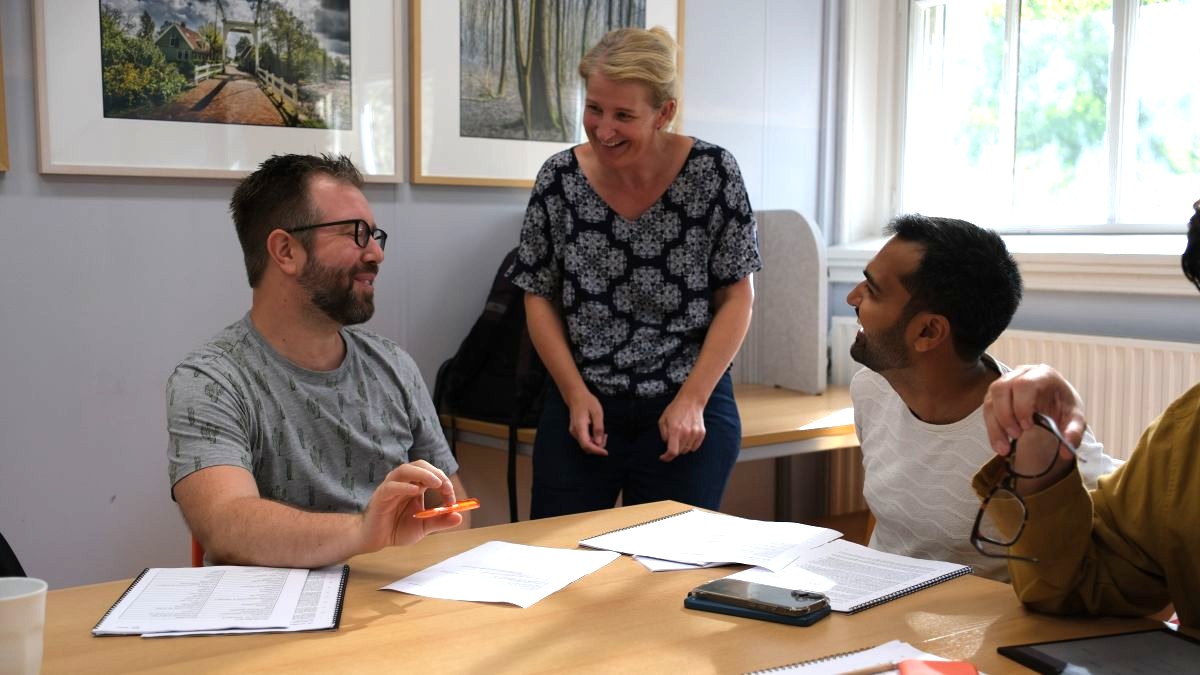
For so many internationals who have already taken Dutch language courses, their journey stops somewhere after heavy beginner grammar courses and before speaking truly takes hold.
Whether that’s due to book-focused courses, complicated grammar or futility and fear that you’ll never be able to get that guttural g sound right, life goes on and Dutch takes a back seat.
It’s for just that reason that NedLes, a homey Dutch school in Amsterdam Oost, developed its intensive, 2-week conversation course for those with at least an A2 level who want to start speaking Dutch in their daily lives.
“People want to stabilise their language level and feel confident enough to speak,” says Renske Berns, co-owner of NedLes.
Conversational boost
“Think of it as a conversational boost,” adds co-owner Welmoed Nijhout, speaking from their sunny and spacious office nearby the Oosterpark.
The intensive course immerses students in Dutch for 10 days, with two hours spent in class speaking and about four hours of preparation per class that you can do at home, at the school (on its sunny porch weather permitting!) or at the nearby public library.
“They’re not joking when they say intensive,” says Angely Diaz, an agile coach who moved to the Netherlands from Honduras in 2019. “You really have to commit to it, and I appreciate that. I’ve lived here for seven years already and really want to make progress this year. And NedLes is the only place I’ve found that really focuses on just talking, talking, talking!”
Podcasts
The small classes of 10 people maximum do that by starting off listening to a Dutch podcast, which students then discuss throughout the lesson. They also talk about daily topics, meaning you can carry what you’ve practiced with you outside the classroom and into the real world. There are no books used in class. (Yes, you read that right!)
“I can listen to podcasts more easily,” says Diaz of her progress since taking an intensive course. “But more than anything, it helped my self-confidence when speaking Dutch, to start the conversation in Dutch and resist switching to English.”
Student Stephen F., a classical musician from Toronto who moved to Amsterdam earlier this year with his husband (also a NedLes student!), agrees. He’s taken two intensive NedLes classes so far.
Muscle memory
“Both of them have helped me be less afraid to talk out loud in Dutch,” he says. “In class, I can speak well enough to be understood, but with mistakes. I still don’t get through many interactions in public that stay completely in Dutch without me or the other person switching to English, but when it does happen, I feel quite happy about it.”
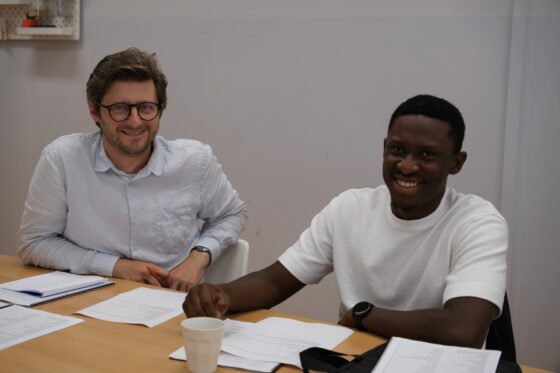
And compared to other Dutch courses he’s taken online or at different schools, he says what he likes about NedLes is that “it doesn’t get bogged down in grammar rules, so you practice speaking more”.
“It’s a more organic way to learn than only following rules without getting the muscle memory of applying them,” adds Diaz. “And the teachers are very supportive and make the class engaging, fun, and most of all, a space to learn Dutch. Unlike other schools, they didn’t switch to English when we were confused but spoke in basic Dutch to make sure we understood. I appreciate that, because that’s how it goes in the real world!”
The next intermediate intensive course begins December 7, with another one following early in the new year. At only €625 a course, NedLes makes learning to speak Dutch affordable. What better holiday gift to give yourself than one that keeps on giving?
Thank you for donating to DutchNews.nl.
We could not provide the Dutch News service, and keep it free of charge, without the generous support of our readers. Your donations allow us to report on issues you tell us matter, and provide you with a summary of the most important Dutch news each day.
Make a donation