Partner content
Hydrogen economy brings new explosion zones to the Netherlands
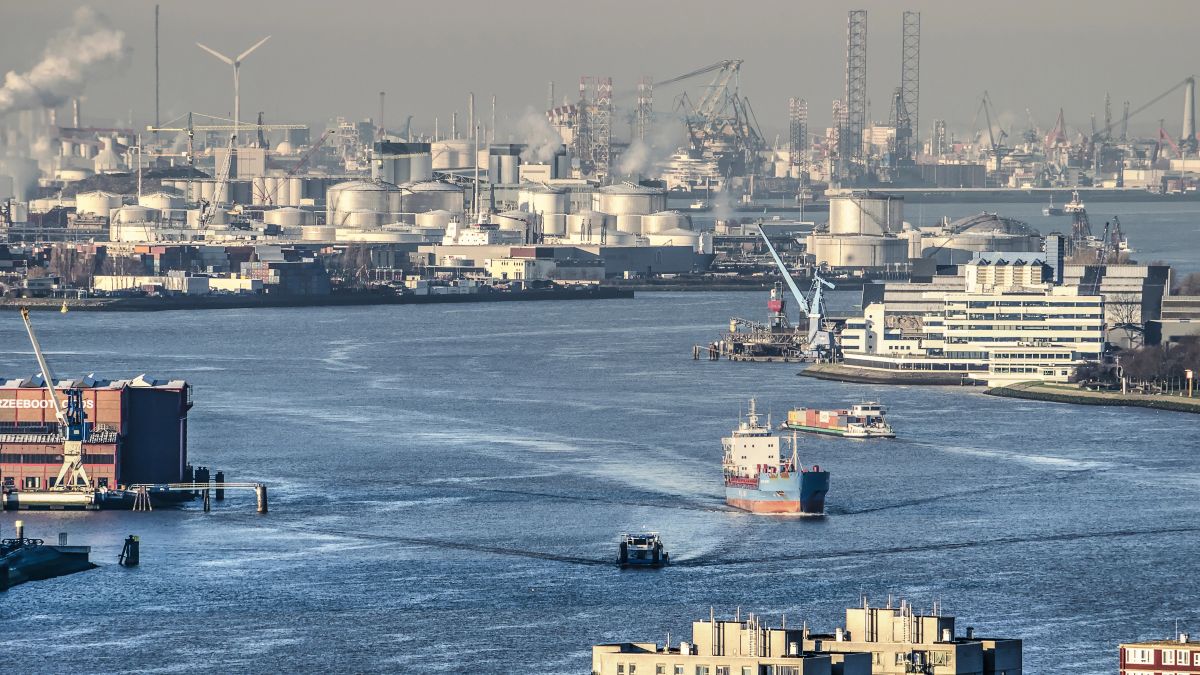
In May, king Willem-Alexander opened the first stretch of the national hydrogen network in Rotterdam: 32 kilometres of pipeline between the Maasvlakte and the Pernis refinery, already filled with hydrogen. With every new pipeline, hydrogen plant and filling station comes something less visible: an area where an ordinary phone, laptop or camera is not allowed.
A new map of the country
Wherever a flammable gas, vapour or dust can mix with air, European rules known as ATEX require the site operator to map the areas where that can happen and to classify them into zones. Inside a zone, only equipment that has been certified not to cause a spark or a hot surface may be used. In the Netherlands the zoning follows a national guideline, NPR 7910, and the labour inspectorate checks it.
For decades those maps covered the familiar places: refineries, chemical plants and tank terminals. Hydrogen adds new ones. An electrolyser, the plant that splits water into hydrogen and oxygen with electricity, is a hazardous area. So are hydrogen filling stations, a compressor, a storage tank and the land around a pipeline valve.
Shell’s 200 megawatt electrolyser on the Maasvlakte is nearing completion and is expected to start commissioning in 2027, Air Liquide received the first electrolysers for a second 200 megawatt plant in May, and the country already has 23 public hydrogen filling stations.
Hydrogen is also a stricter case than petrol or natural gas. It ignites across a much wider range of concentrations in air and needs far less energy to set it off: a spark too weak to ignite petrol vapour can be enough. Hydrogen therefore sits in the most demanding equipment group of the ATEX system, known as IIC, and a device that is fine in a refinery is not automatically good enough for a hydrogen site.
Closer than you think
Zones are not only found behind a fence in the port. Every petrol station has them around its pumps and tank vents. Flour mills and industrial bakeries have dust zones, and so do woodworking shops and the grain terminals in the Rotterdam port. Paint shops are zoned because of solvent vapour, and warehouses that still run forklifts on lead-acid batteries often have a zoned charging room, because charging those batteries gives off hydrogen. If you work at any of these places, the safety induction will tell you where the lines are.
What it means for the people inside
Inside a zone, the devices people carry are the weak spot: the fixed installation is designed and inspected, the phone in a contractor’s pocket is not. Employers therefore hand out certified phones, tablets and cameras, built by a small cluster of Dutch companies, mostly around Rotterdam.
Internationals are a large part of that workforce. In 2024, 17% of employee jobs in Dutch industry were held by people who came to the Netherlands as adults, against 15% across all sectors, according to Statistics Netherlands.
Deltalinqs, the employers’ association of the Rotterdam port, has said the port cannot do without international workers and counts thousands of hard-to-fill vacancies, many of them in energy transition jobs. For many of them the system is new in a literal sense: North America classifies hazardous locations in divisions rather than zones, with different markings on the equipment, so an engineer arriving from Houston or Calgary meets a different rulebook on day one.
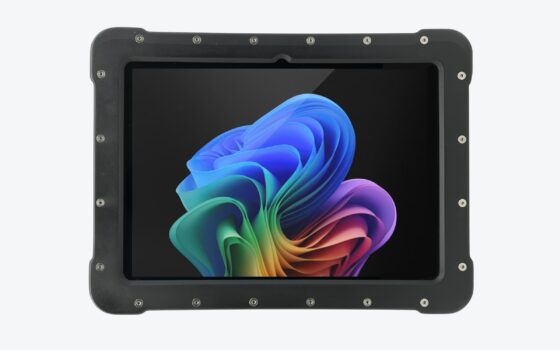
One of those Rotterdam-based companies is Armadex in Ridderkerk, which this autumn introduced a universal ATEX tablet case: a certified housing that takes standard iPads, Galaxy Tabs and Surface tablets, so that a plant can replace the tablet without replacing the certified part. It is certified for zone 2, the type of area where an explosive atmosphere is not expected in normal operation, and for the IIC group that hydrogen requires. “Until now a certified tablet was one device glued to one housing, and every new tablet generation meant starting again,” says Frank Matena of Armadex. “Companies replace a tablet every two or three years, while the housing lasts ten. Separating the two was overdue.”
Certified devices are sold through specialist dealers and webshops; ATEXwinkel.nl, for instance, lists explosion-proof tablets alongside phones, cameras and lamps. They cost a multiple of the consumer version, which is why employers provide them rather than ask staff to bring their own.
The practical advice is simple: take the induction seriously, look for the orange hexagon with “Ex” on any device you are handed, and ask the site’s safety officer, in Dutch the veiligheidskundige, when something is unclear. “Hydrogen does not change the rules, it makes them bite harder,” says Matena. “A spark that would do nothing next to a diesel tank is enough here, so the things people carry into the zone get checked more strictly than ever.”
Thank you for donating to DutchNews.nl.
We could not provide the Dutch News service, and keep it free of charge, without the generous support of our readers. Your donations allow us to report on issues you tell us matter, and provide you with a summary of the most important Dutch news each day.
Make a donation