Would you read a book if it was printed like a newspaper?
Molly Quell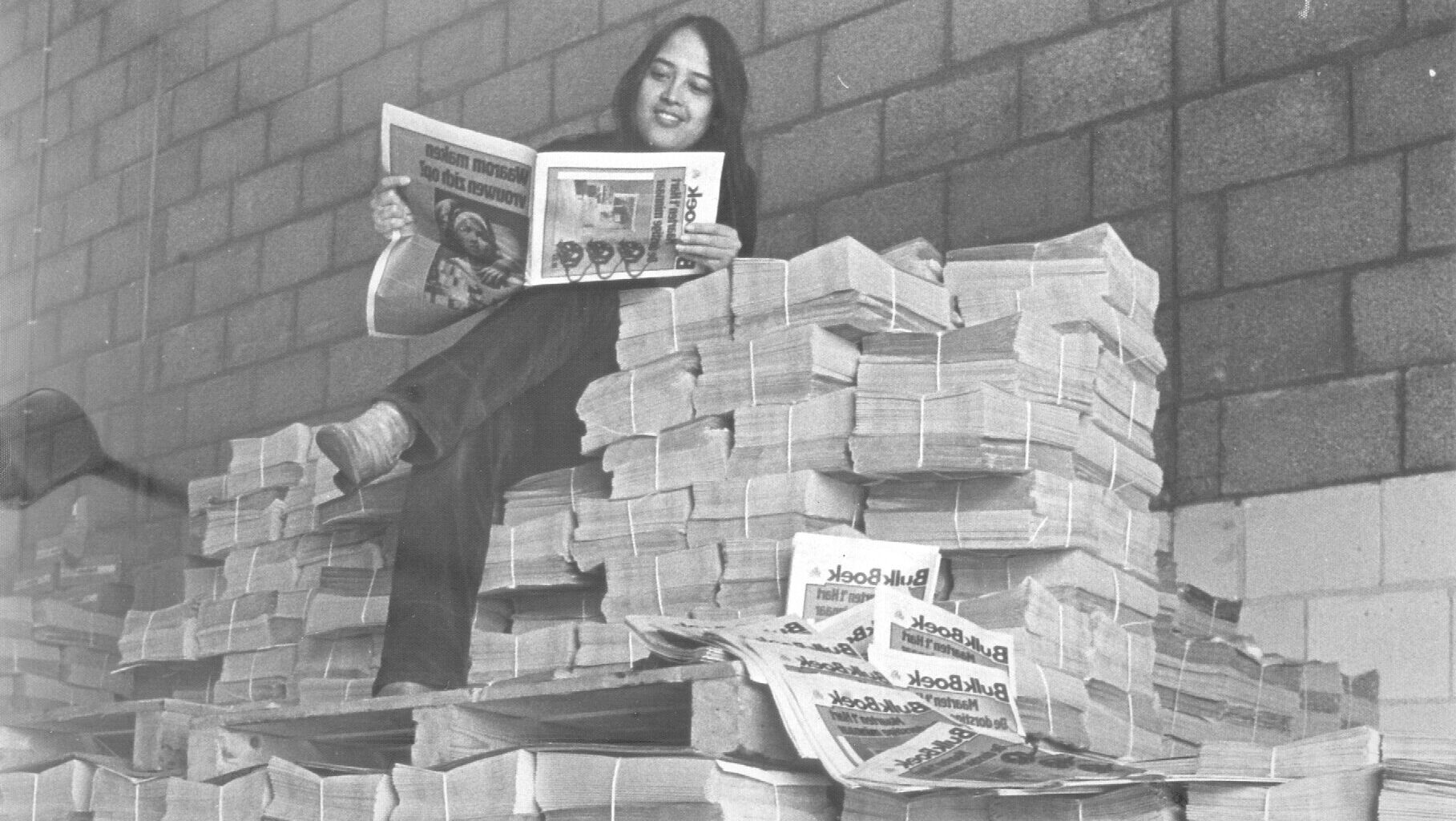
See more DutchNews articles in your Google search results
See more DutchNews articles in your Google search results
Add as a favourite source on Google Add DutchNews as a favourite source on GoogleTypically, book formats are pretty standard. Hardback, paperback, e-book. But in the 1970s, a Dutch publisher tried a new configuration for novels: the newspaper.
Theo Knippenberg attributes his publishing career to his mother, who had for years nagged him to find a respectable trade.
“Totally by accident, I became a publisher,” Knippenberg told DutchNews.
The now 80-year-old stumbled on his success at an arts festival in Utrecht in the late 1960s. He sold a series of tiny books, bound together with an elastic band, by Dutch writers.
Knippenberg expalined that he ran into author Harry Mulisch at a road crossing and convinced the writer of The Discovery of Heaven to let him publish an excerpt of an essay. Once Mulisch was on board, Knippenberg used it as leverage to convince other famous Dutch writers, such as Jan Wolkers, to contribute.
A voracious reader, Knippenberg found books unaffordable during his student years. He took the proceeds from the mini book sales and invested them into publishing equipment – not a traditional printing press but one built to print newspapers.
Thinner newsprint was cheaper to produce and therefore cheaper to sell. Together with his wife, Patty Voorsmit, Knippenberg launched Bulkboek.
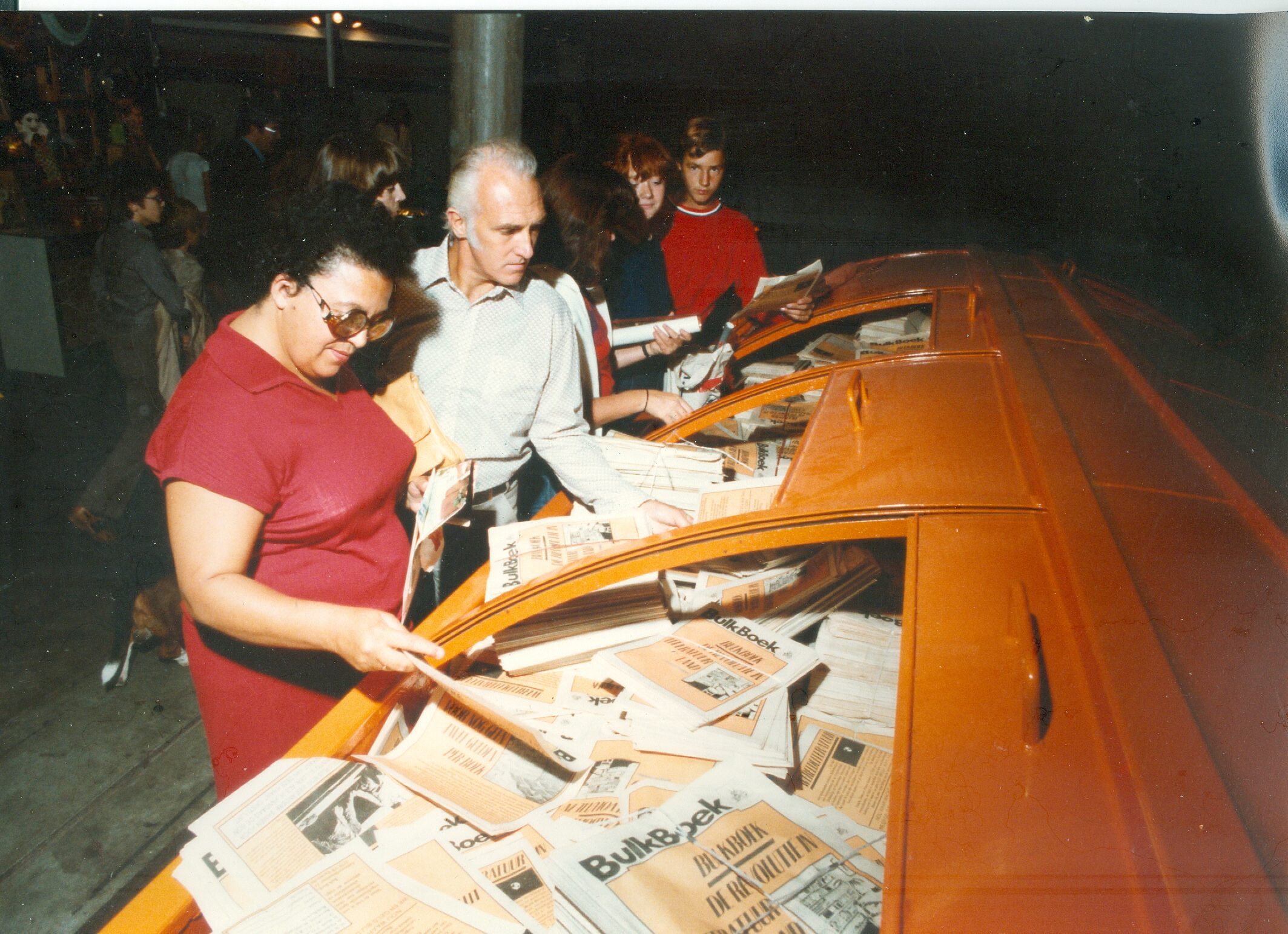
The first edition, published in 1970, was Schroot by Belgian writer Jef Geeraerts. It follows a former colonel in the Belgian military who is struggling to adapt to life in the Congo.
Over the following 26 years, Bulkboek would publish 250 novels in the newspaper format.
Readers could sign up for an annual series of 10 issues, which cost 1.50 guilders apiece, equivalent to around €4 today. At its peak, the company had over 100,000 subscribers.
The editions were aimed at secondary students and included interviews, critical essays and explanatory texts to help readers understand the work.
The works were selected based on published availability and “my own tastes,” Knippenberg said.
He knew nothing about how publishing worked and had to learn how to create the text sheets, include illustrations and run the books off. He describes his early set-up as “so primitive.”
The initial print runs were all books from Dutch or Flemish authors but by the late 1970s, Knippenberg began branching out. “I got ambitious,” he says. Leo Tolstoy, Pablo Neruda and Iris Murdoch were a few of the authors whose works found their way into the Bulkboek format.
The publisher also moved beyond the Netherlands into Belgium, Germany and France, and began to publish books in languages other than Dutch.
In the early 1990s, the economics of publishing had changed, as cheap paperbacks came onto the market.
Last year, Bulkboek was taken over by educational publisher BruutTAAL, but Knippenberg continues to be involved with some aspects of the company. The new endeavour is working on a series of publications of short stories.
“Students have much shorter attention spans these days,” he says, explaining why short fiction is a better way to draw in young readers.
The publication format continues. On second-hand book websites, Bulkboeks are still available for sale. Leo Tolstoy’s Boyhood, Cees Nooteboom’s Half the World and Willem Frederik Hermans’s The Signet Ring can all be found, many for two or three euros. Less than you would have paid when they were first published by Bulkboek.
Thank you for donating to DutchNews.nl.
We could not provide the Dutch News service, and keep it free of charge, without the generous support of our readers. Your donations allow us to report on issues you tell us matter, and provide you with a summary of the most important Dutch news each day.
Make a donation