Villagers at centre of asylum row urge council to heal divide
See more DutchNews articles in your Google search results
See more DutchNews articles in your Google search results
Add as a favourite source on Google Add DutchNews as a favourite source on GoogleResidents of a Noord-Brabant village at the centre of a bitter row about plans to accommodate 50 asylum seekers have accused the local council of making the problem worse through its poor communications strategy.
Violent protests were staged in Engelen, on the edge of ’s-Hertogenbosch, after the council announced in April it would be housing a group of teenage boys and girls, all under 18, in a former police station on Beverspijken.
Opponents have staged marches to express their concern about women’s safety, while supporters say they have been subjected to a hate campaign, with swastikas and obscene words spray-painted on their homes.
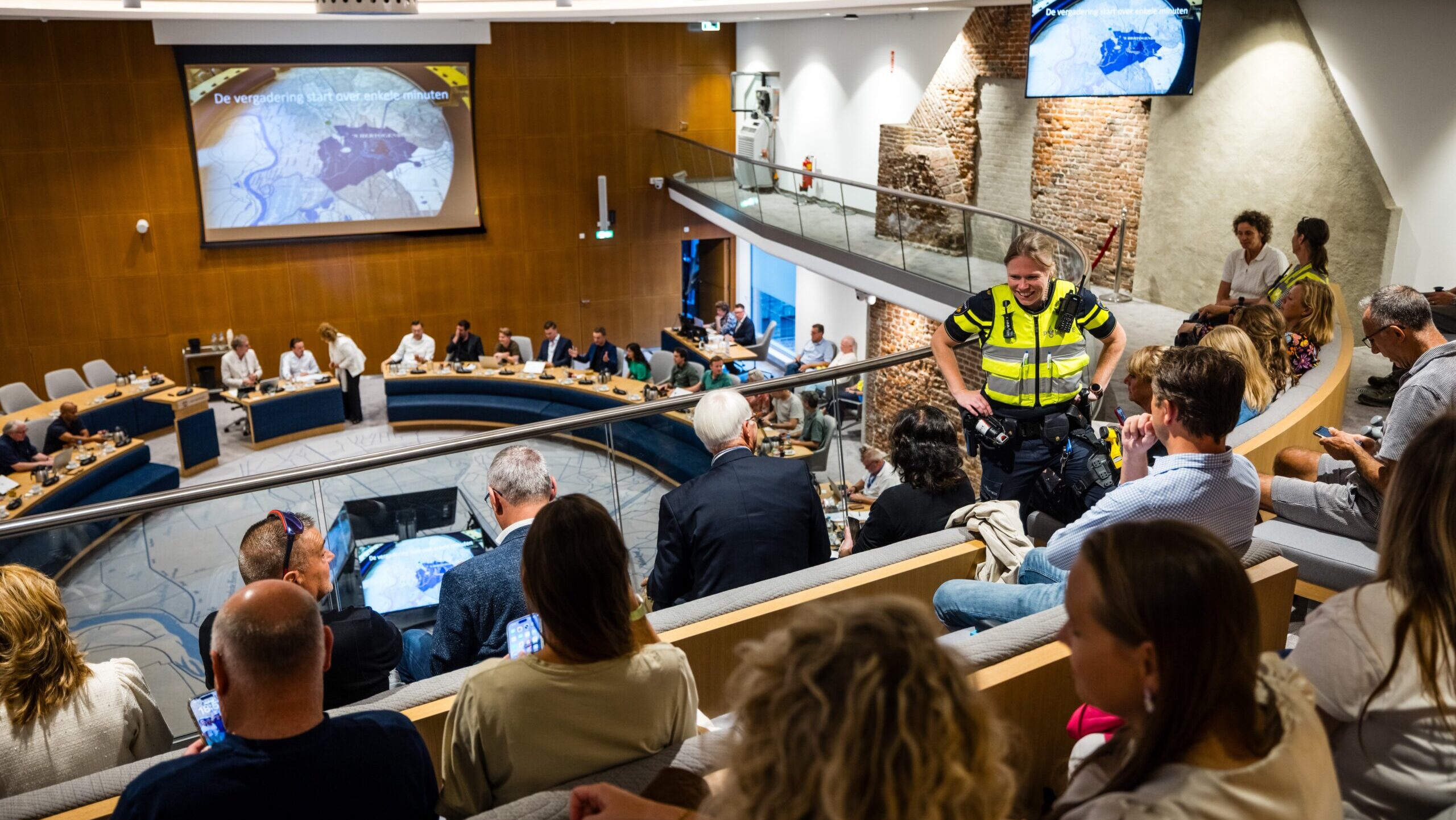
At a council meeting on Monday night, residents on both sides of the divide appealed to the local mayor, Jack Mikkers, to talk to villagers before the final decision is made next month.
Around 100 people packed into the council chamber in Den Bosch and a side room set up as an overspill location for those who were unable to get into the public gallery.
The council says it has an obligation to accommodate asylum seekers under the so-called “spreading law”, which requires all local authorities to take in a fair share in order to ease overcrowding at the reception centre in Ter Apel, Groningen.
“Spend an evening walking through Engelen, ring people’s doorbells and listen,” said Tamara Govers, who organised one of the marches in May. “Come as a person, not an official, without cameras or press releases.”
Blacklist
Astrid van den Broek, who spoke in support of the plan, called for councillors to stop the threats and intimidation. “My name’s been put on a blacklist,” she said, adding that a man who threatened her when she filmed a group putting up protest signs was at the meeting.
“I’ve told security,” she said. “Don’t talk to me about being concerned about our women’s safety if the shelter goes ahead.”
Other villagers said the municipality had been too slow to respond to the menacing atmosphere in the village. “The shelter has driven a wedge between friendships,” said resident Eva Buijs.
Jack Burg, chair of local campaign group Veilig Engelen, said “better communication” from the council could have prevented the situation escalating.
Burg said the plans did not do enough to address concerns about the impact of the refugee centre on quality of life in the village.
“Conditions and rules have not been worked out,” he said. “We need more than this plan for a suitable accommodation facility. We want clarity, but that’s not what this is.”
Strict conditions
The council has set strict conditions for the centre, including a 10pm curfew and night-time security. Residents will have to move out as soon as they turn 18, most likely to smaller groups in Den Bosch.
The municipality also wants the refugee accommodation agency COA to send equal numbers of girls and boys, but that may be difficult to arrange because five out of six underage asylum seekers are male.
Some residents said they were not against accommodating refugees in the village, but called the empty police station on Beverspijken the “wrong location”.
One group produced data from decibel readings taken from the site that showed levels of 83 decibels had been recorded at night – 18db higher than the level permitted by the local environmental plan.
Others questioned whether the council and the COA could be relied on to stick to their agreeement to make the accommodation centre a temporary facility, pointing out that permits for other locations have been extended at the request of the agency.
Thank you for donating to DutchNews.nl.
We could not provide the Dutch News service, and keep it free of charge, without the generous support of our readers. Your donations allow us to report on issues you tell us matter, and provide you with a summary of the most important Dutch news each day.
Make a donation