Groningen calls for permanent solution to refugee beds crisis
See more DutchNews articles in your Google search results
See more DutchNews articles in your Google search results
Add as a favourite source on Google Add DutchNews as a favourite source on GoogleGroningen city council has said it can no longer offer temporary shelter for more than 100 asylum seekers who had to sleep outside the main reception centre in Ter Apel because of a shortage of beds.
Up to 140 refugees have spent the last three nights the Hanze Plaza conference centre under the supervision of the Red Cross, but the municipality said it was looking for a long-term solution with the asylum ministry.
“It is inhumane to make people who are fleeing sleep outside and appalling that no other municipality so far has raised their hand to arrange adequate accommodation,” Manouska Molema, alderman responsible for asylum, said.
But she told local radio station Radio Noord that without a permanent solution with the ministry, the council did not have the facilities to deal with the overspill from Ter Apel.
“Yesterday it became clear that we don’t have enough capacity for people when need overnight shelter,” Molema said. “We said then: we will extend it for one more night and we’re prepared to take gap-filling measures if there is some perspective. But if there isn’t we will stop.”
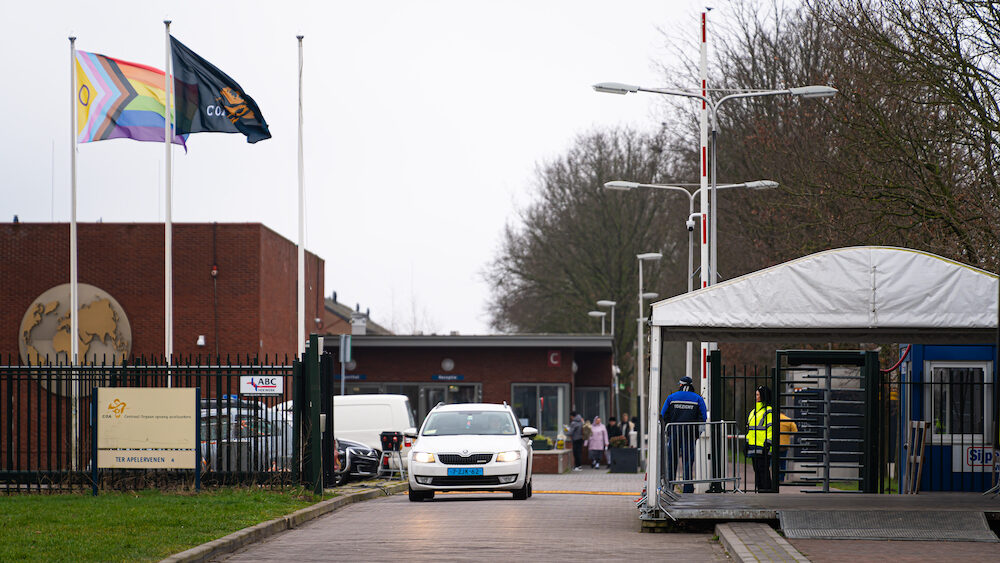
More than 2,300 people are currently staying overnight in Ter Apel, which has a limit of 2,000 beds, the highest number in two years.
Camp beds
The refugee accommodation agency COA is having to pay fines of €50,000 for every night it goes over its capacity after the local council in Westerwolde sought a court order to try to bring the numbers down.
The COA started turning away some asylum seekers last week, prioritising the most vulnerable refugees such as unaccompanied children.
Other local authorities, such as Stadskanaal and Gieten, have also offered temporary shelters for single men, which are often spartan facilities such as a camp bed in a sports hall.
Amsterdam also agreed to take in an extra 230 refugees, but some councils have refused to house any, even though under the so-called “spreading law” they are obliged to accommodate a proportionate share.
Harm Goossens, general manager of the Red Cross in the Netherlands, said it was “incomprehensible” that the country was unable to find enough beds for refugees.
“We are worried that if this situation continues, we will soon see women and children on camp beds.” he said. “Can we really let this happen as a country?”
Thank you for donating to DutchNews.nl.
We could not provide the Dutch News service, and keep it free of charge, without the generous support of our readers. Your donations allow us to report on issues you tell us matter, and provide you with a summary of the most important Dutch news each day.
Make a donation