Dutch ministers welcome Orbán defeat in Hungarian election
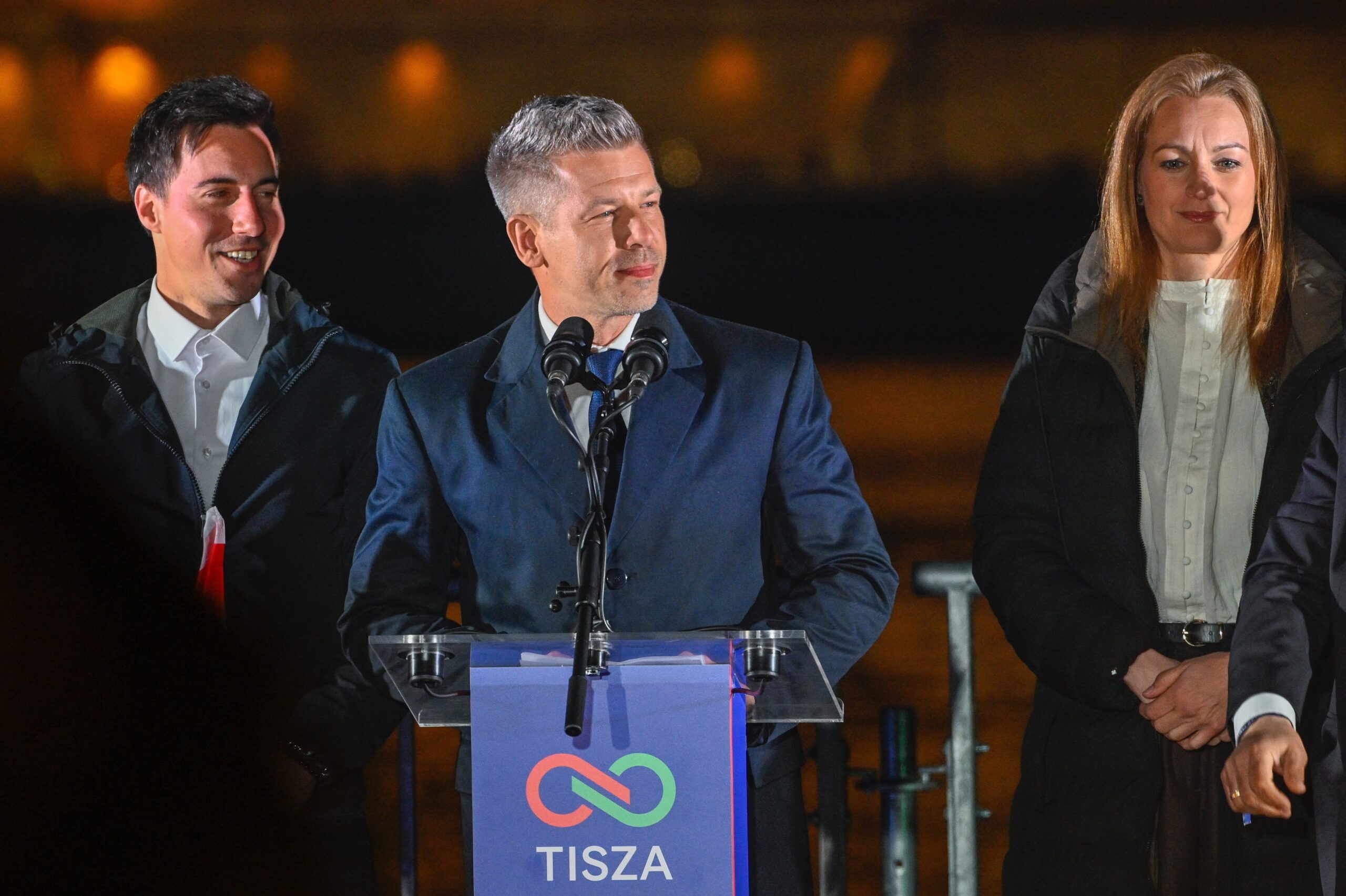
The collapse of Viktor Orbán’s 16-year rule in Hungary has been welcomed by Dutch coalition leaders in The Hague and promises to end a long-standing fight over frozen EU funds in which the Dutch had a central role.
Péter Magyar’s centre-right Tisza party won 138 of 199 parliamentary seats on 53.6% of the vote, a two-thirds super-majority that lets the new government rewrite the constitution. Orbán conceded on Sunday evening, calling the result “painful but clear”.
Among the voters who delivered that result were 6,300 Hungarians who cast ballots at their embassy in The Hague. “Orban has been in power for 16 years and we want to get rid of him, and when I say we I mean most of the people here,” one voter told NOS.
Jetten and Yeşilgöz welcome the result
Prime minister Rob Jetten congratulated Magyar in both Dutch and English on social media, calling the result “a new step for Hungary and the EU, with hope for the restoration of democracy, the rule of law, and European cooperation”.
The Hungarian people have spoken. This marks a new step for Hungary and the EU, with hope for the restoration of democracy, the rule of law, and European cooperation. Congratulations to @magyarpeterMP on his historic election win.
— Rob Jetten (@MinPres) April 12, 2026
Defence minister Dilan Yeşilgöz-Zegerius said the result opened “a new chapter” for Hungary and Europe, with “great hope for renewed opportunities for a stable democracy and a strong rule of law”.
However, Dutch far right leader Geert Wilders, who has been one of Orbán’s most consistent European allies, said on social media that “Orbán was the only leader with balls in the EU. Tough on migration and anti-woke.”
“Budapest is, thanks to him, an oasis of safety compared to Amsterdam, Brussels or Paris. Now we are stuck with weaklings like Jetten, Macron, Sánchez and Merz. A sad day. But we keep fighting.”
PVV MEPs sit in the Patriots for Europe grouping that Orbán co-founded in the European parliament after the 2024 elections.
A four-year Dutch fight ends
Around €18 billion in EU cohesion and recovery funds earmarked for Hungary have been frozen since 2022 under the rule-of-law conditionality regulation, an instrument the Dutch government, under Mark Rutte, fought to create and then to enforce.
The Hague has been one of the loudest voices in insisting the money stay locked until Hungary delivered judicial and anti-corruption reforms.
Magyar campaigned explicitly on unlocking those funds by meeting the Commission’s conditions. His day-one agenda includes a bid to join the European public prosecutor’s office, which Hungary has refused to join under Orbán, alongside the creation of an asset recovery office and a package of anti-corruption measures.
Thank you for donating to DutchNews.nl.
We could not provide the Dutch News service, and keep it free of charge, without the generous support of our readers. Your donations allow us to report on issues you tell us matter, and provide you with a summary of the most important Dutch news each day.
Make a donation