High turnout is not the be all and end all of local elections
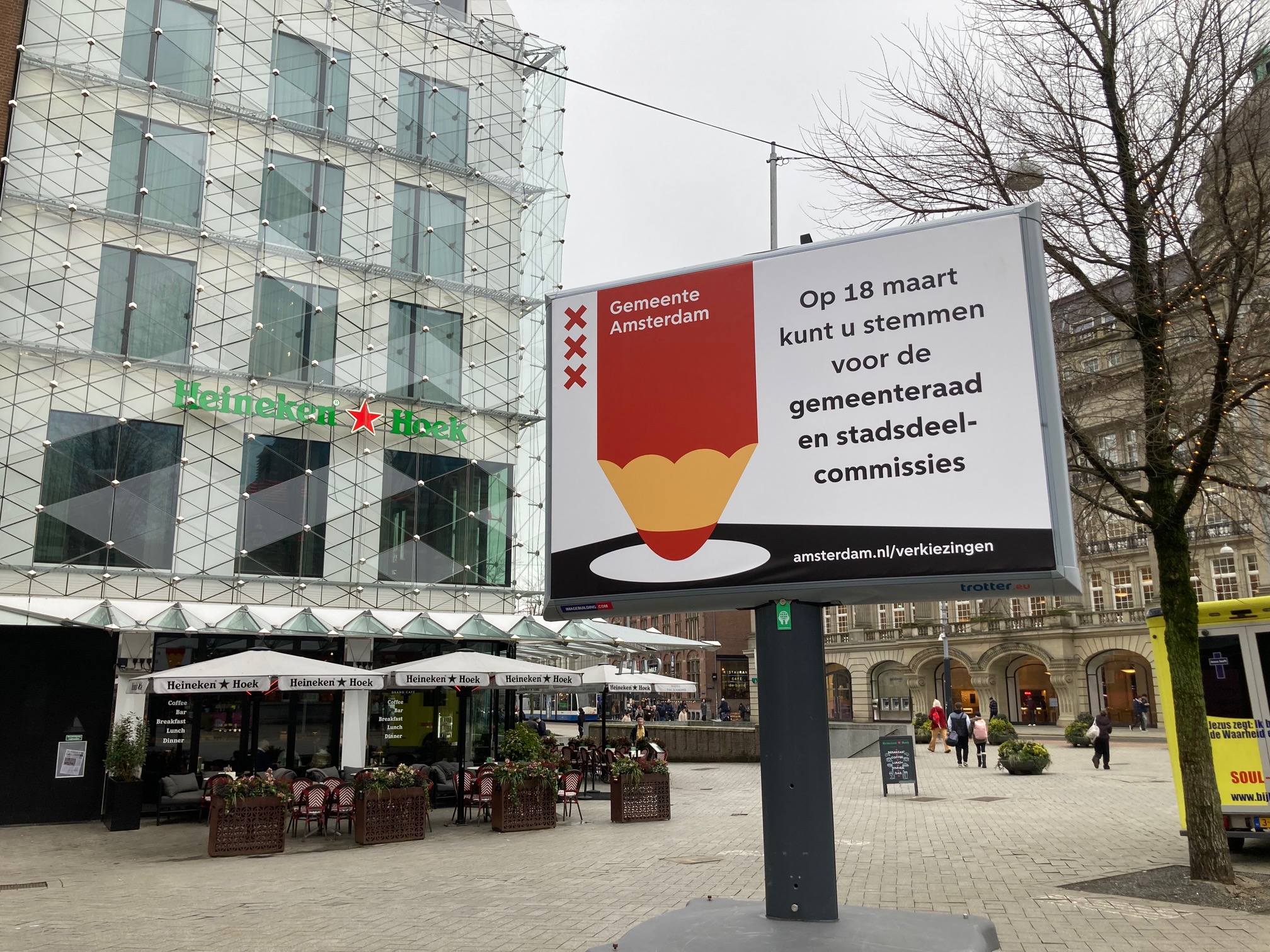
It’s not those who turn out to vote but those who stay at home that local councils should be worried about, says political scientist Hans Vollaard.
Turnout for the last local elections in 2022 fell to 51%, the lowest since the abolition of compulsory voting in 1970. “The foundations of democracy are crumbling,” Rotterdam D66 chairwoman Chantal Zeegers said as the city’s 39% turnout brought up the national rear.
People have distanced themselves from politics, and the mandate and legitimacy of local councils have been weakened, say councils across the country.
But a higher turnout on March 18 will not necessarily change that. Turnout is not a good way of gauging people’s commitment to the local political community. For many, voting is a civic duty, whether or not they know much about local politics.
In addition, a study into voter participation (Lokaal Kiezersonderzoek 2022) showed that 42% of the electorate voted partly or entirely with national political issues in mind.
Turning up at the ballot box, then, is not the only way of measuring involvement in the local community. The survey also showed that non-voters were involved in social activities in their local area, offering their spare time to work at food banks, football clubs, the fire brigade or the local barbecue committee.
Voting is a choice — a right every citizen has to signal that the local council is not doing its job properly, or that their interests are not getting enough attention.
The survey showed that some voters from the well-heeled Rotterdam neighbourhood of Hillegersberg declined to vote precisely because things were ticking along nicely in their neck of the woods. In that instance, a lower turnout could even be regarded as a positive.
The assumption in all this is that people know they can vote in the local elections and understand what that vote can bring them. That is doubtful, to say the least. Fewer young people with vocational training, and people with foreign roots in particular, exercise their right to vote.
The national education council concluded some years ago that the level of knowledge about the democratic rule of law among young people is worryingly low. Do they know what their right to vote in local elections entails?
The same question may be asked of EU citizens and non-EU citizens who have lived here for five consecutive years, such as Indian Eindhovenaren, Polish Zeewoldenaren, Argentinian Rotterdammers and Italian Leidenaren. How much effort are their local councils putting into informing them of their right to vote?
The lack of knowledge about voting rights means that higher turnout is mainly driven by people whose upbringing and education have made them sufficiently politically aware to make themselves heard.
Self-interest
And that brings us to the core problem of unequal turnout. Fewer young people, people with vocational training and people with foreign roots find their way to the ballot box, and their interests do not, or only partly, coincide with those of people who vote more often. Think of the need for starter homes, healthcare, job reintegration, language classes or support when confronted with discrimination.
In addition, non-voters have different views on certain issues. They are, for instance, more in favour of camera surveillance and less keen on wind turbines. They are less supportive of subsidies for culture and even less keen on homes for asylum seekers compared to people who do vote.
Political parties often target neighbourhoods and groups who already vote for them in order to secure support in future elections, creating a vicious circle in which people from low-turnout groups feel confirmed in their belief that politicians are not interested in them. A higher turnout, therefore, is not an improvement as long as it does not represent social groups equally.
Trust
In 2022, the low turnout was often attributed to a lack of trust in politics. Indeed, non-voters often cite a lack of trust as a reason, although practical problems and lack of interest also played a part. However, lack of trust can also act as a spur to vote — for other parties rather than those in power. A higher turnout therefore does not necessarily mean political trust is higher.
Even a high turnout on March 18 will not strengthen the mandate of local councils, as voters are often unaware of the local issues playing out in their towns and cities. Add turnout inequality to that, and the conclusion must be that local councils have their work cut out to discover what people really want from them.
Hans Vollaard is a political scientist at Utrecht University and carried out the Lokaal Kiezersonderzoek 2022. This article was first published in the Volkskrant.
Thank you for donating to DutchNews.nl.
We could not provide the Dutch News service, and keep it free of charge, without the generous support of our readers. Your donations allow us to report on issues you tell us matter, and provide you with a summary of the most important Dutch news each day.
Make a donation