GL-PvdA take biggest national share of vote as FVD break through
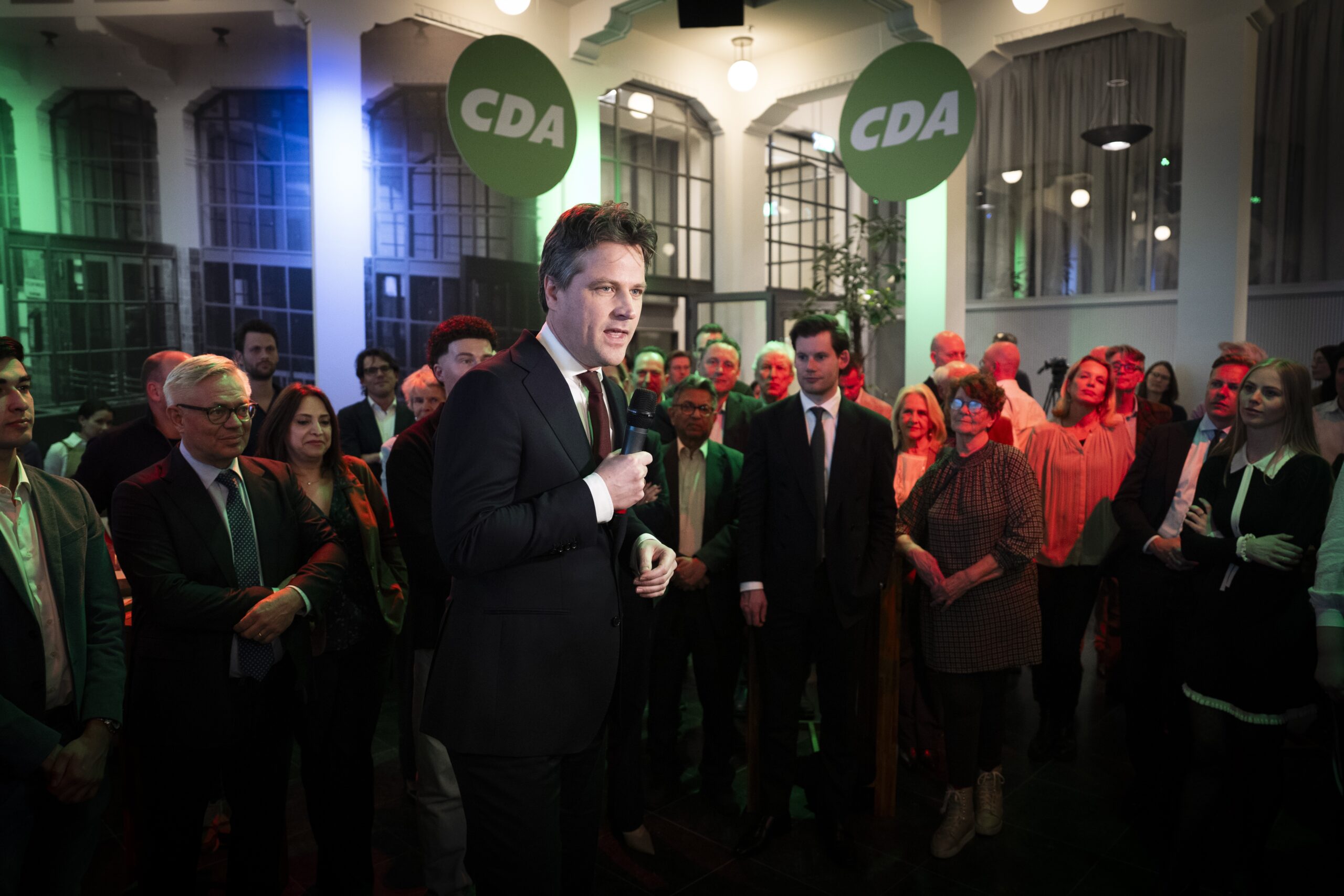
The left-wing alliance GroenLinks-PvdA held its position as the largest national party in the Dutch local elections, but the cheers were muted as its vote share dropped by nearly 3%.
Comparisons with the national elections are difficult because of the strong showing for local parties – which took over one third of the vote. Nevertheless, Jesse Klaver’s party performed strongly in the cities, gaining two seats in Rotterdam to overtake largest party Leefbaar Rotterdam as the largest party on the council, and an extra seat in Utrecht.
GL-PvdA also remained the largest in cities such as Groningen, Eindhoven and Leiden, despite losing seats in all three. But across the country it was a bleaker picture as the party’s total share fell from 16% in 2022 to 13.7%.
Party leader Jesse Klaver claimed the result showed GL-PvdA had made progress since the general election in October, when it finished first in just eight municipalities, even though it lost 139 of its 1,181 councillors.
“There is something in the air,” he said as the first results came in on Wednesday evening. “We could become the largest party in the Netherlands.”
Check the results in your municipality on NOS’s detailed web page
The three parties in Rob Jetten’s centre-right coalition saw their vote broadly hold up, with D66 gaining 0.8% nationwide compared to four years ago, when it was a junior partner in Mark Rutte’s cabinet.
It became the largest party in Maastricht, gaining two seats, and made gains in regional cities such as Den Bosch, Leeuwarden and Delft, winning 9% of the vote altogether.
Jetten said: “We’ve retained our seats in a lot of places and made small gains in others, and I think that’s a great result.”
CDA have most councillors
The Christian Democrats (CDA) closed the gap on GL-PvdA as their vote held up nationwide. Despite losing 19 councillors they became the largest party nationwide in terms of seats with 1,109 altogether.
Party leader Henri Bontenbal said: “I think this is a great result. Four years ago we wouldn’t have dreamed of it.”
The third coalition partner, the right-wing liberal party VVD won 65 seats across the country. It lost four seats in The Hague, where local party Hart voor Den Haag swept the board, but in the other cities its vote largely held up.
“We’ve seen that local parties have done well and the national parties have been hit by that, and if that’s the result at the end of the day, we need to learn from that,” VVD leader Dilan Yesilgöz said.
Asylum centres
The biggest winner nationwide was the far-right Forum voor Democratie, which finished with 298 councillors in around 100 municipalities, winning seats everywhere it stood.
FVD was strongest in areas where there was strong local resistance to building or setting up asylum seekers’ centres. It fielded candidates in twice as many muncipalities as before and took 4.1% of the vote, almost four times as much as in 2022.
All local authorities are obliged to house a proportionate share of refugees, but both FVD and several local parties won seats with campaigns promising to block any plans.
FVD have been ruled out as a coalition partner in several cities, including Rotterdam, The Hague and Nijmegen, because some of their candidates have links to extremist right-wing groups or praised terrorists such as the Norwegian mass murderer Anders Breivik.
Party Lidewij de Vos accused her opponents of making “excuses” for refusing to work with FVD councillors. “We have a foot in the door everywhere. It’s a fantastic night,” she said.
PVV mixed results
It was a mixed night for Geert Wilders’s PVV party, which dropped out of city councils such as The Hague and Utrecht but made an overall gain of 42 seats, mainly by standing in more municipalities.
In Terneuzen, on the Belgian border in Zeeland, the PVV gained three seats to become the largest party with seven. The town’s mayor, Erik van Merrienboer, resigned last year when the council refused to back his plan for an asylum centre, after suggesting some councillors had come under pressure to vote against it.
The PVV also became the largest party in Papendrecht and Stadskanaal, two places where it was fielding candidates for the first time, as well as Zoetermeer.
The ChristenUnie lost nearly a third of its 302 councillors, despite winning a bigger share of the vote than in October’s general election.
Party leader Mirjam Bikker called it a painful result: “We are going to miss elected representatives who want to speak for and serve their beliefs in their town or village.”
SGP gain ground
The orthodox protestant SGP overtook the CU, winning 256 seats altogether and strengthening its base in Bible Belt communities such as Urk, where it won seven of the 19 seats.
The farmers’ party BBB stood in the local elections for the first time, winning 38 seats altogether, while another newcomer, the hard-right JA21, won 15 seats in the seven municipalities where it fielded candidates.
Nieuw Sociaal Contract, the party founded by former Christian Democrat (CDA) MP Pieter Omtzigt in 2023, was on the ballot in five municipalities but failed to win a single seat.
Thank you for donating to DutchNews.nl.
We could not provide the Dutch News service, and keep it free of charge, without the generous support of our readers. Your donations allow us to report on issues you tell us matter, and provide you with a summary of the most important Dutch news each day.
Make a donation