Dutch prime minister discusses Iran, refugees with EU leaders
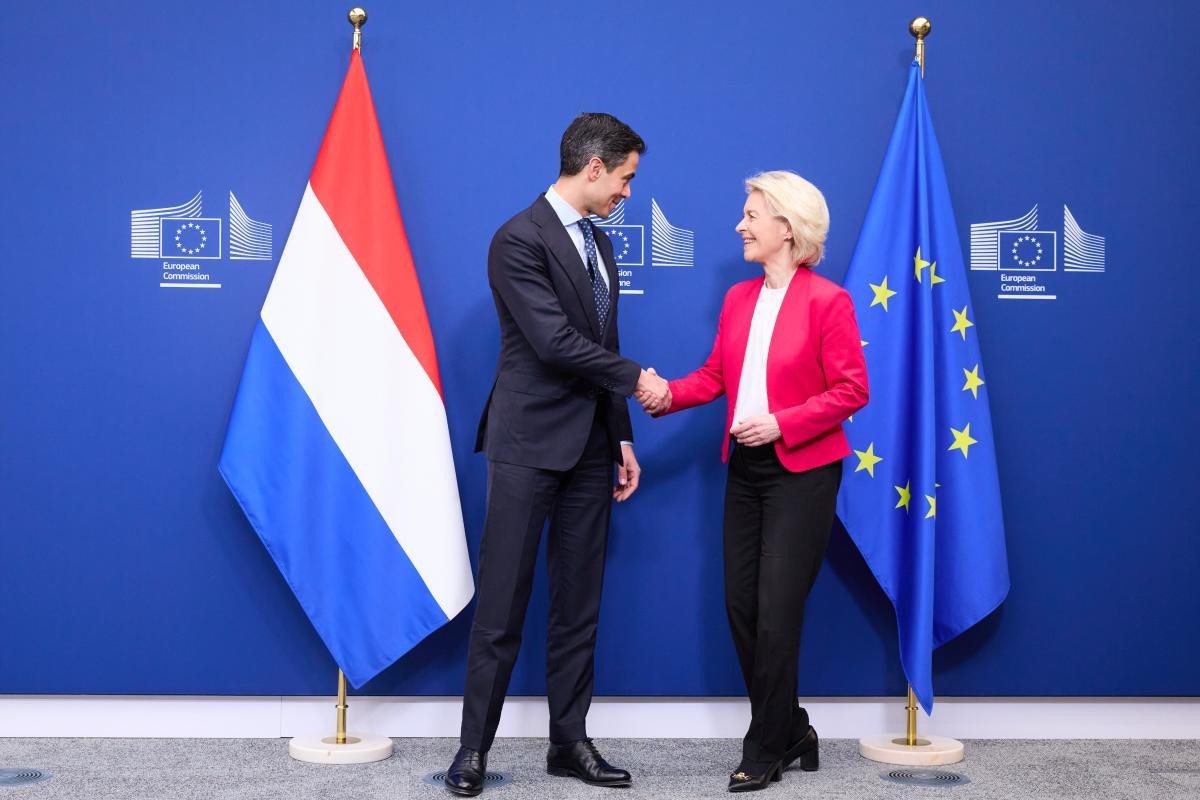
Dutch prime minister Rob Jetten has held his first meetings with European leaders in Brussels on Tuesday, discussing plans to develop “return hubs” for failed asylum seekers with commission chief Ursula von der Leyen as well as the situation in the Middle East.
While the previous government’s plan for a similar set-up in Uganda failed, “there are enough other countries open to this sort of innovative alliance,” the Telegraaf quoted Jetten as saying.
The trip to Brussels was Jetten’s first foreign visit as prime minister and the Dutch media were complementary about his “excellent” English.
Talks with Nato chief Mark Rutte and with Belgium’s prime minister Bart De Wever were also on the agenda. In addition, he briefly met European council chief Antonio Costa and Roberta Metsola, leader of the European parliament.
The new Dutch administration, a pro-Europe combination of Jetten’s D66, the VVD and CDA, has put the Netherlands “back at the table,” Jetten told reporters. The Netherlands would be close allies with both Germany and France, he said.
“With the Germans on economic policy, energy and the climate,” he said. “And with France we said on Monday that we will work together on the nuclear deterrent. I think this is the role that the Netherlands must play. We must look for clever coalitions which serve Dutch interests and strengthen Europe.”
On Monday, foreign minister Tom Berendsen and defence minister Dilan Yesilgöz told MPs in a briefing that the Netherlands is behind French president Emmanuel Macron’s plan to expand France’s nuclear capacity but were vague about how that agreement will work.
Macron suggested in his speech earlier in the day that European allies would take part in French nuclear exercises, would accept French nuclear assets being stationed in other countries and would make “non-nuclear” contributions to the French deterrent.
He said eight other European countries – the UK, Germany, Poland, the Netherlands, Belgium, Greece, Sweden and Denmark – had agreed to participate in this new “advanced deterrence” strategy.
Thank you for donating to DutchNews.nl.
We could not provide the Dutch News service, and keep it free of charge, without the generous support of our readers. Your donations allow us to report on issues you tell us matter, and provide you with a summary of the most important Dutch news each day.
Make a donation