“Celebrating before the birthday is bad luck in Germany!”
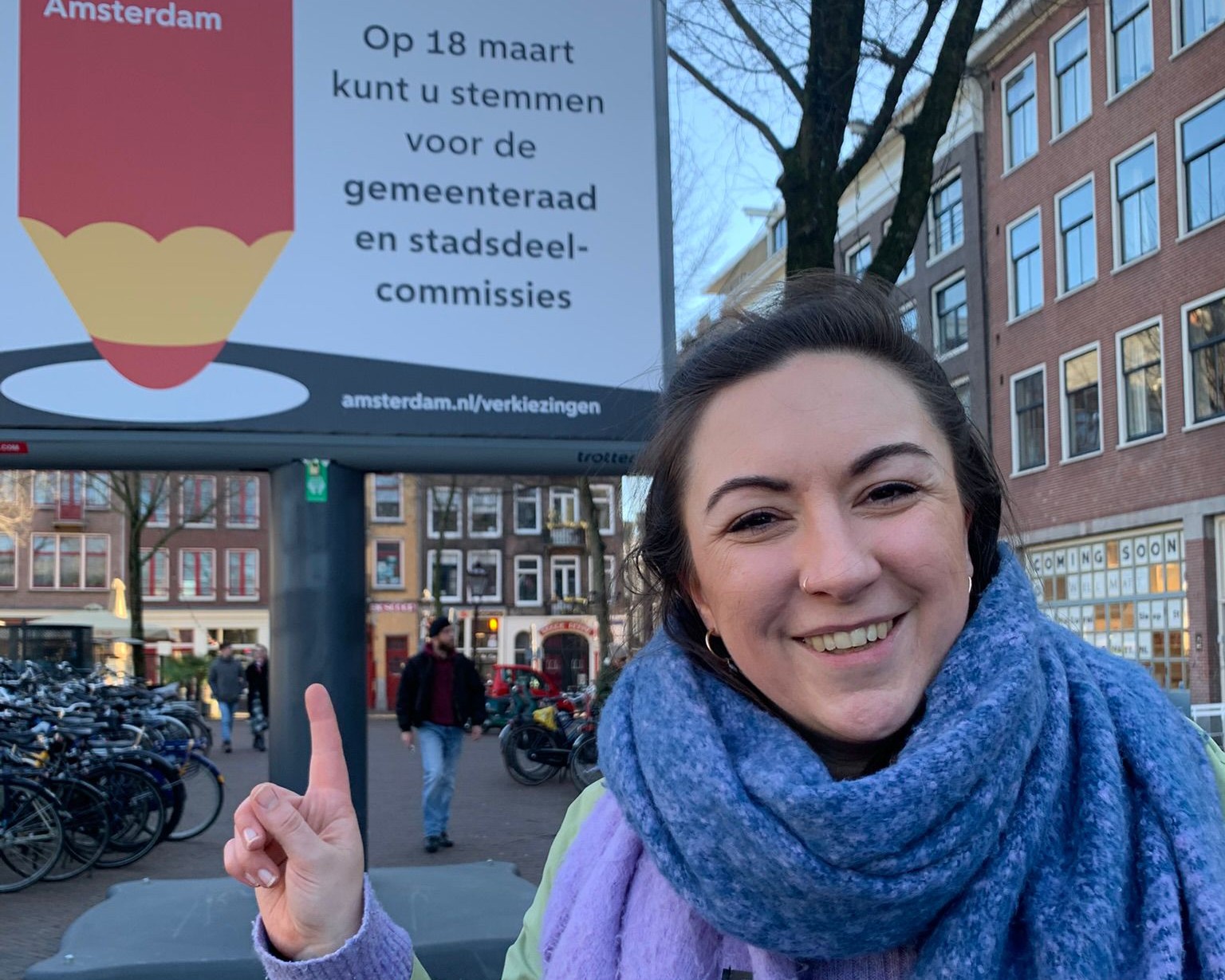
Verena Kitowski is a German national who after just seven years in the Netherlands is standing as a candidate in this week’s local elections. She knows all the lyrics to Europapa, visits the beach in a camper but gets frustrated that it’s so hard to speak Dutch really fluently.
How did you end up in the Netherlands?
I moved to Amsterdam from Sweden in 2019 for my work at Fairphone. As a German who grew up close to the border, I only knew the Netherlands from summer holidays on Texel and an occasional trip to the beach in Zeeland as a teenager.
I had never been to Amsterdam before my interview. And I got the best first impression walking out of Centraal [station] along the IJ. My decision was made: if I get an offer, I’m moving… I was very naive to not consider the housing
situation.
How do you describe yourself – an expat, lovepat, immigrant, international?
I’m describing myself as an international or EU immigrant. I have lived and worked in four European countries and am making use of the freedom of movement that we enjoy within the EU. We are the first generation of Europeans who have the opportunity for this and it’s an amazing achievement that we should collectively value more.
How long do you plan to stay?
I don’t have an end date. I feel at home in Amsterdam and feel very lucky that I get the chance to live here in one of the most beautiful and liveable cities. Since I’ve only lived in Amsterdam, I always highlight that I’ve become an Amsterdammer: my experience here would have been very different outside the capital.
Do you speak Dutch and how did you learn?
I have made my way to B2 level, but unfortunately it’s taken much more time than I expected. When moving here, my expectation was to learn Dutch fast but it turned out I got stuck on the same Dutch level for several years.
As a German native speaker, it’s easy to understand and read Dutch, and therefore even more frustrating if you cannot express yourself fluently. In my opinion, life in Amsterdam makes it too easy to get away with not speaking Dutch.
Getting active at Volt [the party she is standing for in Amsterdam] definitely helped me to improve because I started spending significantly more time with Dutch speakers in my free time. Volunteering is something I definitely recommend to anyone who feels they want to get out more, to spend time with Dutch people and people outside of their own bubble.
What’s your favourite Dutch thing?
Mijn vriend, Yann. And biking! I love the Dutch biking lifestyle that creates the relaxed atmosphere, casual clothing style and pragmatic planning.
How Dutch have you become?
I fully embrace the biking lifestyle even though I already lived this before moving here. The international perspective gives too much credit to the Dutch for this! I used to live in Malmö in Sweden where the biking infrastructure is just as good… but then the weather is even worse.
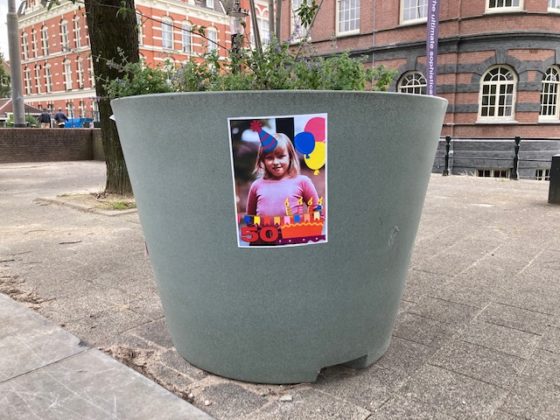
A cultural topic that I just cannot get my head around is the birthday tradition of
congratulating everyone but the person who has a birthday. Or even congratulating and celebrating before the actual birthday. In Germany this is bad luck if you are
superstitious.
Which three Dutch people (dead or alive) would you most like to meet?
Rutger Bregman – A historian and author of Utopia for Realists and Humankind, which I am currently reading. He received much media attention for some of his political statements about tax avoidance and philanthropists.
Joost Klein – A singer whose humour I enjoy. He participated at the Eurovision in 2024 for the Netherlands with his song ‘Europapa’. This was the first Dutch song that inspired me to learn all the lyrics.
Peter de Vries – A journalist who was famous for his crime investigations. He was
murdered in Amsterdam in 2021 after investigating the underworld and international drug trade. I only recently learned more about his work and found it fascinating that he didn’t seem to fear shaking up the establishment.
What’s your top tourist tip?
In Amsterdam it’s going to the Eye Bar inside the Eye Filmmuseum in Noord. Sittingthere with coffee and veggie bitterballen, and looking out of the big windows onto the IJ is an amazing way to spend an afternoon.
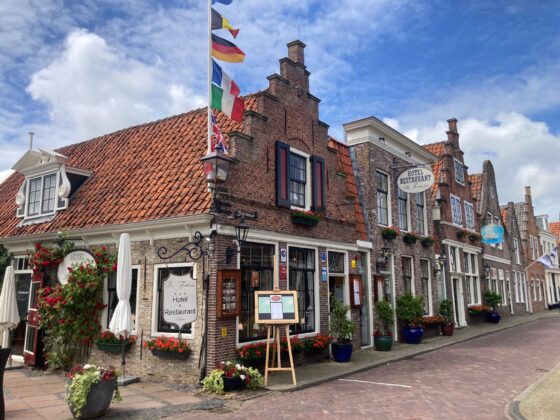
I also love visiting small towns around the Netherlands such as Edam or Balk in
Friesland. Bike tours and camping at the so-called Mini-campings (small campsites run by farmers) is a great way to get to know the countryside.
Tell us something surprising you’ve found out about the Netherlands.
Since moving to Amsterdam, I’ve learned a lot about the colonial history of the
Netherlands and the consequences it still has today. It’s not something I learned about at school. I hope all foreigners moving to the Netherlands learn about this, as it also explains parts of the Netherlands today.
If you had just 24 hours left in the Netherlands, what would you do?
I would take my camper, drive to the beach and invite all my friends to spend the day with them in Castricum, Bloemendaal or wherever we find a great spot to look at the sea. I’m a big advocate for the Dutch beaches: they are in most parts natural, have world-class fine sand and the wind in your face is a cure for all kinds of worries.
The Netherlands goes to the polls in 342 local councils on March 18. Even if you are not Dutch, you may have a vote. Read all our coverage and find out more here.
Thank you for donating to DutchNews.nl.
We could not provide the Dutch News service, and keep it free of charge, without the generous support of our readers. Your donations allow us to report on issues you tell us matter, and provide you with a summary of the most important Dutch news each day.
Make a donation