The art of transformation: Rijksmuseum inspired by Ovid’s myths
Senay Boztas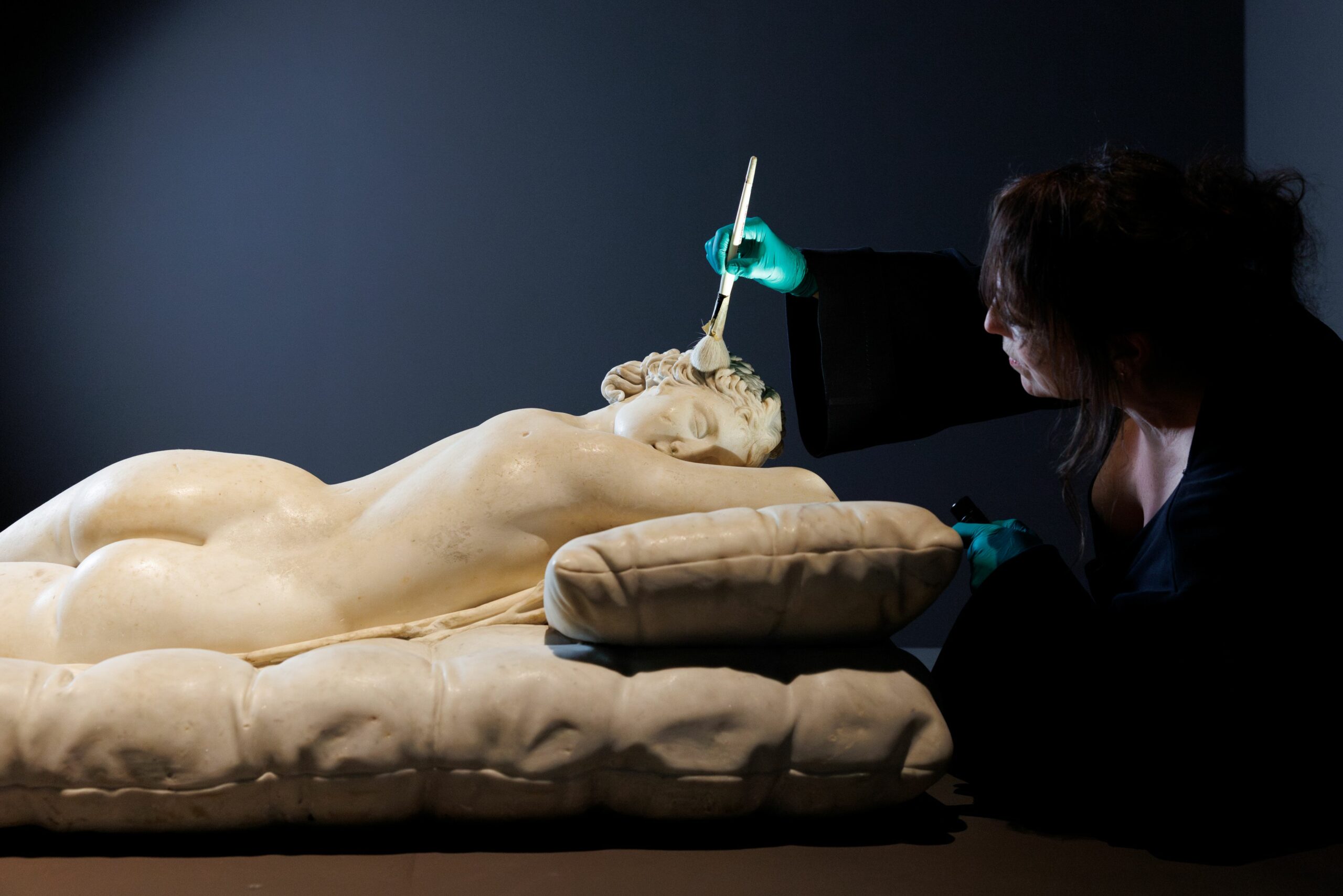
A statue transported from the Louvre lies on her side, the sheets pulled away to reveal her elegant curves. Only when you walk around Italian sculptor Bernini’s marble mattress do you see that this sleeping figure has both breasts and male genitals.
Sleeping Hermaphroditus is one of the star pieces in a new show at the Rijksmuseum in Amsterdam, which collects more than 80 international masterpieces inspired by classic Greek and Roman myths.
In some 200 stories, the Roman poet Ovid described the fearful, painful and sometimes joyful interactions of gods and goddesses with the human world – a 15-book work called the Metamorphoses (derived from the Greek and Latin words for transformation and form).
You’ll know the stories from the two centuries of artwork and literature they inspired: Medusa, with her hair of snakes and a gaze that turns men to stone. Queen Leda, “seduced” by the god Zeus in the form of a swan. Arachne, who challenged the goddess Minerva to a weaving competition, won it, and was transformed into a spider for her cheek.
With works from Titian and Caravaggio to Rubens and Rodin, the Rijksmuseum explores how artists old and new were inspired by Ovid’s stories – and reinterpreted them for their own age.
“His work, in fact one long poem divided into 15 books, is filled with stories of classical mythology,” explains the writer Stephen Fry in the audio guide. “Tales of love, desire, jealousy, ambition, arrogance, power, despair. In all of them, transformation is the central theme… Everything is in constant flux and nothing ever truly disappears.”
Taco Dibbits, general director of the Rijksmuseum, said that the stories still speak to a modern generation, even if we no longer believe Roman gods cause our mortal woes.
“When people are touched by this enormous, godly power, a metamorphosis, a total transformation takes place,” he said at a press viewing. “But it is about universal, human feelings. Ovid’s myths describe the mystery of being touched by divine power, something that artists have tried for centuries to put into form.”
The results are anything but ethereal: the 10 rooms of the Philips wing of the museum are full of naked breasts – sometimes squirting milk – male and female genitals and stories of violence and rape. Frits Scholten, senior curator of sculpture, admitted women often got the rough end of the stick. “It’s not about mutual consent, and that’s the same for a lot of these stories,” he said. “But Ovid does not moralise, which is very interesting.”
The essential belief in ancient times, according to Scholten, was that even if life was nasty, brutish and short, the soul did not die. “It is about the idea that everything has a soul and that the soul is constantly moving from body to body – in nature, in things but also in people,” he said. “If you grasp that idea, then you understand better what the stories are about.”
While some of the older works were clearly “bedchamber pieces”, he said, created with an erotic intention even when they portrayed assault, the exhibition includes in every room modern artworks with a different interpretation of the myths.
Rotterdam artist Juul Kraijer’s Untitled piece inspired by Leda and the Swan shows a headless, voiceless woman, merging with the beast, for example. Femmy Otten’s wooden sculpture We Once Were One refers to classical tales of transformation with a woman emerging from a tree – the folds of her dress like enormous labia.
The exhibition includes surprising materials, representing a key idea that artists are busy transforming raw materials too. Two oysters are carved with Ovidian love stories from the sea in one room; in another is a 16th century dish attributed to Francesco “Urbini” illustrated with phalluses and the text: “every man looks at me as if I were a dick head”.
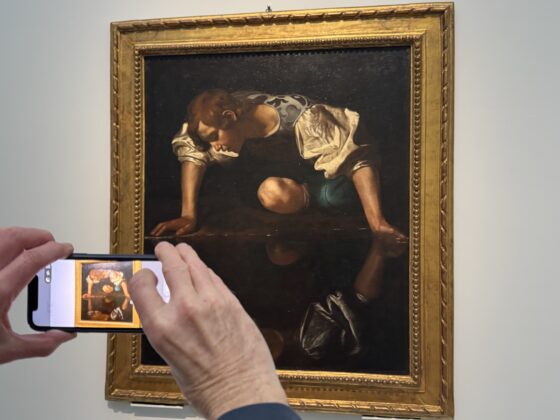
There are sculptures, rough plaster moulds from the French sculptor Rodin depicting bodies emerging from the stone, surrealist works and the intriguing 16th century painting by Caravaggio of Narcissus falling in love with his own reflection – before drowning and being transformed into that flower.
Dibbits said that Ovid’s stories represent the function of art itself, weaving human emotions and experiences into something durable. “Art is inspired by the stories but it’s also the metamorphosis of the material that the artist uses,” he told Dutch News. “Narcissus, who falls in love with his own image, looking in the water, in a sense stands for painting, where the portrait is as real as possible.
“The story of Pygmalion is stone, sculpture, and marble becoming alive. And that’s what the sculptor does, making sculptures that people fall in love with.”
Metamorphoses runs at the Rijksmuseum from February 6 to May 25
Thank you for donating to DutchNews.nl.
We could not provide the Dutch News service, and keep it free of charge, without the generous support of our readers. Your donations allow us to report on issues you tell us matter, and provide you with a summary of the most important Dutch news each day.
Make a donation