Stone is Roman gameboard and AI has worked out the rules
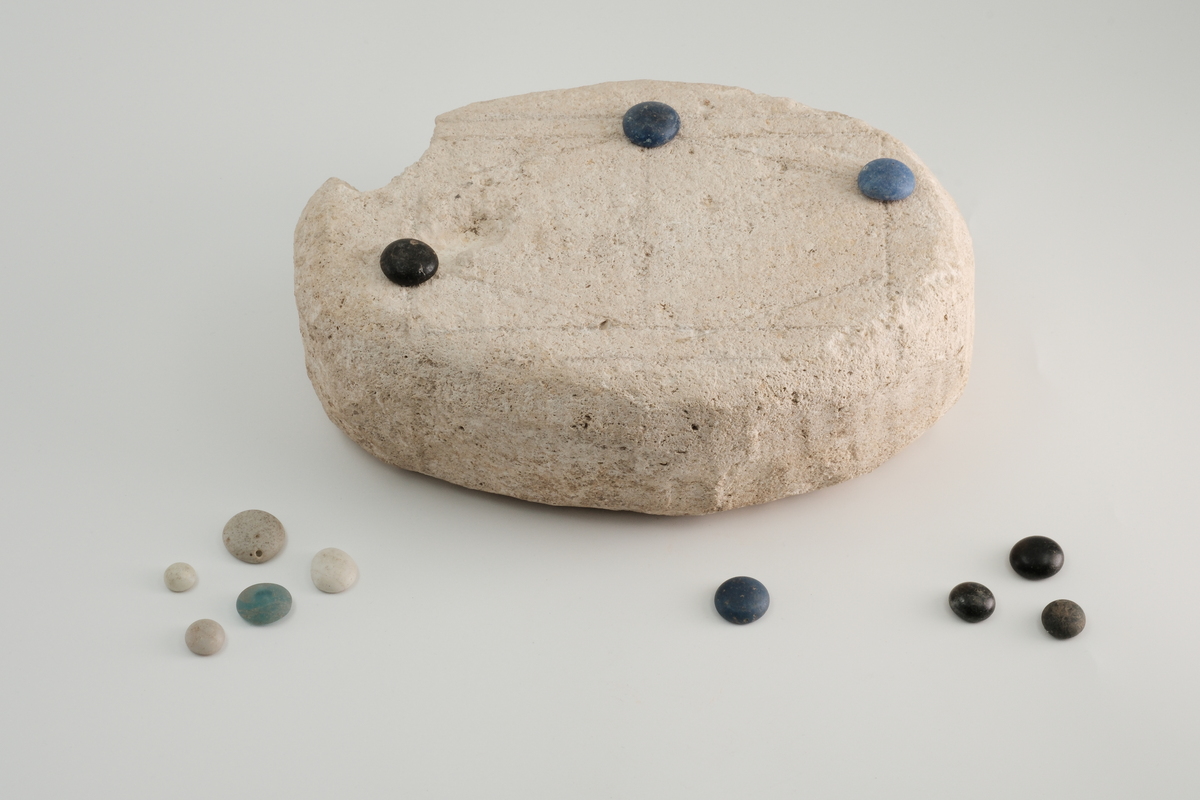
A carved stone featuring a pattern of lines which had Dutch experts scratching their heads has been identified as a board for a Roman game.
The stone, found during a dig in the Limburg town of Heerlen, was confirmed to be a game after experts used 3D scans and AI and they even managed to establish rules to play it, the Romeins Museum said.
The stone, made from white Jura limestone from a French quarry, was found near the Roman baths in Heerlen at the end of the 19th century, along with numerous small game tokens made of stone, glass and bone.
“The stone is very thick and has a neat finish. It may have been fitted into the surface of a table at one time, perhaps at an inn. That’s where people came together to play games and gamble – another favourite Roman occupation,” said museum curator Karen Jeneson.
The pattern puzzled investigators because it had little in common with other Roman games. However, the stone showed signs of wear and tear in places where a token would have moved, which implies intensive use, archaeologist and Roman game expert Walter Christ said.
Further investigation into the markings using a 3D scan revealed some lines where deeper than others, a clear sign that some moves were more frequent than others.
The next, and most innovative step, was to hand over the stone to Maastricht University researchers who used AI system Ludij to reconstruct the rules of the game.
“We trained Ludij by feeding it the rules of some hundred games from the Middle Ages and older,” said researcher Dennis Roemer. “That gave us dozens of possible rules which Ludij used to play against itself, discovering some variations on the way. One set of rules resulted in the same wear and tear pattern as was found on the stone.”
The system may not have found the definitive rules, however, Roemer said. “When fed with a line pattern, Ludij will always find rules,” he said, “but that doesn’t mean the Romans played it in the exact same way.”
The aim of the game was probably to block the opponent’s tokens, a type of game that was played in the Middle Ages and which has now been found to date from much earlier times, Jeneson said.
The museum has provided a pdf version of the game which can be downloaded here.
Thank you for donating to DutchNews.nl.
We could not provide the Dutch News service, and keep it free of charge, without the generous support of our readers. Your donations allow us to report on issues you tell us matter, and provide you with a summary of the most important Dutch news each day.
Make a donation