Political parties start waking up to the power of the expat vote
Robin Pascoe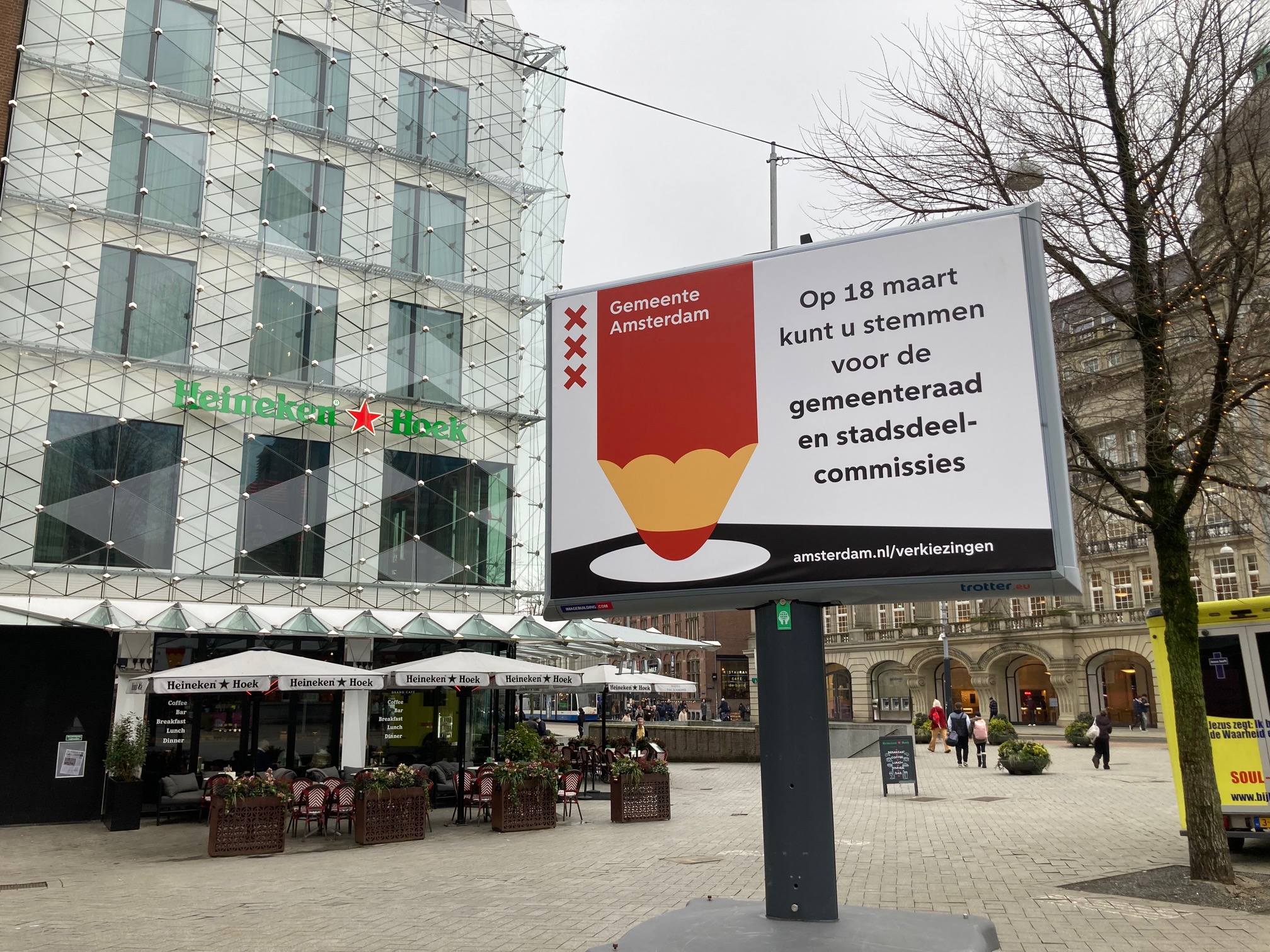
Hundreds of thousands of non-Dutch nationals can take part in next month’s local council elections and political parties are starting to wake up to the potential impact of so many additional voters.
Several political debates in English are being planned and there are signs that parties are also publishing more information in other languages too.
Turnout always hovers around 50% in most parts of the country in local elections, but many people who can vote are not aware of the fact. In a recent Dutch News survey, nearly one in five respondents said they did not know if they could vote in the local elections, even though many of them could.
Dutch nationals, EU nationals, and other foreign nationals who have officially lived in the Netherlands for at least five years will automatically be sent a voting card for the March 18 vote and have until March 13 to protest if they have not received one.
As the size of the international population grows, it is becoming more of a political force to be reckoned with. In Amsterdam, for example, international voters could effectively control five or six seats on the city council, given the size of the local expat population.
The situation is similar in The Hague, where 16% of potential voters are not Dutch nationals, and in Maastricht, Rotterdam, Amstelveen and Delft, where around 10% of potential voters have another nationality.
Under European law, local authorities are required to actively inform foreign nationals about their right to vote, but in practice Dutch towns and cities are reluctant to do anything which could be interpreted as favouring one population group over another.
Little has happened since the last local elections, despite a lot of hand-wringing about the low turnout, and local councils are still largely taking a passive approach.
Floris Vermeulen, associate professor at the University of Amsterdam and a specialist in migrants and voting, says the lack of interest is partly down to the political climate, in which backing the rights of certain groups, such as migrants, does not win votes.
“We’ve had a lot of contact with The Hague city council, for example, and they have told us explicitly that they are not doing anything special about this issue,” he said.
Political debates
Nevertheless, there are signs that local branches of the national parties are becoming more proactive in their approach to foreign voters. Political parties in Amsterdam, The Hague and several other towns and cities are organising events where international residents can come along and find out more about voting and the various party policies.
In Amsterdam, five parties of the biggest city parties will hold an English language debate on March 9, sponsored by Dutch News and IamExpat. And on Tuesday February 17, Volt is holding an “international town hall” for foreign nationals to find out more about voting.
In The Hague, no less than three events are being planned: The Hague Municipal Election Debate will take place on February 24, a second event is being held on March 10 at The Hague Tech while the Student & Stand Debate is on March 5.
In Eindhoven, university students have organised their own information guide for students and staff because “many of them had no idea they could vote” while Groningen will host a debate featuring nine political parties on February 24.
Online information
Local parties are also publishing information about their policies in English, although it is too early in the campaign to say if the trend is upwards. In 2022, around half the parties did so.
In Amstelveen, for example, the CDA has published information about their local campaign in English.
In The Hague, populist party Hart voor Den Haag gives website visitors an option to choose their language, although this was not operational at press time, while in Leiden, seven of the 11 parties registered by early February had English information available. Maastricht had a similar high percentage.
Of the main political parties, the VVD is trailing when it comes to English information, with several local party websites containing broken links to English-language pages, according to Dutch News research involving 10 key cities.
More than half the Dutch News readers who took part in the recent website survey said they would like to be more involved in local politics, although several blamed their own lack of Dutch for not being better informed.
“Local politics is where change really begins, where citizens are directly affected,” said one. “I wish there was an easier way to stay informed about local politics in my area.”
If you are aware of an election-related event for internationals in your town or city, do please email editor@dutchnews.nl.
Thank you for donating to DutchNews.nl.
We could not provide the Dutch News service, and keep it free of charge, without the generous support of our readers. Your donations allow us to report on issues you tell us matter, and provide you with a summary of the most important Dutch news each day.
Make a donation