Opposition attack Jetten on retirement age and spending cuts
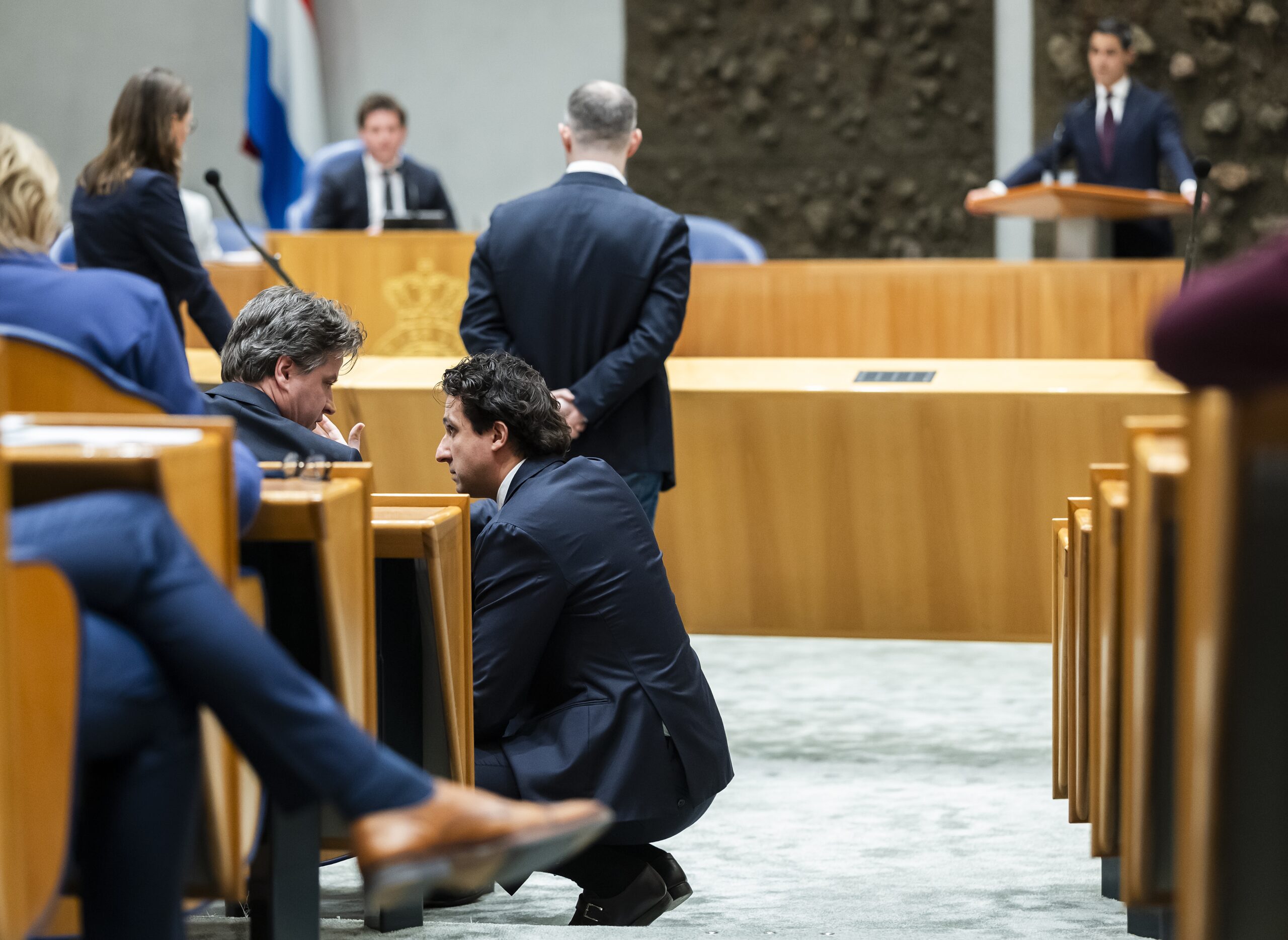
The incoming coalition of D66, CDA and VVD has come under fire over its plans to raise the state retirement age and cut spending on elderly care in the first parliamentary debate since the coalition agreement was published.
Opposition parties accused the centre-right trio of tearing up an agreement made with unions and employers seven years ago by changing the mechanism so that people in their thirties will have to work until the age of 70.
A motion tabled by the left-wing alliance GroenLinks-PvdA calling on MPs to reject the plan failed to pass after parties on the right declined to support it, but it prompted harsh exchanges during the debate.
GL-PvdA leader Jesse Klaver branded it a “false start” for the minority government, which will need support from opposition parties to get its legislation through parliament.
“It’s your responsibility to find majorities,” Klaver told D66 leader Rob Jetten. “You have unilaterally abandoned the agreements we made in the pensions deal. Why on earth would we make an agreement with you if you can turn round at any moment and say: forget it, those agreements didn’t really exist?”
“Broken promises”
Jetten stressed that the new rules, which will raise the retirement age in step with life expectancy, would not come into force until 2033 and his government would consult opposition parties and organisations such as trade unions first. “It’s up to us to find enough support,” he said.
Jan Struijs, of pensioners’ party 50Plus, also criticised the coalition parties for “breaking a hard-won pensions agreement” that was a “promise by a previous cabinet’’.
Struijs, a former police union leader, called for Jetten to make an exemption for workers in physically demanding jobs. “I know how hard it is to be on hte front line in our society for 43 years, whether it’s in the police, healthcare or the army,” he said.
As expected, MPs voted at the end of the debate to endorse the coalition agreement and give Jetten a mandate to form a government, which is expected to be sworn in on February 23. But the debate was an early test of the willingness of opposition parties to work with the coalition to build majorities.
Rianne Letschert, who was appointed by Jetten to chair the two months of negotiations between D66, VVD and CDA, said: “The choice these parties made to form a minority cabinet is more than merely a procedural step.
Care and asylum
“It marks a quite unusual political reality: new, unknown and for many, I think, fairly tense. But I think the choices the party leaders have made can produce a constellation that strengthens our democracy, as long as it is crafted carefully.”
Parties on the left are likely to put pressure on the cabinet to scrap some of the measures on social security, including a €2 billion cut to elderly care and lower incapacity benefits. But on the right, they will face resistance to their plans for asylum, the environment and nitrogen reduction.
Annabel Nanninga of JA21, the largest opposition party on the right with nine seats, called for the cabinet to cut taxes and take more steps to cut the number of asylum seekers coming into the country.
The coalition has pledged to pass the previous government’s asylum laws, which would make it harder for refugees to bring their families to the Netherlands and require them to apply for a new residence permit every three years. But Nanninga said the plans did not go far enough: “We can’t cope with it now,” she said.
Budget deficit
The cabinet’s tighter spending plans include a budget deficit limit of 2%, lower than the European Union’s maximum of 3%, encouraging suggestions that they could be building in scope to make concessions to opposition parties.
ChristenUnie leader Mirjam Bikker called the agreement an exercise in “hard-right bookkeeping” that would hit vulnerable families on benefits or the long-term sick hardest.
But Yesilgöz warned: “The national debt is already rising. If we say we can throw money at things without causing pain, we’ll end up passing on the burden to future generations and stripping away all the buffers we have for another coronavirus or Ukraine.”
Opposition parties also focused on the proposal to raise the excess charge on health insurance from €385 to €460 a year and cut the maximum term for unemployment pay from one year to two.
Klaver said “hardworking people” would pay the price of the incoming cabinet’s plans to raised defence spending by making €16.5 billion of cuts to health and social security, as well as introducing an extra income tax payment known as the “freedom contribution”.
Health insurance
Chris Stoffer, leader of the orthodox Protestant SGP, said: “For people earning between €30,000 and €70,000 to €80,000 the blows keep coming”.But Dilan Yesilgöz, of the right-wing coalition party VVD, insisted that the costs were being “shared by everyone”.
Henri Bontenbal, leader of the third coalition partner CDA, said he had been reluctant to increase health insurance costs, but insisted: “It would be irresponsible for us not to do it, even if we have to explain painful choices to the voters.”
Bontenbal also reassured the Christian parties, SGP and CU, on the lack of detail on medical-ethical issues in the coalition agreement. Their leaders were concerned that D66, which was instrumental in establishing euthanasia in the Netherlands, might try to relax restrictions on surrogacy and embryo research at a later date.
“You’ll recall from previous coalitions that the parties will not surprise each other or tread on each other’s toes, and certainly not the opposition’s toes,” Bontenbal said.
Some party leaders ruled out working with the coalition’s plans point blank, notably Geert Wilders of the far-right PVV, who accused the three parties of “bleeding the Netherlands dry and giving it to Jesse Klaver”.
Socialist party leader Jimmy Dijk also urged his colleagues on the opposition benches not to do deals with D66, VVD and CDA. “Don’t do it, because they’ll stab you in the back.”
Thank you for donating to DutchNews.nl.
We could not provide the Dutch News service, and keep it free of charge, without the generous support of our readers. Your donations allow us to report on issues you tell us matter, and provide you with a summary of the most important Dutch news each day.
Make a donation