Hospital experiments with controversial placebo operation
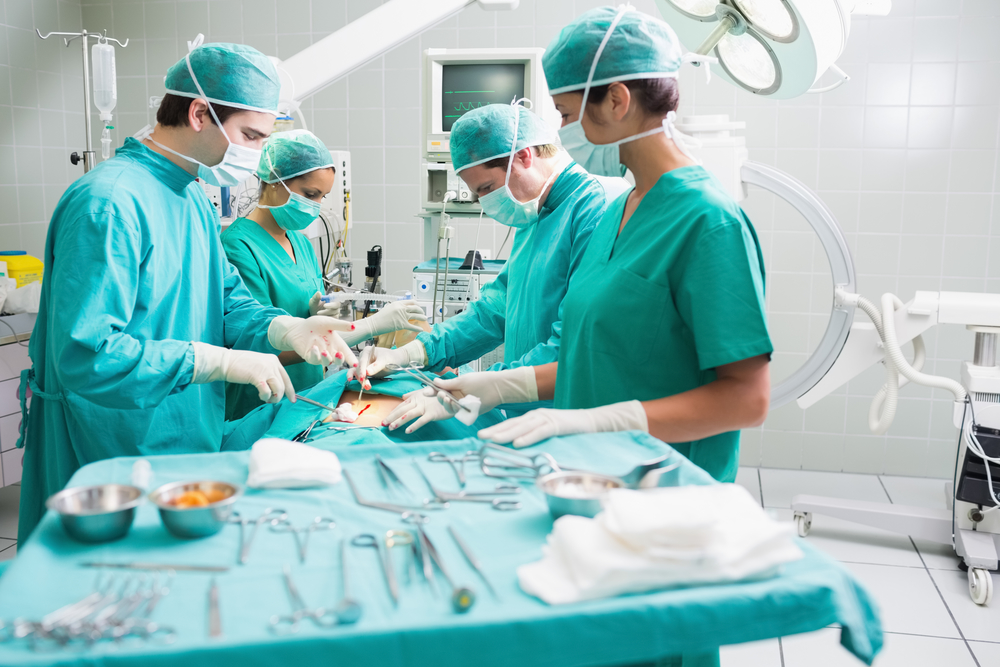
People suffering from unexplained stomach pains are being given placebo operations in a controversial trial being carried out at a Dutch hospital.
The patients are suffering from the rare condition median arcuate ligament syndrome ( MALS), where the band of tissue in the upper belly presses on the artery that sends blood to the stomach, spleen and liver.
Half of the patients in the trial group will undergo the operation, while the others will merely be cut open and stitched up again.
Belgian surgeons have labelled the procedure “unethical” because patients will not be told until years later if they were actually operated on. Some have sought treatment in Belgium and Germany, where the operation is standard.
But MTS hospital in Enschede says the trial is the only way to find out if doctors’ suspicions that the pain is psychological are correct.
Head researcher and vascular surgeon Bob Geelkerken told Dutch broadcaster NOS the “fake operation” is the only way of proving if the procedure is effective.
He said the experiment would have to show that the real operation is at least 40% more effective than doing nothing.
Ethical considerations
Placebo operations are rare in the Netherlands, and the threshold for approval is high, Jan van Lanschot, vice chair of ethics commission CCMO, said.
“Symptoms that can’t be measured, such as pain, itching and nausea, are hard to determine objectively. When it comes to subjective symptoms, it is important to know if they can be helped by operating or if they spring from something else,” he said.
Van Lanschot would not say which arguments had allowed the experiment to go ahead.
Belgian vascular surgeon Inge Fourneau said she sees at least one Dutch patient suffering from MALS every week. Her patients report a better quality of life after the treatment.
A fake operation is riskier than other placebo experiments, she said. To deprive a patient of an operation for scientific purposes would be “disproportional”, she said.
Thank you for donating to DutchNews.nl.
We could not provide the Dutch News service, and keep it free of charge, without the generous support of our readers. Your donations allow us to report on issues you tell us matter, and provide you with a summary of the most important Dutch news each day.
Make a donation