Forget bikes: why does the Netherlands have so many minibiebs?
Molly Quell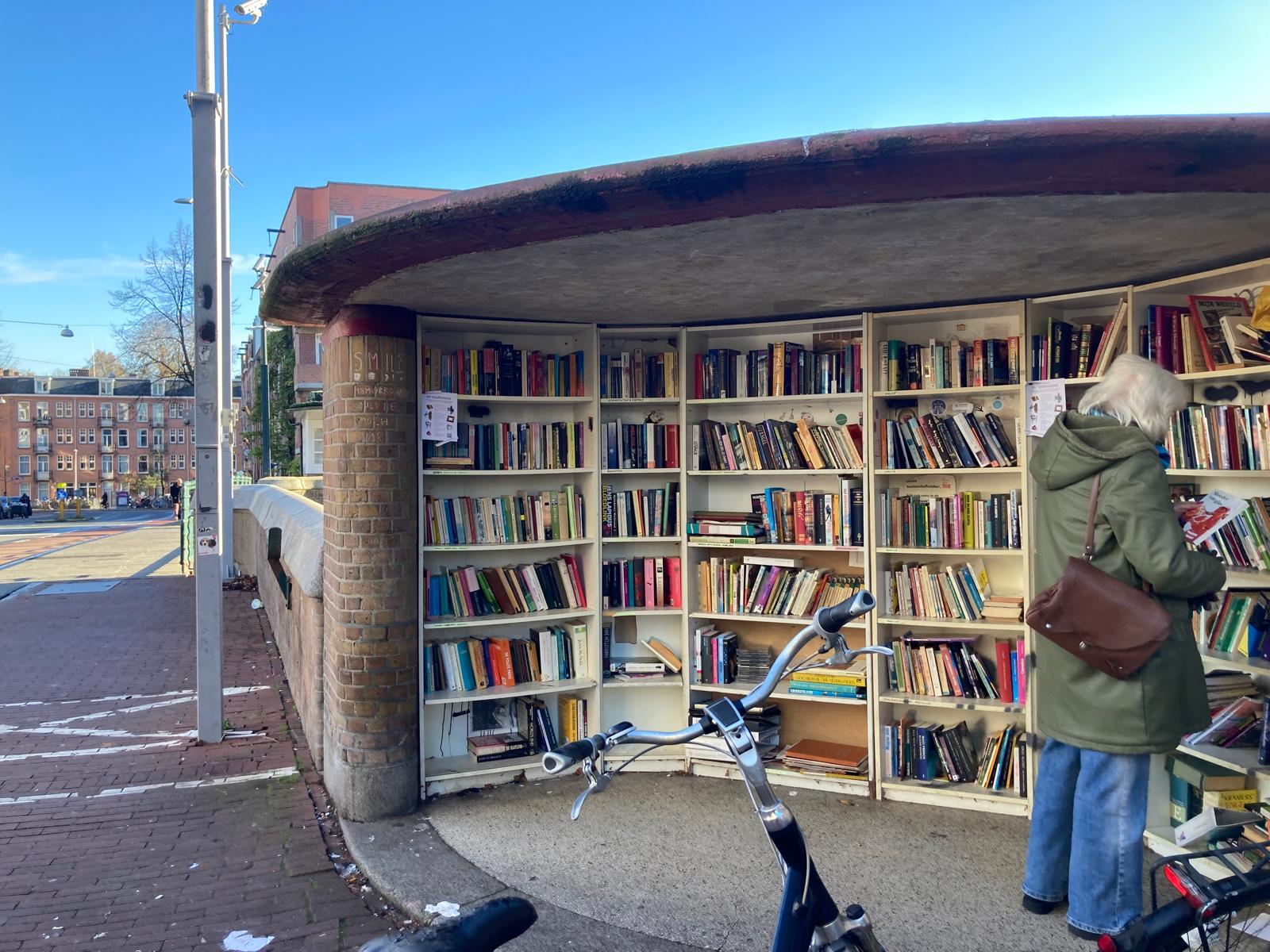
Our regular columnist Molly Quell wonders why she has access to such an abundance of free books in the Netherlands.
It may be hard to remember, but half a decade ago, the world was in the midst of pandemic lockdowns. Bars were closed, parties were banned and social media got so insane it physically hurt.
I coped the way many people did: by taking a lot of walks. Add to the mix an extremely energetic pit bull who was also bored out of his mind and missing the pub, and walking quickly became my number one hobby.
No one will be surprised by this revelation but I am not a chill person. As such I can’t simply meander. I can’t just walk without a purpose. I need a plan. I need a goal.
Enter the minibiebs. Or free little libraries. Those boxes mounted outside of houses and parks or sometimes freestanding on a street corner. Sometimes it’s a shelf. Sometimes it’s an elaborate cabinet.
Regardless of the outer shell, the inner purpose is the noblest of goals: giving away books for free.
People leave books they don’t want, others take the books they are interested in. It’s a glorious circle.
I made it my Covid mission to visit all those I could walk to.
This plan had many upsides. Exercise, fresh air, new books! It also had downsides. I acquired a huge stockpile of books that I then needed to read. I am still trying to dig myself out from underneath this substantial treasure.
It is probably impossible to know who created the first minibieb but, according to the Little Free Library foundation, a nonprofit organisation based in the United States which encourages people to set up their own little library, Todd Bol of Wisconsin built one in 2008 in honour of his schoolteacher mother.
Bol wanted to inspire others to do the same and set up the foundation with the aim of beating Andrew Carnegie’s goal of establishing 2,509 free public libraries across the English-speaking world.
The group hit that goal in 2012.
Like many things, the little library trend spread. The Little Free Library foundation says, worldwide, the number is now 200,000.
The Dutch like to read. Survey data shows that 85% of Dutch adults are regular readers.
According to a study by the University of Groningen, the Netherlands had some 1,500 minibiebs by 2020, which is probably an undercount since you do not need to register your library.
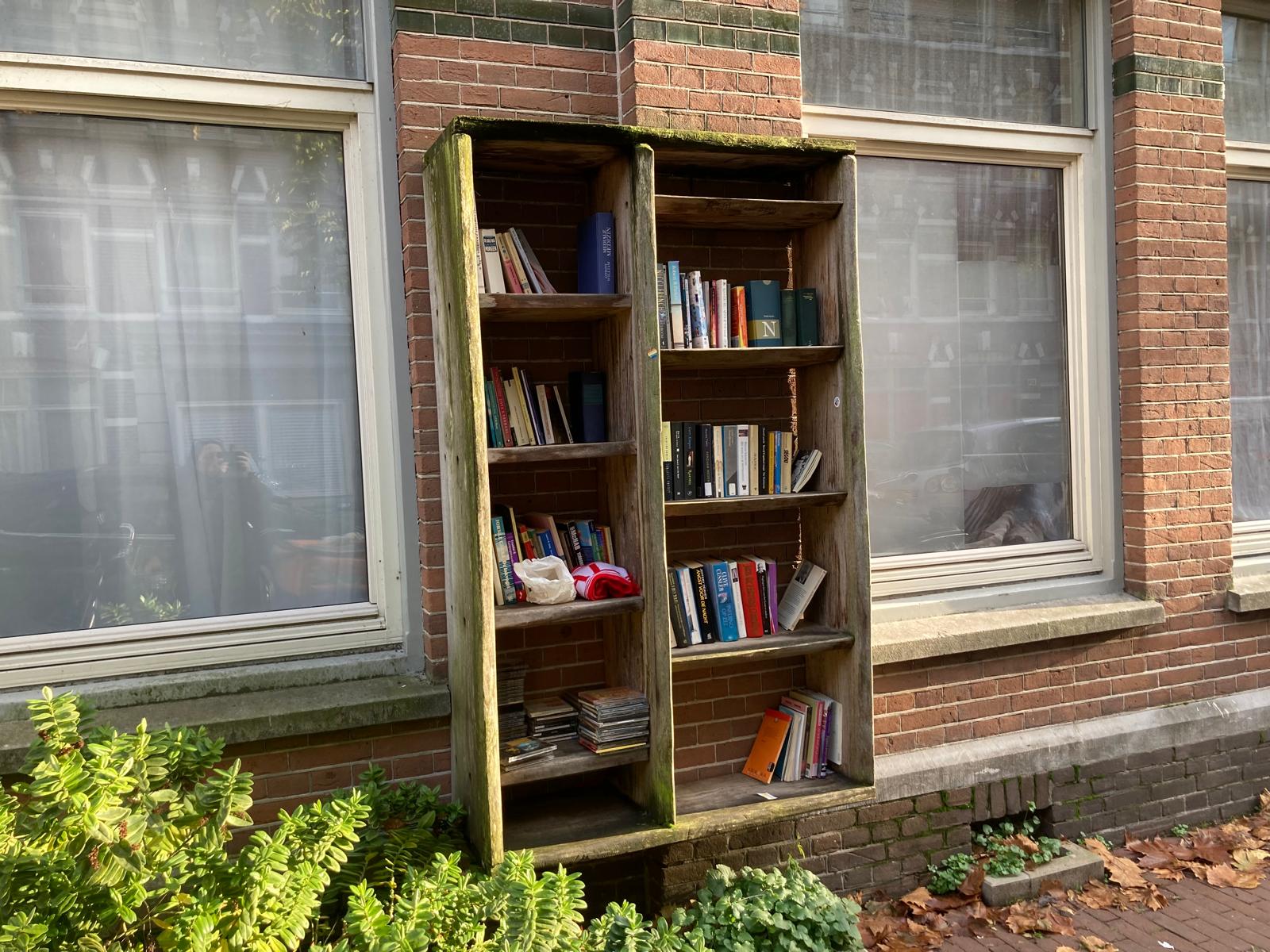
During my walks, I discovered that all of the minibiebs had their own character. Some are meticulously maintained, tidied seemingly every day, always in order. Others are wild and unhinged, crammed with old magazines and outdated travel guides.
Unsurprisingly, the minibiebs near primary schools or creches tend to be filled with kids books. In some neighborhoods, all the books are Dutch. In others, all in English.
Their contents are dictated by the local readers. If you have one or two voracious fantasy readers on the block, the nearby minibiebs will be filled with George R. R. Martin and Robert Jordan. Crime lovers? Patricia Cornwell and Henning Mankell.
And it’s not just local book lovers setting up a cute cabinet in front of their house. In 2015 author Ronald Giphart set up a book exchange in the train station in Utrecht. The idea was such a success the NS has set up StationsBoekWissel in transport hubs across the country.
So it’s not a surprise that the densely populated and largely walkable Netherlands seems to have a lot of minibiebs.
Of course there is something else appealing about minibiebs to the Dutch population: they are free.
Thank you for donating to DutchNews.nl.
We could not provide the Dutch News service, and keep it free of charge, without the generous support of our readers. Your donations allow us to report on issues you tell us matter, and provide you with a summary of the most important Dutch news each day.
Make a donation