Partner content
Enjoying Dutch integration exams: mission impossible?
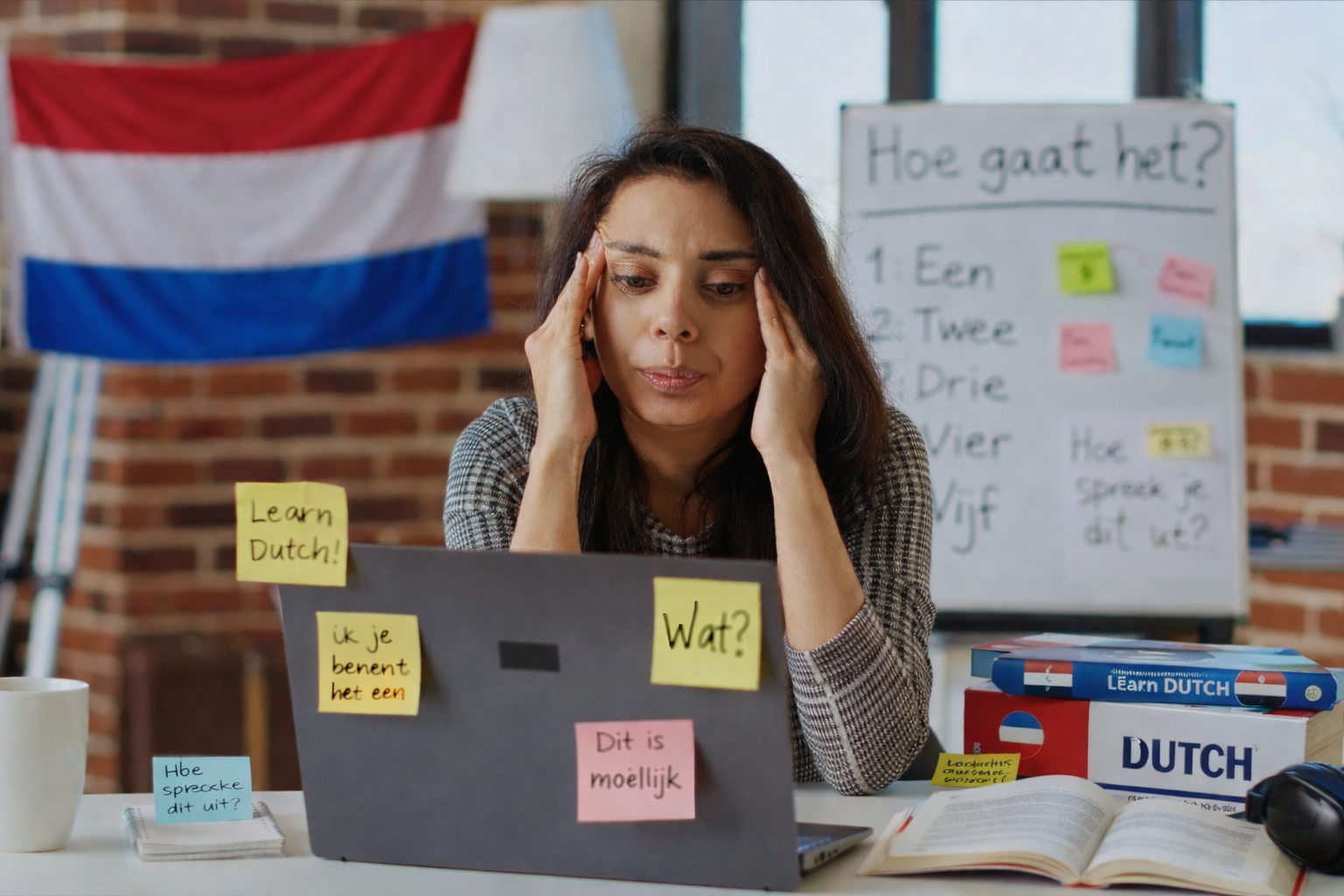
When Bart Nawijn decided to create an online Dutch course for people aiming to pass their integration exams, he remembered being a confused foreigner learning French years ago. “I put myself in the shoes of the expat,” he says.
“Frustration is something that people experience a lot. It’s so important to get more and more excited about learning more, instead of getting angry about how little you know!”
Five years ago this Dutch teacher decided to start the subscription-based self-study course Inburgering Online, giving immigrants a chance to pass the five basic exams in as little as 45 days (although most people take four to five months).
Finding time
“I’d given thousands of Dutch lessons to people wanting to get their integration exam or just learn Dutch,” he says. “I realised that people are struggling with full-time jobs, having children and also preparing: they had to go to school two or three times a week after work, in big classes of different levels, where some teachers may not be that inspiring.
“It made me think of an online self-study course that’s subscription-based so that people can prepare anywhere and at any time and without any extra books. That was the plan.”
With many people rushing to get exams done before the next government changes the naturalisation requirement from five to six years and a harder language level, his plan is working well. He has helped more than 50,000 Dutch learners with his online platform Inburgering Online and currently has 55 to 60 new sign-ups every day.
The idea is to make language learning not just functional but also fun. “It’s very focused on passing the exam, what you need to know to pass it and my philosophy is to make it as pleasant and efficient as possible,” he says. “You start off learning the most important words, so you have the ammunition to start.
“You can move on to the grammar because then you have the weapons. And part three is lesson videos – tips and tricks that make it a lot easier to understand the exam. Then you will be ready to practice exam exercises and finally complete mock exams to see if you’re ready.”
Stumbling blocks
Students from almost everywhere, he says, struggle at first with Dutch word order and grammatical rules that often stick a verb at the end of a phrase. “A big frustration is the sentence structure,” he admits. “In Dutch, we say: I learn Dutch because I in the Netherlands live. The verbs are pushed back to the end of the sentence. It’s virtually impossible if you don’t practise a lot and have a bit of discipline.”
One thing that Dutch people could do more is to realise that when internationals try out their few words, it is unhelpful to get a reply in English. “People don’t realise that it’s exactly the opposite of what they want when you’re trying hard to speak a language and they move to your native language,” he says. “Stop speaking English when they are trying!”
If you are starting the uphill journey of language learning, Bart advises finding subjects you are interested in and watching, listening or reading as much as possible in Dutch. You’re unlikely to find a newspaper that is readable at A2 level (simple sentences and commonly-used expressions), so short snippets you really want to understand might help you more.

You can watch the daily news in simple Dutch on the public broadcaster’s channels and online (NOS Journaal in Makkelijke Taal) and another good tip is to find content made for children on SchoolTV.nl. This site has clips from the excellent news programme for children on subjects from the Winter Olympics to the impact of foreign workers, ordered by age. Groups 3 to 5 are for younger children, and groups 6 to 8 are the top of primary school.
“Just surround yourself with Dutch that you find interesting,” he says. “I learned a lot of French listening to music and I love watching sports programmes: get yourself into that zone. Also, don’t wait too long to take a look at the exam and trying a practice exam, even if you’re not ready, because it makes your studies more effective.”
Go for it
The new Dutch government wants to increase the required language level for naturalisation, and possibly also for permanent residence, to the more advanced B1 level – although there will be an exemption for special cases if this really isn’t possible – and so many people are rushing to get through easier exams before the change comes in.
An online course means that if you are motivated, you can progress very quickly. “You can do it all by yourself without any assistance and without having any knack for languages,” says Bart. “It takes you by the hand and is very intuitive. Some people manage it in one to three months – it really depends how intensively you study.
“It’s possible not to speak any Dutch and have a great time in the Netherlands but it’s even more fun, valuable and satisfying if you understand the language!”
Het or de? Start on your Dutch language journey at Inburgering Online
Thank you for donating to DutchNews.nl.
We could not provide the Dutch News service, and keep it free of charge, without the generous support of our readers. Your donations allow us to report on issues you tell us matter, and provide you with a summary of the most important Dutch news each day.
Make a donation