Dutch council goes it alone with restrictions on lily growing
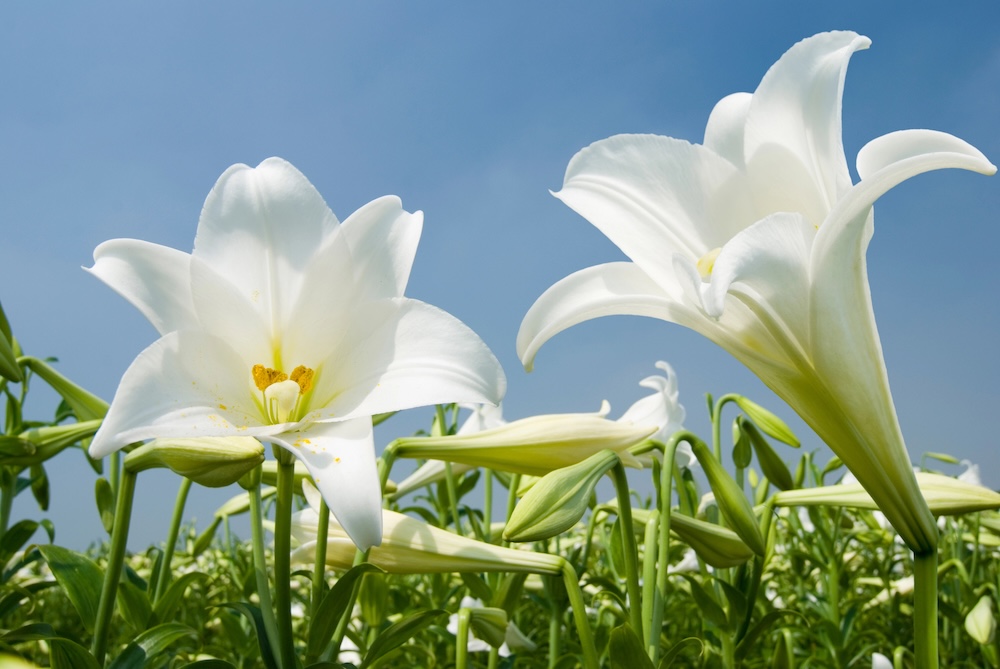
The Drenthe local authority of Westerveld has voted to impose limits on the region’s flower growers, banning them from growing lilies within 50 metres of houses, schools and healthcare institutions.
The decision, approved by councillors on Tuesday night, comes after years of discussion about the impact of the industry on health, given that lily production involves four times as much pesticide use as other flowers.
Westerveld is at the centre of the lily industry, with 400 hectares of agricultural land used to grow the flowers. It and other local authorities have been pressing the government to introduce stricter rules for years.
“It will be a real shame if we all start making our own rules, but we could not wait any longer for national policy,” council official Frank Foreman told current affairs show Nieuwsuur.
The highest Dutch court, the Council of State, recommended setting up a no-spray zone around lily fields in 2014 because of health risks. The pesticides used in lily cultivation have been linked to Parkinson’s, Alzheimer’s and ALS.
The public health agency RIVM carried out a study four years ago into the effect of exposure to chemical pesticides in farming communities. It said there were indications of a link between crop cultivation and some health conditions, but more information was needed to explain the results.
Professor Bas Bloem, a neurologist at Radboud University Medical Center, believes that, particularly with “luxury products” such as flowers, commonly used weedkillers such as glyphosate should be banned until proven safe.
“There is 40 years of research with converging evidence from epidemiology, toxicology, animal studies and other types of research that consistently indicates that pesticides are one of the contributing factors that may cause Parkinson’s disease,” he told Dutch News last month.
“Pesticides are not the only cause of Parkinson’s, but there is widespread consensus that they are among the various environmental factors that jointly contribute to causing this disease.”
Court case
Last April, the Council of State ruled that lily growers need a permit to use pesticides as long as there is uncertainty about the impact on protected environments.
However, research by Nu.nl shows this condition is largely being ignored.
Earlier this month, the town council of Hof van Twente in Overijssel voted to stop farmers from setting up any new lily cultivation for 18 months while definitive rules are worked out.
Thank you for donating to DutchNews.nl.
We could not provide the Dutch News service, and keep it free of charge, without the generous support of our readers. Your donations allow us to report on issues you tell us matter, and provide you with a summary of the most important Dutch news each day.
Make a donation