Partner content
Class is in session: a uniquely fun way to learn Dutch
In these days of online and AI learning, the Dutch Brainwash course is decidedly (and purposefully) old school. Here’s why you should take it if you want to really speak Dutch.
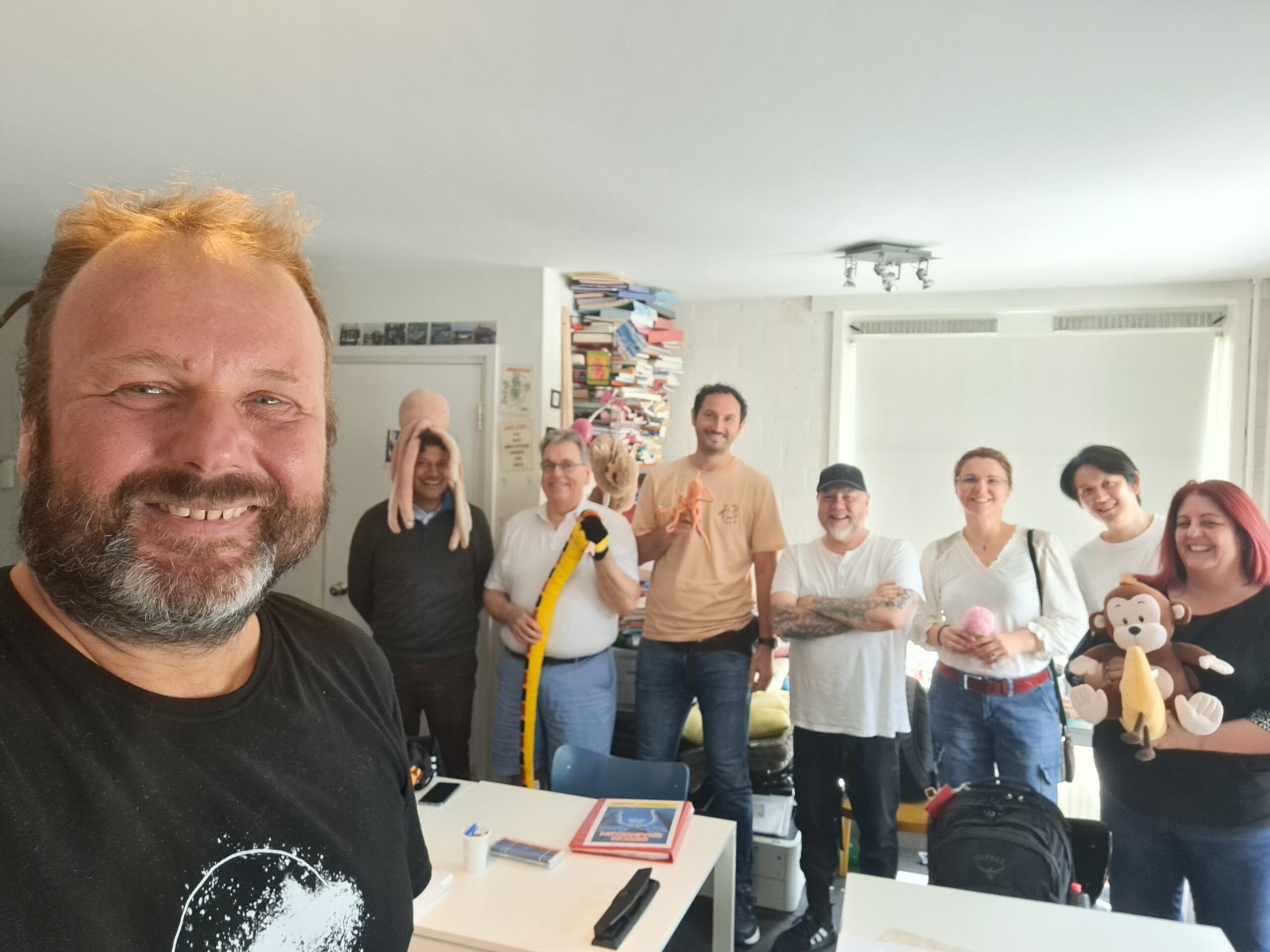
Albert Both’s casual classroom on Amsterdam’s Keizersgracht, where he’s been teaching internationals how to speak Dutch since 2009 at his Talencoach headquarters, is about as far away from online learning as you can get. With so many AI-driven Dutch language courses available these days, Both’s schooling style – he’s part comedian, part therapist, part event planner and part language facilitator – is indeed made for live.
“If you want to transform Dutch from a boring routine or tough obligation into a fun, vibrant, entertaining pursuit, this course is for you,” says student Yulia Kachesova (57), who lives in Antwerp and had taken Dutch language classes before. “I realised something had been missing from my previous attempts: an emotional connection with the language.”
Which is provided by Both in droves – live, in class. “You’re either a live language trainer or a YouTube star,” says Both, who finds teaching online classes boring. “I want to focus on groups where people can come together and talk, which is what they also want.”
And talk they do. Not just idle chit chat about the weather and “survival-based Dutch like how to buy things,” but about love, life and “what to do if someone is highly annoying,” says Both. The casual conversation, amiable atmosphere and large dose of humour uniquely motivate his students.
“We can read each other’s body language and express ourselves more in person,” says American career and leadership coach Joe Mier (40), who has been living in Amsterdam for 15 years and was looking for a class that went beyond rules and grammar. “Making personal connections with Albert and your classmates, talking during breaks, having a sense of humour and making jokes – all that works better in person than online.”
Albert’s course, he says, “helped me the most with finding the fun in learning, speaking Dutch and building my confidence. It triggered my interest in reading more Dutch books, news and watching shows. I am always learning and making mistakes, but it has given me more confidence to speak Dutch and hold my own in a Dutch conversation. It felt like an extra push to get out of your comfort zone and start enjoying Dutch more.”
Mr Dutch Brainwash
Both, also known as Mr Dutch Brainwash after the one-week intensive Dutch language course he designed based on his own “brainwash” method, caps his courses at eight people per session.
“We sit around a table like a group of friends,” he says. “My students inspire each other to learn. We create a safe and fun atmosphere, as compared to their past traumatic experiences learning Dutch, which were often impersonal and had students sitting there like they were in a factory.”
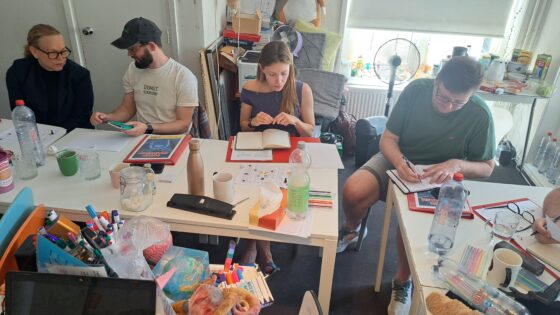
Not that there isn’t value to online courses. In fact, Both says it helps when someone who has taken one then joins his course.
“It’s great when they do Duolingo and then me,” he says. “Even the nuns put you in a language lab behind a computer. But here students can put into practice what they’ve been learning with real people.”
AI versus live
“In general, being an introvert, I’m perfectly fine with online activities,” agrees Yulia, who has taken online classes. “But I believe the offline format actually amplified the course’s success.
“AI offers plenty of support for language learning, but it’s unlikely to place the language at the heart of its cultural and historical context. It can’t deliver the fun and entertainment of true language learning, nor let you experience ‘live’ or informal language in action…. Albert placed Dutch in a broader context, turning it into a logical piece of the puzzle. That’s what I loved most.”
Many of Both’s students highlight his unique approach to language and teaching that drew them to his course in the first place, including his insistence that Dutch is not as hard to learn as people think. “He talked about how English speakers can use certain tricks to help them speak Dutch. That caught my attention, and his logic really clicked with me. I wanted to learn the language in a smart way,” says 39-year-old student and doctor AQ.
“I would describe the course as someone giving you a key to the door of the Dutch language,” he says. “It is then one’s responsibility to hold on to that key and learn how to use it. This means applying logic to continue learning, practicing consistently, and allowing yourself to make mistakes.”
AQ has also taken online courses before but says that in-person classes have their own “vibe and energy” compared to virtual ones. “Communication is not only about voice and video; there is also chemistry and body language, which have a more positive effect on learning—not just a language, but anything. AI is a great tool…but there were numerous instances where AI could not explain certain language concepts well or translated words in ways that did not make sense.”
Fred Paler (50), a healthcare worker from the Philippines, was also drawn to Both’s Brainwash after reading about his approach to language learning. He says it improved his Dutch and was instrumental in helping him pass his inburgering exams.
“After two sessions, as I rode the train, I could feel and understand confidently what the conductor was saying, which I believe is the effect of Albert’s class,” he says. “AI tools do not teach you the nuances of the Dutch language. Grammar wise, online courses have helped me, but as far as speaking Dutch is concerned, I was not that confident before Albert’s class.”
Back to class
For anyone looking for a Dutch refresher class, struggling with stalled motivation or wanting to focus on speaking the language, Both’s class is invaluable, says Yulia. “It’s perfect for open-minded, curious people eager to try something new without rigid mental barriers labelled ‘right’ or ‘wrong.’”
“The Dutch Brainwash is not a classic language course, and that is exactly why I loved it,” adds AQ. “I think it is for people who are curious, flexible and open-minded.”
If that sounds like you, sign up here for the next Dutch Brainwash!
Thank you for donating to DutchNews.nl.
We could not provide the Dutch News service, and keep it free of charge, without the generous support of our readers. Your donations allow us to report on issues you tell us matter, and provide you with a summary of the most important Dutch news each day.
Make a donation