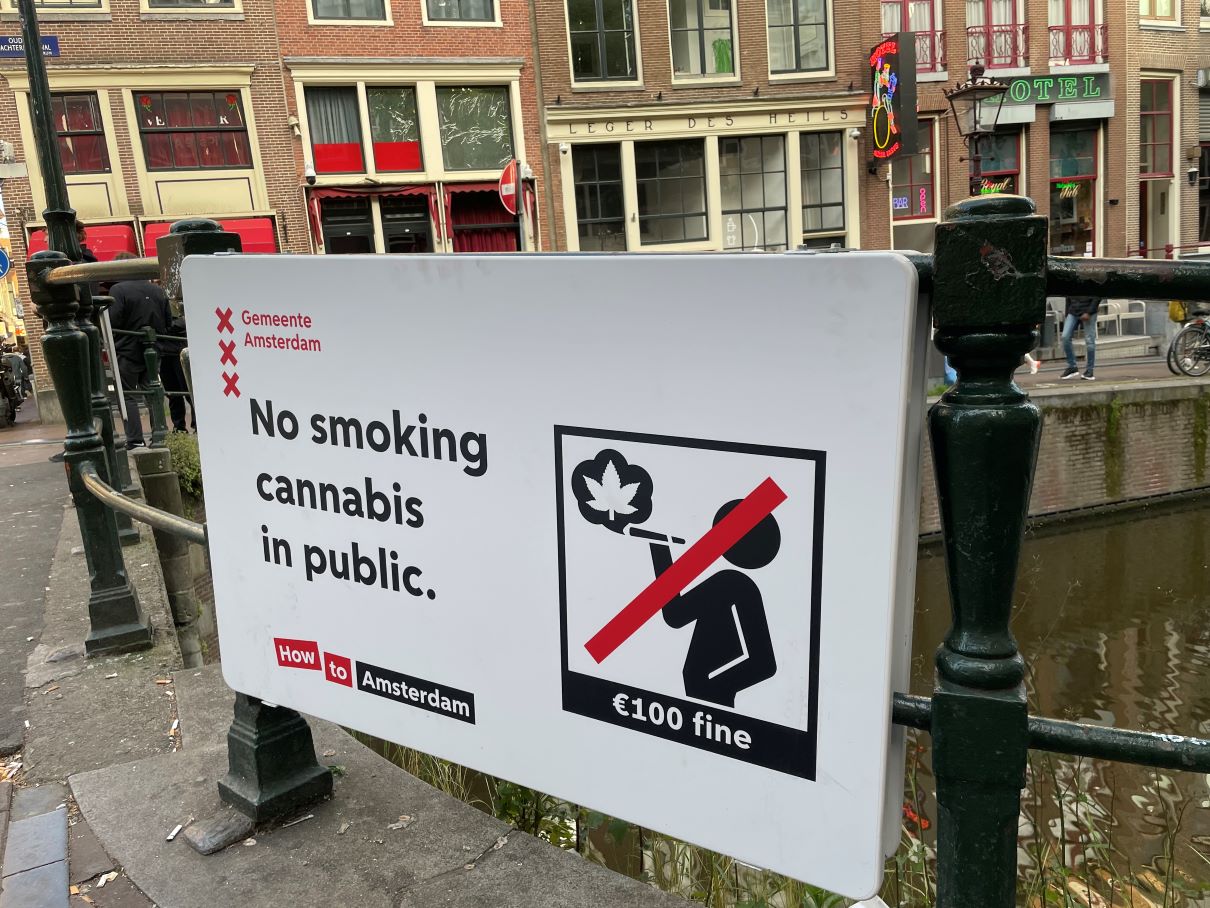
A ban on allowing tourists to access Amsterdam’s cannabis cafes is likely to be back on the city council agenda after the March 18 local elections.
Since 2012, non-locals have been excluded from the cafes, known as coffeeshops, across much of the country, with the primary aim of ending drugs tourism from neighbouring Belgium, France and Germany.
But an exception was made for Amsterdam, on the condition that the city withdrew licences from coffeeshops located too close to schools. Now, however, there is likely to be a majority in favour of keeping tourists out of the city’s cafes as well, as part of the drive to reduce nuisance tourism.
Mayor Femke Halsema is known to favour a ban and last year the PvdA said it too would back a ban in the city centre, where most coffeeshops are located. The Liberal democratic party D66 and the left-wing Greens GroenLinks, which are likely to be the biggest parties on the city council alongside the PvdA after the vote, are opposed.
But several other parties support a ban, including the VVD and CDA. And this could make the issue a key part of talks to put together a new coalition after the vote, the Parool reported at the weekend.
Halsema has the power to introduce a ban herself but has said she will only do so with council backing.
However, experts have raised questions about introducing a ban in Amsterdam. Criminology professor Dirk Korf, who has studied the issue in the south of the country, says it simply won’t work. “Who is going to ensure compliance?” he asked the paper.
Korf points out that street dealing flourished before coffeeshops were licensed and warns that it will return under a ban. “There was not a single coffeeshop in Lelystad for a time but a lot of dealers,” he told the paper. “When the first coffeeshop opened, the dealers disappeared.”
But Dingeman Coumou from city centre residents’ association d’Oude Stadt told the Parool the paper’s own research suggests fewer tourists will come to the city if a ban is introduced. “In particular those just out to party will stay home, and they are the ones we want to see the back of,” he said.